

The most polished kitchen floor isn’t always the easiest one to live with. For homeowners comparing high-end kitchen flooring options in Del Mar, spills, cleanup, and installation details matter as much as the finished look.
A kitchen floor needs to hold up to everyday use, not just look good on installation day. Luxury vinyl is one option for spill-prone spaces, while large-format tile and wide planks offer distinct visual effects and practical considerations.
This guide explains how to compare those choices, what installation and product warranties cover, and which flooring features can simplify cleanup. You’ll learn how format and material affect a kitchen’s look and feel, and how to weigh trade-offs before choosing a direction. The goal is a clear, considered choice that suits your kitchen and the way you use it.
Key Takeaways
- Match wide planks or large-format tile to the kitchen’s layout, desired look, and moisture exposure.
- Compare flooring estimates by looking beyond the total, including the installation work and warranty terms.
- Weigh engineered wood’s durability and spill protection against how your kitchen is used day to day.
- Explore vinyl formats for spill-prone areas, then coordinate your flooring direction with the kitchen’s overall design.
Can You Install Wide-Plank and Large-Format Tile in Del Mar?
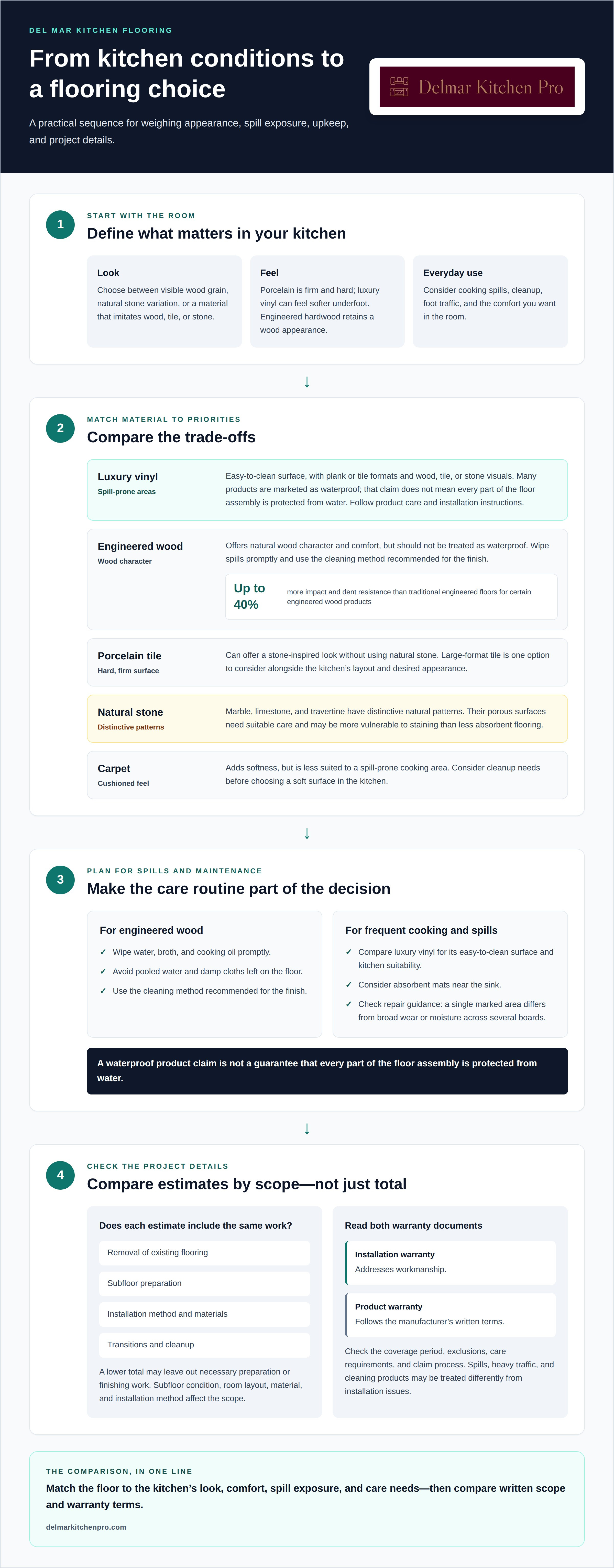
Yes. Wide-plank flooring and large-format tile can both suit a Del Mar kitchen. The right choice depends on your preferred look, comfort, and exposure to spills. Porcelain tile and natural stone create a hard surface, while hardwood brings visible grain and a warmer appearance. Luxury vinyl offers wood, tile, and stone visuals in plank and tile formats.
In coastal kitchens, moisture management matters. Many luxury vinyl products are marketed as waterproof, making them a practical option for areas exposed to kitchen spills. Luxury vinyl plank has a board-like appearance, while rigid-core vinyl is another plank format. Follow the product’s care and installation instructions: a waterproof claim does not mean every part of the floor assembly is protected from water.
Porcelain, natural stone, hardwood, and luxury vinyl differ in feel and upkeep. Porcelain has a firm, hard surface; stone adds natural variation; hardwood shows authentic wood grain; and luxury vinyl can imitate those looks with a softer feel underfoot. Laminate also offers wood visuals. Carpet feels cushioned but is less suited to a spill-prone cooking area.
Marble, limestone, and travertine each have distinctive natural patterns. Their porous surfaces need suitable care and may be more vulnerable to staining than less absorbent flooring. Weigh their appearance against cooking spills and maintenance needs. Porcelain can offer a stone-inspired look without using natural stone.
Del Mar permit requirements depend on the project’s scope. Replacing a floor surface and changing the broader kitchen construction are not necessarily the same type of work. Account for the specific work involved when planning the project.
For a more comfortable feel, compare engineered hardwood, luxury vinyl, and carpet in the context of the room. Engineered hardwood retains a wood appearance, luxury vinyl offers plank or tile styling, and carpet adds softness. In a kitchen, consider cleanup needs in the cooking zone before choosing a soft surface.
Do You Offer A Warranty On Flooring Installation?
A flooring installation warranty and a product warranty cover different parts of a project. Installation coverage addresses workmanship, while a product warranty follows the manufacturer’s written terms. Read both documents for the coverage period, exclusions, care requirements, and claim process. A warranty may treat installation issues differently from damage caused by spills, heavy traffic, or cleaning products.
Flooring estimates are easier to compare when they describe the same scope. Check whether each includes removal of existing flooring, subfloor preparation, installation, transitions, and cleanup. A lower total may leave out necessary preparation or finishing work. Compare the tasks and materials listed, not just the bottom line. The floor’s condition and chosen material affect the work involved.
Installation method depends on the flooring product and subfloor. Some materials use adhesive; others use a floating or mechanical installation. A smooth, stable subfloor helps support an even finish, while uneven areas may require preparation before installation. Bathrooms and kitchens also need careful transitions at doorways, cabinets, and adjoining floors. These details affect how the finished surface meets neighboring rooms.
Material, existing-floor removal, subfloor condition, room layout, and installation method all affect a project’s scope. A detailed estimate should connect the proposed work to those conditions. Colors and plank or tile patterns can also influence layout, especially when flooring continues through several rooms.
Delmar Kitchen Pro serves Del Mar homeowners looking for quality high-end kitchen flooring options Del Mar. A showroom helps you compare samples, finishes, and colors; an installer assesses preparation and installation requirements. For a clear comparison, use estimates that describe the same rooms, materials, and steps. Written warranty terms, a defined scope, and attention to the subfloor provide a practical basis for evaluating proposals beyond price alone.
Engineered wood flooring durability and spill protection
Engineered wood can provide real-wood character with performance suited to a busy kitchen. Certain engineered wood products offer up to 40% more impact and dent resistance than traditional engineered floors. That figure makes product construction worth comparing, especially where chair legs, dropped utensils, and daily foot traffic can mark the surface. Durability still depends on the specific material and its care instructions.
Protect flooring from spills with a practical routine. Wipe water, broth, or cooking oil promptly rather than letting liquid sit. Use the cleaning method recommended for the selected finish, since abrasive tools or unsuitable cleaners can affect the surface. Engineered wood should not be treated as waterproof. If spills are frequent, compare it with luxury vinyl, which is described as easy to clean and suitable for kitchens.
For easier routine maintenance, consider luxury vinyl: its surface is easy to clean, and it comes in plank or tile formats. Repairability depends on the type and location of damage. A single marked area differs from broad wear or moisture affecting several boards, so review the product’s repair guidance. Engineered wood may suit homeowners who prioritize natural wood character and comfort over a waterproof claim.
Plan for durability by matching materials to how the kitchen is used. In a household with frequent cooking, place absorbent mats near the sink and clean spills promptly. Avoid leaving damp cloths or pooled water on engineered wood. To compare warmth and appearance, view a floor sample in the actual kitchen beside cabinetry and counter colors. Wood grain can look different in daylight than under evening lighting, and wide boards make the pattern more prominent.
Choose a flooring style by weighing appearance, comfort, and upkeep together. Engineered wood offers natural grain; luxury vinyl can reproduce wood visuals with simpler surface cleaning. For high-end kitchen flooring in Del Mar, the best fit is the material whose care requirements suit your household’s routines.
Waterproof vinyl flooring for kitchens and other spill-prone areas
For kitchens exposed to spills and busy foot traffic, luxury vinyl is a practical material to consider. It is described as waterproof and suitable for kitchens, bathrooms, and other moisture-prone spaces. Among high-end kitchen flooring options in Del Mar, it stands out for combining a cleanable surface with visuals that resemble hardwood, ceramic tile, or stone. Installation details still matter: seams, edges, and the surface beneath the floor affect how the complete floor handles moisture.
Format affects both appearance and how the floor fits a room. Luxury vinyl comes as planks, tiles, and sheets. Planks can suggest wide wood boards, while tile formats can echo stone or ceramic. Sheet vinyl comes in rolls 6 to 12 feet wide, which can mean fewer seams across some areas. A kitchen’s shape, doorways, and cabinets help determine which format works best.
For homeowners comparing high-end kitchen flooring options in Del Mar, vinyl offers a range of premium-looking styles. Wood-look planks can create a consistent visual through the kitchen, while tile-format vinyl can define a cooking zone. Wipe spills promptly and follow the selected product’s cleaning instructions. Waterproof describes the flooring product, not every part of the floor assembly, and does not mean stain-proof or maintenance-free.
For moisture, stains, and everyday kitchen traffic, compare luxury vinyl with porcelain tile and natural stone. Luxury vinyl is described as suitable for kitchens and easy to clean; porcelain provides a hard tile surface. Salt-air performance depends on the specific product and installation, so don’t assume every material handles coastal exposure equally. Consider where water may collect, such as beside a sink or dishwasher, when planning the floor.
If you’re planning a broader remodel, coordinate flooring choices with kitchen construction plans so the material and layout work together.
Delmar Kitchen Pro: Counter Options
Delmar Kitchen Pro offers Counter Options to help create a considered, cohesive kitchen design. Once you’ve narrowed down flooring materials, counter color and pattern can shape how the whole room feels. A light counter beside wood-look flooring, for example, creates a different effect from a darker surface paired with stone-inspired tile.
Turn to Delmar Kitchen Pro when your flooring decision is part of a larger kitchen update. Counter Options can be considered alongside a Luxury Custom Kitchen, Cabinets, or Cabinet Reface & Paint, so the finishes work together rather than compete for attention. The right combination depends on your preferred look and the materials already in the room.
For help planning your kitchen’s counter choices, contact Delmar Kitchen Pro.
Plan a Kitchen That Works as a Whole
Connect your flooring choice with the kitchen you want to live in. Before settling on a finish, consider how it will work with cabinetry, counters, and the room’s overall feel. A coordinated plan can make each selection feel intentional rather than like a series of separate decisions.
As you compare high-end kitchen flooring options in Del Mar, keep your priorities in view: the look you prefer, the care your household can maintain, and how the kitchen functions day to day. Delmar Kitchen Pro can help shape the broader project with a Luxury Custom Kitchen, Cabinets, or Cabinet Reface & Paint. These services can support a coordinated kitchen update alongside Counter Options.
Bring your design direction and kitchen priorities into the next conversation with Delmar Kitchen Pro, then decide which choices belong in the project scope. A clear starting point makes the decisions ahead more manageable.
Contact Delmar Kitchen Pro to discuss your kitchen plans and take the next step with confidence.
Frequently Asked Questions
How Much Does Flooring Cost in Del Mar?
The overall budget depends on the floor area, selected material, and project scope. Floor-level transitions, trim, and disposal can also affect the total. Treat an estimate as a project-specific figure, not a material-only amount. For a useful comparison, make sure the proposed work covers the same rooms and finish details you have in mind.
How Should I Compare Flooring Estimates?
Compare estimates using the same floor area and product or material category. Look for separate descriptions of material, labor, trim, and allowances to see what each total includes. Note whether the estimate identifies the flooring’s make and model. This makes it easier to compare matching options rather than different products or project scopes.
What is the installed cost per square foot of high-end kitchen flooring in Del Mar?
There isn’t one installed rate for every high-end kitchen floor; the material and work scope affect the amount. For a project-specific figure, the price depends on the case and is given after a quote request. Factors include the selected flooring, room dimensions, layout, and preparation required. A per-square-foot figure is most useful when paired with the full work description.
How long does professional kitchen flooring installation take, and what preparation is required?
Installation timing depends on the project scope, material, and condition of the existing floor. Preparation includes measuring the room, clearing the work area, and planning cuts around cabinets, doorways, and fixed features. The installer also follows the selected product’s instructions and accounts for required subfloor preparation. These steps help establish a realistic schedule and reduce avoidable interruptions.
What slip-resistance and underlayment standards should homeowners consider for kitchen floors?
Choose a surface suited to the kitchen’s exposure to water and routine foot traffic, and review its documented slip-resistance information. Underlayment must match the flooring product and subfloor; it can affect support, sound, and installation suitability. Follow the manufacturer’s written installation requirements rather than assuming one underlayment or surface rating applies to every material.
What are the pros and cons of marble, limestone, and travertine kitchen floors near the coast?
Marble, limestone, and travertine offer distinctive natural patterns, but their porous surfaces need suitable care and may be more vulnerable to staining. Near the coast, weigh their appearance against kitchen spills and the maintenance they require.


