

A kitchen remodel is easier to manage when meals are part of the plan from the start. Knowing how to live through a kitchen remodel means setting up a temporary kitchen in another room, deciding how you’ll handle meals, and keeping everyday essentials close at hand. A little preparation can make each day more manageable.
Cooking and cleanup often become less straightforward while work is underway. A folding table and a few small appliances can make a practical meal station, while pantry staples and meals prepared ahead can fill the gaps. Set aside part of your budget for takeout or restaurant meals, too, so the extra cost doesn’t catch you off guard.
Before demolition, decide where you’ll prepare food, wash dishes, and keep the cookware and utensils you use most. This guide covers setting up a temporary kitchen, planning meal expenses, organizing essentials, and preparing your home for construction. A clear plan won’t eliminate every disruption, but it can make the process more manageable.
Key Takeaways
- Choose a practical spot for a temporary kitchen and make it work for the meals you rely on most.
- Plan for takeout and restaurant meals alongside simple options you can prepare at home.
- Keep the cookware and utensils you need for temporary appliances together and easy to reach.
- Prepare for the disruption before demolition by organizing the kitchen, household space, and project decisions.
1. Setting up a temporary kitchen
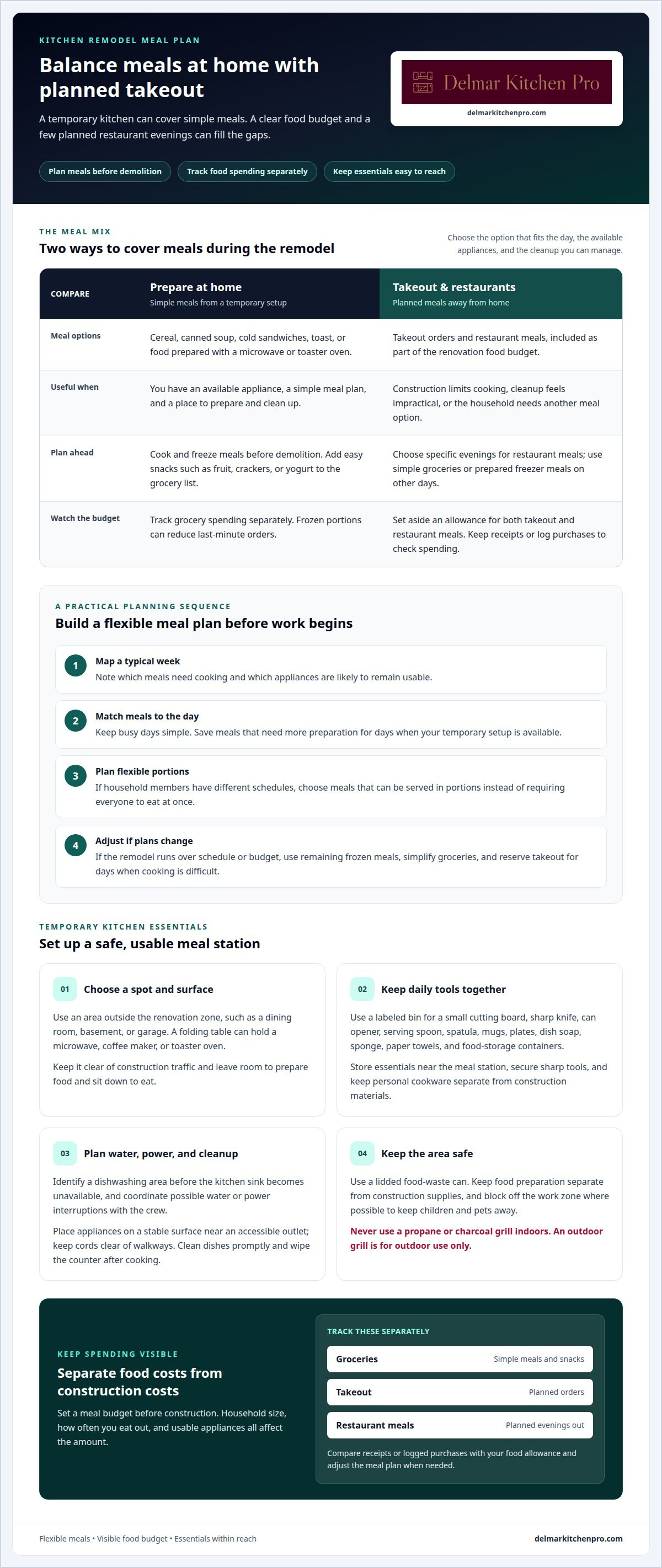
Choose a spot outside the renovation zone, such as a dining room, basement, or garage. A folding table can serve as a counter for a microwave, coffee maker, or toaster oven. Keep the setup clear of work areas, cabinets being removed, and construction traffic. Leave enough space to prepare food and sit down to eat.
Your temporary kitchen’s setup cost depends on what you already own and whether you need a refrigerator or small appliances. Reusing a table, microwave, and cookware can limit new purchases; buying equipment or arranging refrigeration adds to the total. A compact setup can remain functional with a minifridge, electric kettle, and appliances suited to the meals you usually make.
Without a stove or sink, choose foods that need little preparation, such as cereal, canned soup, cold sandwiches, or toast. Use a microwave or toaster oven where appropriate, and plan for clean water and cleanup before preparing food. A lidded plastic bin can hold utensils, dish soap, and other supplies. Disposable plates reduce washing, or set aside one plate, bowl, mug, glass, and set of utensils for each family member.
Plan cleanup before the first meal. If the kitchen sink is unavailable, designate a bathroom sink or another washing area, and clean dishes promptly. Wipe the temporary counter after cooking, and use a lidded food-waste can to contain odors and discourage pests. Never use a propane or charcoal grill indoors. An outdoor grill is suitable only for outdoor use.
Whether to move out depends on how usable the home remains for your household during construction. Staying may be practical if you have a functional place to prepare food, access to essential rooms, and clear separation from the work area. Consider a temporary stay elsewhere if construction blocks essential access or the household cannot comfortably use the available space. Agree on the work area and household access before demolition, and allow for possible delays rather than relying on a fixed end date.
2. Budgeting for takeout and restaurant meals
Set a meal budget before construction begins. The amount depends on household size, how often you eat out, and which appliances remain usable. Track groceries, takeout, and restaurant meals separately so extra spending is visible instead of blending into the renovation budget.
To plan meals during a kitchen renovation, map out a typical week and note which meals need cooking. Choose simple options for busy workdays, such as cereal, soup, cold sandwiches, or food prepared with a microwave or toaster oven. Save meals that need more preparation for days when your temporary setup is available.
Preparing food ahead can reduce last-minute orders. Cook and freeze meals before demolition, then reheat them with an available appliance. Add easy snacks, such as fruit, crackers, or yogurt, to your grocery list. If household members have different schedules, choose flexible meals that can be served in portions rather than requiring everyone to eat at the same time.
Plan takeout intentionally. Set aside specific evenings for restaurant meals and use simple groceries on other days. A prepared meal from the freezer can cover a day when construction limits cooking, while takeout can help when cleanup feels impractical. Keep receipts or log purchases to see whether food spending is approaching your planned limit.
If the remodel runs over schedule or budget, revise the meal plan rather than relying on frequent restaurant meals. Use remaining frozen portions, simplify grocery choices, and reserve takeout for days when cooking is difficult. Keep meal expenses separate from construction spending, so one change doesn’t obscure the other. Clear kitchen construction planning can also help set practical expectations for the work ahead.
Treat food away from home as a planned part of the renovation budget, not as an unrelated household expense. Include both takeout and restaurant meals when setting the amount, so it reflects the options available while the kitchen is being remodeled. A clear budget makes it easier to compare actual meal spending with your allowance and decide whether to adjust your plans.
Before the remodel, prepare meals and freeze them for reheating. Factor these meals into how much you reserve for takeout or restaurant dining: they offer another planned option, so not every meal has to come from an order or restaurant visit.
3. Keeping essential cookware and tools accessible
For a kitchen renovation, keep the tools suited to your temporary cooking setup together in a plastic storage bin. A microwave, toaster oven, slow cooker, or coffee maker can help with different meals, but each needs the right supplies. Pack a small cutting board, one sharp knife, a can opener, serving spoon, spatula, mugs, and a few plates. Add dish soap, a sponge, paper towels, and food-storage containers so routine tasks don’t require searching through boxes.
Water, electricity, and cooking access may change as construction progresses. Keep the kitchen sink available as long as possible, then identify a place to wash dishes before it becomes inaccessible. Coordinate with the crew about water or power interruptions, and plan meals around them. Place appliances on a stable surface near an accessible outlet, with cords kept clear of walkways.
Store daily essentials where you can reach them without entering the work zone. A labeled bin in the dining area or garage can hold what you need for breakfast, coffee, and dinner. Secure knives and other sharp tools, and keep personal cookware separate from construction materials. Return washed utensils to the same bin to keep the temporary setup orderly.
A tidy work area helps protect household belongings and keeps the crew’s path through the home clear. Keep tools, supplies, and materials in the designated work area, away from the surface where you prepare food. Close, lock, or block off the construction zone whenever possible to keep children and pets away from hazards. Before preparing a meal, clear the counter and make sure dishes and utensils are clean. These steps make daily life more manageable while the kitchen is out of service.
If you can still use the sink, keeping it available as long as possible can help during a kitchen remodel. Store cookware and utensils suited to your temporary appliances together in the plastic bin, adjusting what you keep there as the setup changes. Continue to close, lock, or block off work areas whenever possible to help protect children and pets from renovation hazards.
4. Planning ahead for a kitchen remodel
There isn’t one typical kitchen remodel duration. Homeowner estimates range from 4-5 weeks to a minimum of two months, and planning and design can take about as long as the construction work. The kitchen may also be gutted for a full week. Planning how to live through a kitchen remodel means allowing flexibility in your household plans, not relying on one fixed end date.
Before demolition, pack the kitchen and finalize project specifications and orders as much as possible. Cabinets often take the longest to make or order, and their placement guides other parts of the project. Set aside a clear area in the garage or another room for cabinetry and construction materials. Decide where the fridge, coffee maker, and temporary kitchen will go before work starts.
Move computers, artwork, plants, countertop appliances, and furniture away from the work zone to protect them. Seal doorways to the kitchen, close vents on the same floor, and clean or change the HVAC filter daily to help limit dust. Keep one room free of construction, and don’t use it to cut materials or store tools. Dust can still travel beyond the work area.
Agree with your contractor on the project timeline, household access, and how schedule changes will be communicated. Confirm when the crew may need access to the electrical panel, attic, water shutoff, or crawlspace. Keep decisions aligned with the original plan, since changes during construction can disrupt the sequence. Planning outdoor meals in warmer months can also make the temporary setup easier to use.
A written plan for work areas, access, material storage, and meals gives the household a practical reference during the project. A kitchen construction plan can connect the project sequence with daily routines. That is one useful way to live through a kitchen remodel with fewer surprises: make key decisions before demolition, then keep communication clear as work progresses. Kitchen construction planning can help connect those decisions with the project ahead.
Delmar Kitchen Pro
Delmar Kitchen Pro helps San Diego homeowners plan kitchen remodels around the changes they want and the decisions their projects require. If you’re weighing a full kitchen update against refreshing existing cabinets, its Luxury Custom Kitchen and Cabinet Reface & Paint services support different renovation goals. Cabinet and counter choices also shape the room’s layout, storage, and everyday function, so considering them before work begins can help you prepare for the transition.
As you plan meals and household routines, keep the project scope clear: what will change, which materials you’re considering, and how the finished space should serve your home. For help planning your kitchen project, contact Delmar Kitchen Pro.
Make the Next Decision with Confidence
The next step is to turn your remodel goals into a clear project direction. Decide what needs to change, what should remain, and how you want the finished kitchen to support daily life. This gives you a practical starting point for discussing design and construction choices with Delmar Kitchen Pro.
Delmar Kitchen Pro offers Luxury Custom Kitchens, Cabinet Reface & Paint, and cabinets. These options support different project goals, from a broader kitchen transformation to updating existing cabinetry. If you’re still working out how to live through a kitchen remodel, include your household plan alongside the design decisions. A clear scope connects the project with the way you use your home. Contact Delmar Kitchen Pro to discuss your kitchen goals.
Bring your questions and priorities to the conversation, and take the next step at your pace. Contact Delmar Kitchen Pro to discuss your kitchen project. A thoughtful plan can make the path to a more functional kitchen feel clear and manageable.
Frequently Asked Questions
Is it safe to live at home during a kitchen remodel?
Living at home can be workable when the construction area is separate from household spaces. Keep children and pets out by closing, locking, or blocking access to the work zone. Dust may spread beyond the kitchen even with barriers, so protect belongings and maintain a clean area for daily use. If essential access or separation cannot be maintained, plan to stay elsewhere while the affected work is underway.


