

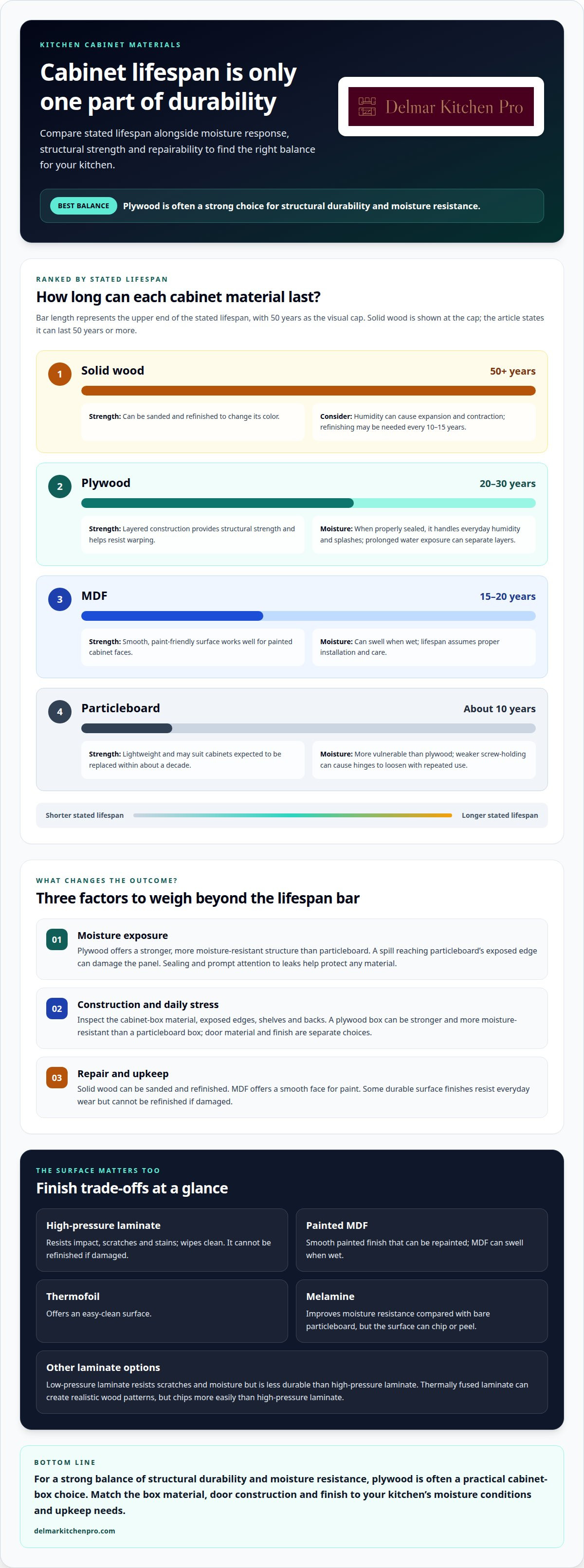
The longest-lasting cabinet material isn't automatically the best fit for every kitchen. For a strong balance of structural durability and moisture resistance, plywood is often the best material for modern kitchen cabinets. Plywood cabinets may last 20 to 30 years, while MDF cabinets typically last 15 to 20 years with proper installation and care; solid wood can last 50 years or more when properly cared for.
Material is only one part of choosing the best material for modern kitchen cabinets. Plywood, MDF, particleboard and solid wood respond differently to moisture, daily wear and repairs, while the finish affects how cabinet surfaces handle spills and scratches. Comparing these trade-offs helps you weigh durability, appearance and upkeep, then choose cabinets suited to your kitchen and how you use it.
Key Takeaways
- Compare cabinet-box materials by how they handle moisture, structural stress and everyday wear, not appearance alone.
- Plywood, MDF and particleboard each have different strengths; the right choice depends on the kitchen’s conditions and the cabinet’s intended lifespan.
- A durable surface finish can help resist scratches, spills and stains, but finishes vary in maintenance needs and repairability.
- Consider how humidity, upkeep and the ability to refinish or replace a surface will affect long-term cabinet performance.
What are the main types of materials used for kitchen cabinets?
Cabinet materials include MDF, HDF, particleboard and plywood, each with different strength and moisture performance. To assess construction, identify the cabinet-box material, inspect exposed edges, and check whether the shelves and backs match the stated build.
MDF, HDF, and Particle Board
MDF is a smooth engineered panel that takes paint well, making it useful for painted cabinet faces. HDF is denser and stronger than MDF, while particleboard is lightweight but more vulnerable to moisture and less durable. Melamine can cover particleboard or MDF, improving moisture resistance compared with bare particleboard, though its surface can chip or peel.
Plywood Construction
Plywood consists of wood veneer layers glued together, with each layer’s grain oriented to strengthen the panel. This construction gives plywood cabinet components structural strength and helps resist warping. Furniture-grade plywood is commonly used for cabinet boxes because it combines strength with moisture resistance. When properly sealed, it handles everyday kitchen humidity and splashes, but prolonged water exposure can separate its layers.
All-Plywood Cabinet Construction
All-plywood construction means plywood forms the cabinet-box components rather than particleboard or MDF. It may include sides, bottoms, shelves and backs, but the term does not automatically mean the doors are plywood. Inspect exposed edges and product details to see which parts use plywood. A plywood box can provide a stronger, more moisture-resistant structure than a particleboard box, while the finish and door material remain separate choices.
Furniture-Grade Plywood
Furniture-grade plywood is made for cabinetry and other finished furniture, with a more suitable surface and construction than utility panels. Hardwood plywood is generally used decoratively and has a face ply from deciduous or broadleaf trees, according to the U.S. Environmental Protection Agency. For a visible wood veneer, check the face layer: hardwood face veneers should be at least 1/16 inch thick.
| Material | Strength | Moisture response | Typical use |
|---|---|---|---|
| MDF | Smooth, paintable | Can swell when wet | Painted panels |
| HDF | Denser and stronger than MDF | Engineered panel | Cabinetry and furniture |
| Particleboard | Lightweight | More vulnerable to moisture | Cabinet components |
| Plywood | Strong layered construction | Resists everyday moisture when sealed | Cabinet boxes |
The best material for modern kitchen cabinets depends on the box construction, moisture exposure and finish you want.
Are plywood cabinets more durable than MDF or particleboard?
Plywood cabinet boxes generally resist warping better than solid wood and offer greater structural strength than MDF. MDF provides a smooth surface for paint but can swell when wet, while particleboard is more vulnerable to moisture. Solid wood offers natural beauty and can be refinished, but humidity can cause it to expand and contract.
Construction affects how materials perform over time. Plywood uses bonded veneer layers, while MDF and particleboard use wood fibers or particles pressed into panels. Particleboard’s weaker screw-holding can cause hinges to loosen with repeated use. Solid wood panels can crack or warp as humidity shifts, so cabinet makers sometimes use engineered stile-and-rail doors, combining solid wood frames with engineered or veneered center panels to limit movement.
Species also shape the look and upkeep of solid wood cabinetry. Maple, walnut, cherry and oak are common door choices. Solid wood can be sanded and refinished to change its color, but it may need refinishing every 10 to 15 years. With proper care, solid wood cabinets can last 50 years or more.
- Plywood: A strong cabinet-box option that may last 20 to 30 years.
- MDF: A paint-friendly engineered panel that typically lasts 15 to 20 years with proper installation and care.
- Particleboard: A lightweight option that may suit cabinets expected to be replaced within about a decade.
- Solid wood: A refinishable choice with long potential lifespan, though humidity movement calls for sound construction and upkeep.
For a practical comparison, weigh the box material against the door construction and finish. Where moisture exposure is a concern, plywood offers a stronger structural choice than particleboard. Sealed surfaces and prompt attention to leaks help protect any material. For a painted look, MDF’s smooth face may suit the design, provided the kitchen does not have serious moisture issues.
Do durable cabinet finishes matter as much as the material?
Yes. The cabinet panel provides structure, while its finish faces daily spills, scratches and handling. Thermofoil offers an easy-clean surface, laminate resists everyday marks, and painted MDF provides a smooth, repaintable finish. These options also create distinct contemporary colors, textures and patterns.
High-Pressure Laminate
High-pressure laminate (HPL) is made by pressing multiple layers together under high pressure. Its surface resists impact, scratches and stains, making it practical for busy kitchens. It cleans with a wipe, but cannot be refinished if damaged. Low-pressure laminate offers scratch and moisture resistance, though it is less durable than HPL. Thermally fused laminate can create realistic wood patterns, but chips more easily than HPL.
Particleboard and Moisture Sensitivity
Particleboard is a lightweight panel that can form the core beneath melamine or laminate. Melamine resists moisture better than bare particleboard, but its surface can chip or peel. Particleboard remains more vulnerable to moisture than plywood, so a spill reaching an exposed edge can damage the panel. Surface protection helps, but does not make the core waterproof.
For kitchens with humidity concerns, plywood, laminate and engineered panels are useful options. No cabinet material is completely waterproof, so good ventilation and prompt attention to leaks matter. A sealed plywood panel can handle everyday kitchen humidity and splashes, but prolonged water exposure can still separate its layers.
Thermofoil is vinyl pressed onto an MDF or other engineered core. Its smooth surface has no grooves or grain to trap dirt, and it resists moisture better than plain MDF. Keep thermofoil away from heat sources such as ovens and dishwashers to help prevent damage. Painted MDF offers a different benefit: its smooth face accepts paint well and can be repainted.
Choose a finish to match both kitchen use and design. HPL suits high-traffic kitchens where surface durability matters; thermofoil creates a smooth, contemporary look; and wood veneer brings natural grain patterns. Pair the surface with a moisture-appropriate cabinet core, maintain ventilation and address leaks promptly.
Cabinet material lifespan
Material lifespan depends on cabinet construction, moisture exposure, installation and care. Plywood cabinets may last 20 to 30 years, while MDF cabinets typically last 15 to 20 years with proper installation and care. Solid wood cabinets can last 50 years or more with proper care, but may need refinishing every 10 to 15 years.
Particleboard may suit a kitchen planned for replacement within about a decade. Its shorter expected service life reflects greater vulnerability to moisture and weaker screw-holding, which can let hinges loosen. A surface finish can resist scratches, spills or stains, but laminate cannot be refinished. A damaged surface may therefore require replacing a panel rather than restoring it.
Finishes and cores also age differently. Painted MDF can be repainted, but moisture can swell the panel. Thermofoil resists moisture better than bare MDF, yet heat from ovens or dishwashers can damage it. Wood veneer brings the appearance of hardwood, but its thin surface limits sanding. Sanding through the veneer damages it, so it cannot be refinished as many times as solid wood.
- For long service: Plywood offers structural strength and may last 20 to 30 years.
- For a refinishable surface: Solid wood may last 50 years or more, with refinishing needs along the way.
- For painted cabinets: MDF typically lasts 15 to 20 years with proper installation and care, but avoid serious moisture exposure.
- For shorter-term use: Particleboard may work when replacement is planned within about a decade.
Even premium or expensive finishes cannot make a cabinet waterproof. Good ventilation and prompt attention to leaks protect cabinet materials and finishes. Choose based on how long you expect to stay in the home, moisture risks, repair needs and preferred appearance. A scratch-resistant laminate surface may reduce visible wear, while painted or hardwood finishes offer different repair and refinishing options.
Delmar Kitchen Pro: Cabinet Reface & Paint
Delmar Kitchen Pro offers Cabinet Reface & Paint for homeowners who want to refresh existing cabinets, and Cabinets for projects requiring new cabinetry. The right next step depends on whether the current cabinets suit the kitchen’s layout and needs or a broader change would work better.
For a coordinated renovation, Delmar Kitchen Pro also offers Luxury Custom Kitchen projects and Counter Options. These services can bring cabinet appearance, material choices and surrounding surfaces together in one kitchen plan. Discuss the look you want, how you use the kitchen, and whether refacing, painting or new cabinets best fits the project.
Contact Delmar Kitchen Pro to discuss your kitchen and cabinet options.
Plan Your Kitchen Around Long-Term Use
Choosing cabinet material is also a chance to think beyond the surface. Consider how the kitchen needs to work, what you want to preserve, and whether the existing layout supports your daily routine. These priorities help define the best material for modern kitchen cabinets and keep appearance, durability and function aligned.
Delmar Kitchen Pro offers Cabinet Reface & Paint, Cabinets and Luxury Custom Kitchen projects. Homeowners can refresh existing cabinetry or plan a broader kitchen update based on the change they want. A useful starting point is deciding how you want the finished kitchen to work for everyday life.
Contact Delmar Kitchen Pro to discuss your kitchen plans and explore a practical next step. A thoughtful decision now can help you move forward with confidence.
Frequently Asked Questions
What are the newest materials used in modern cabinets?
Contemporary cabinetry pairs engineered panels with surfaces such as thermally fused laminate, high-pressure laminate and thermofoil. Multi-layer lacquer also creates high-gloss or ultra-matte looks. These options let homeowners coordinate a clean, modern surface with different cabinet shapes and layouts. Compare finish samples alongside the cabinet design, since the surface appearance and underlying panel are separate choices.
What materials work best in humid kitchens?
Plywood, stainless steel and bamboo are options to consider where moisture is a concern. For a kitchen in San Diego, Encinitas, Rancho Santa Fe, La Jolla or Del Mar, inspect exposed edges and joints near sinks, where routine splashes can reach the cabinet core. The material and finish work together: choose a suitable panel, protect exposed surfaces, and plan the layout to limit repeated water contact.
What wood species are best for cabinet doors?
Maple, walnut, cherry and oak are common wood choices for kitchen cabinet doors. The best fit depends on the grain, color and overall look you want. Compare door samples beside the flooring and countertops, then view them under the kitchen’s lighting. This makes it easier to judge how natural wood will coordinate with surrounding finishes.
What cabinet materials are most popular in modern kitchens?
Modern kitchens commonly use lacquer, laminate and melamine for contemporary surfaces, while wood veneer can add natural grain. Lacquer can create high-gloss or ultra-matte finishes, offering different visual effects without changing the cabinet layout. Choose a surface based on the look you want across the room, then pair it with cabinet construction suited to daily use.
Which cabinet materials are most durable and moisture-resistant?
Plywood offers strong cabinet construction, while stainless steel resists moisture and heat and cleans with a wipe. Bamboo may be worth considering in kitchens where moisture is a concern. The right selection depends on cabinet placement and use. For example, a cabinet beside a sink faces different exposure than an upper cabinet across the room, so consider location as well as material.
How much do different kitchen cabinet materials cost in the United States?
Material pricing depends on panel type, wood species, finish, door design and cabinet dimensions. In San Diego, Encinitas, Rancho Santa Fe, La Jolla and Del Mar, project pricing depends on the specific case and is provided after a quote request. Comparing materials by construction and finish helps clarify what each option contributes to the cabinetry plan.


