

Selling your home doesn’t automatically determine what happens to its kitchen remodel warranty. The kitchen remodel warranty information that matters most is whether the written terms allow coverage to transfer and which work or products they cover. A buyer may receive the remaining protection, but the warranty’s transfer terms control.
It’s reasonable to want a clear answer before a sale, especially since workmanship coverage and manufacturer product warranties may follow different rules. This guide explains how transferability works, what each type of coverage generally applies to, and where to find the stated duration of a remodeling company’s warranty.
You’ll also learn why product coverage may not include the labor required for replacement, and which written records can clarify the protection attached to a completed kitchen remodel. The goal is simple: understand what carries forward, what remains tied to the original owner, and what the paperwork promises.
Key Takeaways
- Find out whether a remodel warranty transfers by looking for transfer terms in the written agreement.
- Separate workmanship coverage from product warranties so you can see which type may apply to a problem.
- Look for the warranty’s duration, covered defects, exclusions, and process for reporting a concern.
- Understand that manufacturer coverage may protect a product without covering the labor to remove and reinstall it.
What is a Remodel, or Home Improvement, Warranty?
A remodeling warranty describes which completed project work may be corrected and how concerns are handled. Its terms help distinguish a material defect from an installation problem and clarify what falls outside coverage.
Material Defects and Workmanship Coverage
A material defect is a flaw in a supplied product; a workmanship defect results from how someone installed or completed it. That distinction matters because separate terms may apply to the product and the contractor’s labor. For example, a cabinet finish defect differs from a door installed out of alignment. Misuse, impact, harsh cleaners, neglect, pets, or later alterations may be excluded. The written warranty defines the specific limits.
Coverage for Hidden Defects
Hidden-defect coverage addresses significant concealed problems that prevent a product from working properly or could have affected a consumer’s decision to acquire it. This may matter when a defect is behind a finished surface and becomes visible only during use. Coverage still depends on the warranty’s terms and the affected work. Documenting when the issue appeared can help explain the concern.
Covered Work and Remodel Components
Remodel coverage generally applies to completed work included in the contract, rather than every component in the kitchen. Cabinets, countertops, appliances, plumbing, and electrical work may fall under different terms depending on what the agreement includes and who supplied the product. The 2-10 HBW Remodeler’s Home Improvement Warranty, for example, separates workmanship and materials from systems and structural-defect protections. Newly uncovered conditions may require a separate solution and approved change order.
Maintenance and Claim Filing
Routine care can help prevent avoidable damage that may affect coverage. Wipe standing water near sinks and dishwashers to protect nearby finishes, and avoid harsh cleaning products. If a concern appears, report it promptly in writing, include photos, and describe when it began. Take reasonable steps to limit further damage. Avoid dismantling the affected area or having someone alter it before evaluation, unless there’s an urgent safety concern. The written warranty explains the reporting process and possible remedies.
Contractor workmanship and manufacturer product warranties
A kitchen project can involve separate protections for installation and supplied products. Useful kitchen remodel warranty information distinguishes contractor workmanship terms from manufacturer product coverage. In San Diego, homeowners should read both sets of terms to understand which coverage applies to a specific concern.
Legal and Contractor-Offered Warranties
A contractor workmanship warranty covers installation or other contracted work, while a manufacturer warranty applies to a product under its terms. Product coverage may pay for a defective item without covering the labor to remove and reinstall it. For example, if counter material needs replacement, the product warranty and installation terms may address different parts of the repair.
Washington State Legislature identifies RCW 62A.2-314, as amended, as implying a merchantability warranty for goods sold by a merchant unless that warranty is excluded or modified. This applies to goods, not a blanket warranty period for remodeling workmanship. As of October 2026, no Washington statute establishes a specific warranty period for remodeling work. A contractor-offered warranty may add coverage beyond legal protections; its duration, exclusions, and claim process define its scope.
When reviewing kitchen remodel warranty information, keep product terms separate from the installation agreement. That distinction helps clarify coverage if a supplied fixture develops a defect after installation.
Written Contracts and Limitation Periods
A limitation period sets a deadline for bringing a legal claim; it doesn’t promise that a workmanship warranty lasts that long. Washington State Legislature states that the limitation period for a claim on a written contract is six years. It also states that Washington construction claims must accrue within six years after substantial completion or the end of the contractor’s services, whichever is later.
Keep the signed contract, warranty, product documents, and written change orders together. These records connect the agreed scope with the work completed and help identify which terms may apply to a concern.
For kitchen construction planning, review your kitchen project options.
Does the warranty transfer if I sell the house?
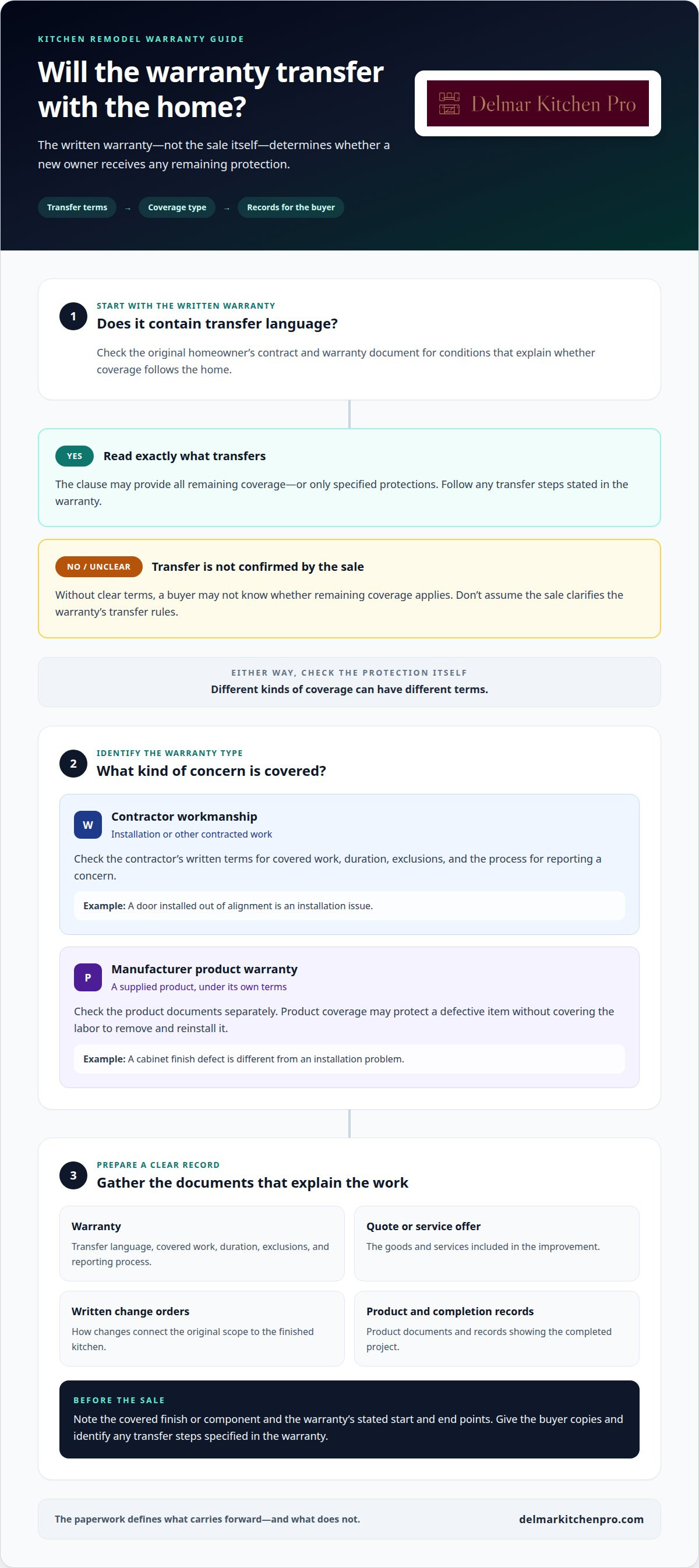
A kitchen remodel warranty may transfer to a new owner, but its written terms determine whether coverage follows the home. The original homeowner’s contract, warranty document, and any transfer conditions are key records. Without clear terms, a buyer may not know whether any remaining coverage applies after the sale.
Read the warranty for its covered work, duration, exclusions, and transfer language. A clause may explain whether the next owner receives all remaining coverage or only specified protections. For example, workmanship coverage and a manufacturer’s product warranty may have different transfer rules. The sale itself doesn’t clarify those terms; the documents do.
A written offer of service or quote should describe the goods and services included in the improvement. Keep it with the signed agreement and warranty so the buyer can identify the work completed. If the project changed, written change orders connect the original scope to the finished kitchen. Those records can help distinguish contracted work from additions or later modifications.
Before listing the home, gather the warranty, quote, change orders, product documents, and completion records in one file. Note the finish or component covered and the warranty’s stated start and end points. Give the buyer copies and identify any transfer steps specified in the warranty. This makes remaining coverage easier to understand without treating a general promise as a guarantee.
For homeowners, transparency means explaining what the written terms provide, not implying every kitchen improvement transfers automatically. If a warranty names the original owner, limits coverage to that person, or states transfer conditions, those words matter. Reviewing the paperwork lets a buyer see the covered work, remaining duration, and any limits before relying on the warranty after closing.
How long a remodeling company warranty lasts
A remodeling company’s warranty doesn’t have one standard duration for every kitchen project. The written terms set the period for the contractor’s coverage and may distinguish workmanship, materials, systems, or structural concerns. For homeowners in San Diego, the practical answer is the duration stated for each type of coverage in the project documents, not a general promise that every part lasts equally long.
Coverage periods can differ
The 2-10 HBW Remodeler’s Home Improvement Warranty illustrates how periods may vary by coverage type: one year for workmanship and materials defects, two years for systems defects, and ten years for the consequences of certain structural defects. These are the terms of that specific warranty, not a universal duration for all remodeling companies. A separate contractor warranty may use different periods and definitions.
Read the start point as carefully as the end date. A document may identify when coverage begins and explain which completed work it covers. That detail matters if a concern appears after installation or near the stated deadline. A faucet’s manufacturer coverage, for example, may have a different period from the contractor’s coverage for installing it.
What the written period means
A longer period doesn’t necessarily cover more types of defects. Exclusions, the reporting process, and available remedies also shape the protection. Keep the agreement, warranty, completion records, and product paperwork together. If renovations include separate phases or written changes to the original scope, preserve those records too. They help connect the covered work with the warranty terms and dates.
For a clear view of kitchen remodel warranty information, identify the duration for each coverage category rather than relying on one headline number. This makes it easier to understand which document applies to a particular issue and whether the concern falls within its stated period. For kitchen construction planning, discuss your kitchen project.
Delmar Kitchen Pro
Delmar Kitchen Pro helps homeowners plan kitchen updates that connect their design choices with the work involved. Whether you’re considering a Luxury Custom Kitchen, Cabinet Reface & Paint, Cabinets, or Counter Options, a clear project scope makes it easier to understand which completed work the written warranty describes.
Turn to Delmar Kitchen Pro when you’re ready to shape a new kitchen or transform existing cabinetry and surfaces. As the project takes form, keep its written scope and warranty terms together so you can distinguish covered work from product-specific coverage. Each document serves a different purpose, and both matter when you need clarity after completion.
Contact Delmar Kitchen Pro to discuss your kitchen project.
Plan Your Next Kitchen Project With Clarity
A remodel is easier to plan when expectations are clear before work begins. Treat kitchen remodel warranty information as one part of the project conversation, alongside the design, materials, and scope. That gives you a clearer basis for deciding what matters in your finished kitchen and how each decision fits your plans.
Before moving forward, consider what you want the space to do, which details are priorities, and how the finished room should feel in daily use. A thoughtful conversation about those goals helps shape a project around your household, rather than simply filling a room with new finishes. Clear decisions at the start make the path ahead easier to follow.
When you’re ready to discuss your kitchen plans, contact Delmar Kitchen Pro. Take the next step at a pace that feels right for you, with your priorities guiding the project from the start.
Frequently Asked Questions
Home renovation warranty: what can I expect?
Expect written terms that explain covered work, exclusions, duration, and how to report a concern. In a renovation involving several trades, the agreement should distinguish the contractor’s work from supplied products. For example, a cabinet installation concern differs from a product defect. Keep the contract and related warranty documents together so you can identify the applicable terms if an issue arises.
If I buy my own appliances or fixtures, who warrants them?
The manufacturer generally provides product warranty terms for an appliance or fixture you purchase, while the contractor’s agreement covers contracted work. These protections can address different issues. For example, a faucet product warranty may cover the faucet itself, while installation concerns relate to the work performed. Keep the product paperwork and remodeling agreement together to clarify which terms apply to a specific problem.
Is a longer warranty always better?
No. A longer period doesn’t necessarily mean broader coverage or a simpler claim process. Review which defects qualify, what exclusions apply, how to report an issue, and what remedy the warranty describes. For example, a longer warranty with narrow coverage may offer less useful protection for a particular concern than clear terms addressing the work you want covered.
What warranties typically cover a kitchen remodel?
A kitchen remodel may involve contractor coverage for workmanship and separate manufacturer coverage for products or materials. The written terms determine which components and defects qualify. For example, installation coverage and a cabinet-part warranty may apply to different aspects of the same problem. Appliances, plumbing, and electrical components can have distinct terms, so identify the work and products addressed by each document.
How long do kitchen remodeling warranties last?
There isn’t one duration for every remodeling company or kitchen project. The contractor’s written warranty sets its coverage period and may use different periods for different types of work. Some states may require remodelers to provide one year of coverage, but requirements vary by location. For a San Diego-area project, the written warranty’s start date and terms clarify the contractor’s stated coverage.
Are kitchen remodel warranties required by law in the United States?
There isn’t one warranty period that applies nationwide. Requirements vary by location, and some states may require remodelers to provide one year of coverage. That requirement is not a universal rule for every U.S. project. For homeowners in San Diego, the project location matters when determining applicable requirements, while the written warranty explains the contractor’s stated coverage and claim process.


