

A matte countertop isn't always a smooth one. Leathered granite countertops have a low-sheen surface with a tactile texture, created by brushing the stone after it has been honed. That texture sets them apart from both reflective polished granite and smoother honed granite.
The appeal is easy to understand: a softer look can feel more relaxed, and the varied surface can help disguise fingerprints and smudges. But texture also affects everyday cleaning, so it’s worth knowing how the finish feels before choosing it. This guide explains how leathered granite is made, how it compares with polished and honed finishes, and what can affect countertop costs, including the stone, fabrication, and design details. You’ll have a clearer sense of whether its appearance and upkeep suit your kitchen before making countertop selections and broader design decisions.
Key Takeaways
- Learn how the textured, matte surface differs in feel and appearance from polished and honed granite.
- Understand how to clean the surface and why its grooves may need extra attention during everyday upkeep.
- See how brushing creates the finish and why the amount of texture can vary.
- Identify the stone, fabrication, and design choices that influence countertop costs.
What Is Leathered Granite?
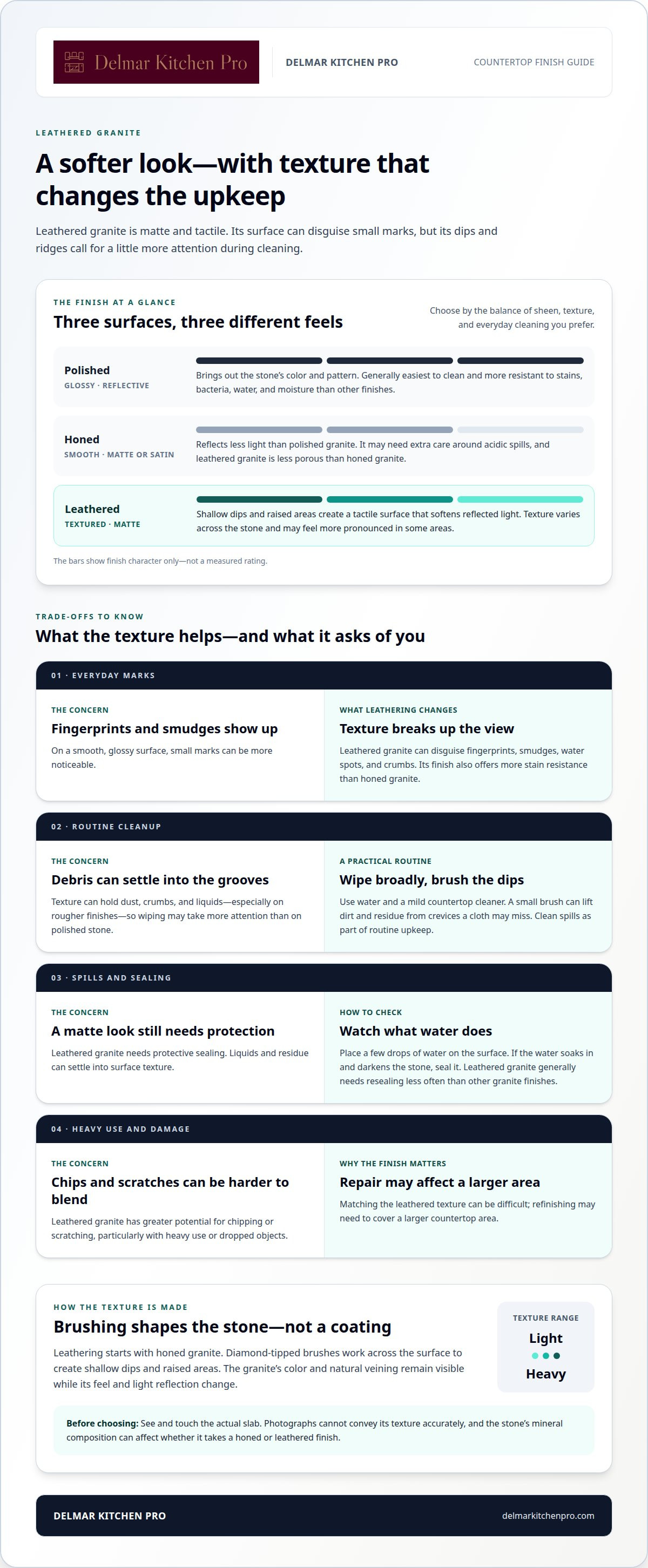
Leathered granite has a textured, matte surface created by brushing the stone after honing. Shallow dips and raised areas give the slab a tactile feel and soften reflected light. Unlike polished granite, it doesn’t appear glossy. The texture varies across the stone, so some areas may feel more pronounced than others. These surface details are part of the finish, not a separate layer applied over the granite.
What colors and types of granite are available with a leathered finish? Granite comes in varied natural colors and patterns, but its mineral content can prevent some slabs from taking a honed or leathered finish. Color alone doesn’t determine whether a particular slab can be leathered. Consider the specific stone, since its mineral composition and texture affect the final result.
What should you look for when choosing and inspecting leathered granite slabs? View and touch the actual slab, because photographs don’t convey its texture accurately. Check the color, pattern, and surface texture across the full piece. The U.S. Environmental Protection Agency describes dimension stone as large, sound blocks, free from blemishes and generally uniform in texture. These qualities can help you assess whether the slab’s appearance suits your design.
For everyday cleaning, wipe the surface with water and a mild countertop cleaner. A small brush can help lift dirt from dips and crevices a cloth may miss. Sealing is also part of care. To see whether the granite needs sealing, place a few drops of water on the surface. If the water soaks in and darkens the stone, seal it. Leathered granite needs protective sealing, though it generally needs resealing less often than other granite finishes. Clean spills as part of routine upkeep, and brush away residue that settles into the texture. This simple routine addresses both the broad surface and its detailed grooves.
Differences between polished, honed, and leathered granite
Granite finishes change a surface’s sheen, texture, and everyday performance. These differences can help you match a countertop to your kitchen’s appearance and cleaning habits.
Finish Comparisons
Polished granite has a glossy, reflective surface that brings out the stone’s color and pattern. Honed granite is smooth but matte or satin, with less reflected light. Leathered granite has a textured matte finish, with ridges and dips noticeable by sight and touch. The distinction matters: smooth and textured surfaces clean differently, and each finish creates a different visual effect.
Polished granite is generally easier to clean and more resistant to stains, bacteria, water, and moisture than other finishes. Leathering makes granite less porous than honed granite, so spills are less likely to penetrate. Honed granite’s finish may affect how it responds to spills. These differences affect how a countertop handles routine kitchen messes, not just how it looks under showroom lighting.
Pros and Cons
Leathered granite countertops can disguise fingerprints, smudges, water spots, and crumbs because their texture breaks up the appearance of small marks. The finish also offers more stain resistance than honed granite. That makes it appealing for kitchens where a glossy surface feels too formal or every smudge seems visible.
There are trade-offs. Texture can hold dust, crumbs, and liquids, especially on rougher finishes, so wiping may take more attention than it does on polished stone. Leathered granite also has greater potential for chipping or scratching, particularly with heavy use or dropped objects. Damage can be difficult to blend because matching the finish may require refinishing a larger countertop area.
Choosing by Use and Appearance
Consider the balance you want between sheen and texture. For a bright, reflective look and straightforward wiping, polished granite is a strong fit. For a smooth, low-sheen surface, honed granite can offer a quieter appearance, and it may need extra care around acidic spills. Leathered granite suits a tactile, matte look, but debris that settles into its texture needs extra attention.
Seeing how the finishes work with cabinetry can clarify the choice. Explore countertop options alongside cabinet colors and kitchen materials to compare the overall effect.
How leathered granite is made
Leathering changes granite’s surface through mechanical texturing rather than adding a coating or separate material. The process starts with honed granite. Diamond-tipped brushes then work across the surface, creating a distinctive pattern of shallow dips and raised areas. The stone’s existing color and natural veining remain visible, while its feel and light reflection change.
The amount of texture can range from very light to very heavy. A lighter finish gives the slab a more restrained feel, while heavier texture makes surface variation more pronounced. These are differences in degree, not separate stone types. Comparing samples by touch shows how brushing changes the feel of a particular granite.
Can existing polished granite countertops be refinished with a leathered finish? Yes. Polished granite can be leathered in a shop, where the stone is processed to create the textured finish. Because leathering textures honed granite, the polished surface must first be worked into the appropriate base finish. The specific granite matters: its mineral content can prevent some slabs from taking a honed or leathered finish.
That material difference is why leathering doesn’t produce an identical result on every slab. Natural color, veining, and mineral composition shape the finish’s appearance. The chosen texture also affects the final feel, from subtle variation to a more pronounced pattern. Inspecting the actual slab reveals how those qualities come together; photographs cannot convey the tactile result accurately.
For an existing countertop, the work means treating the stone’s surface again, not simply applying a new finish over the polish. Leathering polished granite in a shop adds a fabrication step. The result depends on the granite’s suitability and the texture selected. A slab that cannot accept the finish may need a different surface treatment, while suitable granite can be textured to the chosen degree.
Leathered granite countertop costs
The finish is only one part of a countertop’s total cost. The stone, measured surface area, fabrication, and installation all shape the project. Leathering adds a finishing process, so the final amount depends on whether the slab is already leathered or needs further work. A small kitchen and a larger kitchen require different amounts of stone and fabrication.
The cost comparison between pre-leathered and polished slabs can vary by project. This comparison helps separate the material cost from the cost of changing its finish. If polished granite is leathered in a shop, the added processing affects the total. The stone’s hardness and durability influence the work, while the slab’s size determines how much material is needed.
Fabrication details also matter. Edge profiles, sink openings, cooktop cutouts, seams, and unusual countertop shapes can add labor or require more precise planning. A simple straight run has different fabrication needs from a layout with several corners or a waterfall edge. The usable stone and placement of cuts can also affect how efficiently a slab is used.
The price depends on the project and is given after a quote request; key factors include stone selection, countertop dimensions, finish processing, edge details, cutouts, and installation requirements. Compare estimates based on the same scope of work, not just the finish name. One estimate, for example, may include shop leathering and fabrication, while another uses a slab that already has the finish.
For a clearer project plan, gather the countertop layout, preferred granite, and desired edge details. These choices help define the material and fabrication requirements before a quote is prepared. Plan your countertop project with those selections in mind.
Delmar Kitchen Pro: Counter Options
Delmar Kitchen Pro brings countertop choices into a cohesive kitchen plan through its Counter Options. If you’re weighing leathered granite against polished or honed finishes, consider the selection alongside cabinet colors, layout, and the look you want for the room. A stone’s texture and pattern should work with the surrounding surfaces, not in isolation.
For a broader renovation, Counter Options can be considered as part of a Luxury Custom Kitchen or kitchen construction project. If you’re updating existing cabinetry, Cabinet Reface & Paint can help shape the overall design direction. Share your kitchen details and the finish you’re considering so the countertop choice fits the project.
Contact Delmar Kitchen Pro to discuss your kitchen and countertop options.
Make the Finish Part of the Plan
Choose a countertop finish with the kitchen you want to live with every day in mind. The stone should look right beside your cabinetry and suit the room’s overall design, not simply appeal on its own. If leathered granite countertops fit your vision, consider how the surface will work with the cabinet style and colors you’re planning.
Delmar Kitchen Pro can help shape that broader direction through Counter Options, Cabinets, Cabinet Reface & Paint, and Luxury Custom Kitchen projects. Bringing those choices together can help create a cohesive kitchen plan, whether you’re updating existing cabinets or planning a larger transformation. The next step is to discuss your priorities and the look you’re aiming for.
Contact Delmar Kitchen Pro to discuss your kitchen project and explore a clear path forward.
Frequently Asked Questions
What is leathered granite and how is it made?
Leathered granite is natural granite with a brushed, textured matte surface, made by running diamond-tipped brushes over honed stone. The result depends on the slab’s mineral makeup and brushing intensity, so pieces in the same color family can have different textures. Shop refinishing can also create this finish on existing polished granite, provided the stone is suitable for the process.
How does leathered granite compare with honed and polished granite?
Polished granite has the strongest shine; honed granite is smooth and low-sheen, while leathered granite has visible texture. Consider how each finish will look under your kitchen lighting and handle daily cleanup. Glossy stone reflects more light and wipes easily, while texture can disguise minor marks but hold crumbs. Acidic spills can etch honed granite, so your cleanup habits matter too.
How much do leathered granite countertops cost per square foot installed in the U.S.?
Installed cost depends on the slab and the work needed to fit it, not just the finish name. Measured countertop area, stone selection, edge profile, sink and cooktop cutouts, seams, and installation requirements all affect the project scope. For a fair comparison on a U.S. project, assess estimates with the same layout, material, finish processing, and fabrication details.
How durable and stain-resistant is leathered granite?
Granite is heat resistant, and leathering makes the stone less porous, helping spills resist penetration. The finish offers more stain resistance than honed granite, but it isn’t immune to damage. Heavy use or a dropped heavy object can chip or scratch the surface. For example, take care when moving heavy cookware, since matching a damaged textured area can require broader refinishing.
How do you clean and maintain leathered granite countertops?
For everyday cleaning, use water and a mild countertop cleaner. A small brush helps remove residue lodged in grooves that a cloth may miss. After preparing food, clear crumbs from textured areas around frequently used work zones, such as beside a toaster or cutting board. Regular attention to small dips keeps routine cleanup practical without treating the surface like polished stone.
Does leathered granite need to be sealed, and how often?
Yes, leathered granite needs protective sealing, though it generally needs resealing less often than other granite finishes. There isn’t one fixed interval that suits every slab. A water test offers a practical indicator: place a few drops on the surface and watch whether they soak in and darken the stone. If they do, sealing is needed to protect the countertop.


