

Paint may give you the exact color you want, but stain is often more forgiving in a busy kitchen. Among durable kitchen cabinet finishes, stained cabinets tend to resist scratches and wear, while painted cabinets offer more color choices but can chip or show scratches over time. Stain also showcases the wood grain; paint conceals it.
Choosing a finish means balancing appearance with how your kitchen is used. This guide compares painted, stained, glazed, distressed, and custom finishes by look, sheen, upkeep, and lifestyle fit. You’ll also learn how protective coatings and everyday care affect the decision, so you can narrow your options to a finish that suits your home and daily routine.
Key Takeaways
- Choose paint for broad color options and stain to highlight wood grain, then weigh how each finish handles everyday wear.
- Match the finish to your kitchen’s traffic, cleaning habits, and budget rather than appearance alone.
- Sheen affects both the look of cabinet doors and how readily fingerprints, smudges, and scratches show.
- Custom protective coatings can refine the appearance and performance of a finish; the right choice depends on the cabinet material and how the kitchen is used.
Painted, stained, glazed, and distressed finishes
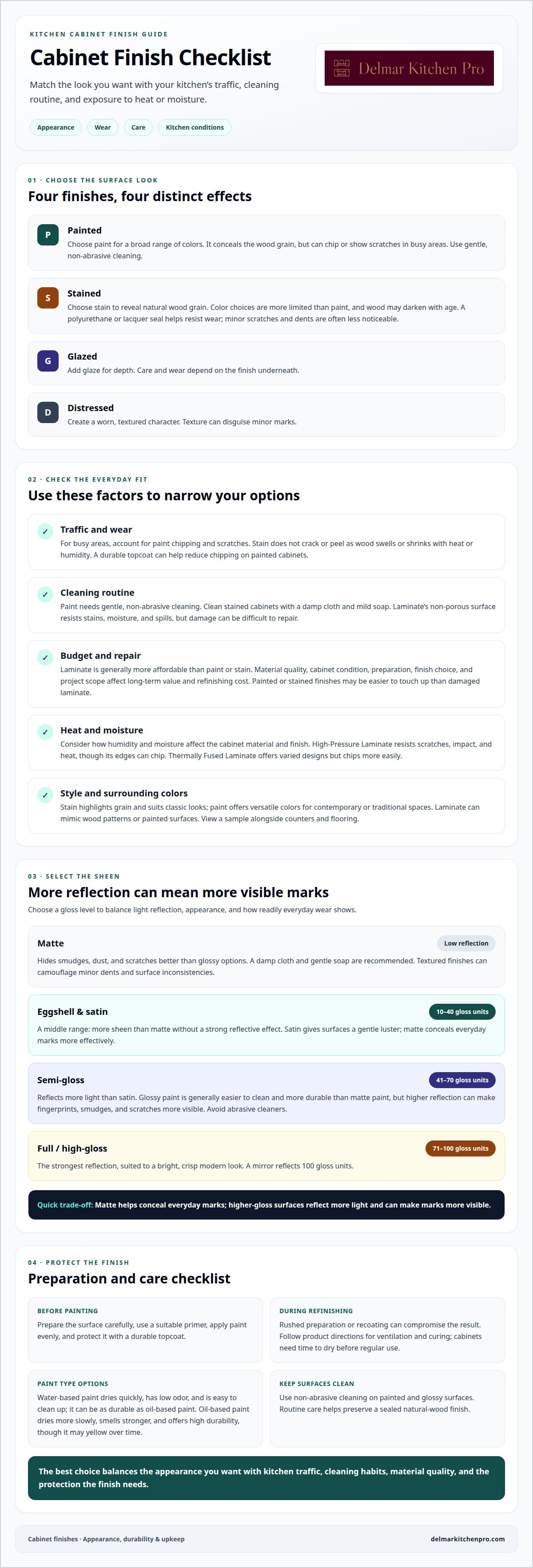
Paint, stain, glaze, and distressing create distinct cabinet looks and wear patterns. Compare the surface, care needs, and application quality before choosing.
Painted Cabinet Finishes
Paint covers the wood grain and comes in a broad range of colors, from contemporary neutrals to traditional shades. High-quality acrylic paint systems with proper primers are recommended, but painted cabinets can chip or show scratches in busy areas. Clean them with a gentle, non-abrasive cleaner and avoid harsh scrubbing. Factory-finished and hand-painted cabinets can both last well; preparation, coating, and protection matter more than the label alone.
Stained Cabinet Finishes
Stain penetrates wood, revealing its natural grain and giving cabinets a traditional appearance. Stain colors are more limited than paint colors, and wood can darken with age. Unlike paint, stain does not crack or peel as wood swells or shrinks with heat or humidity. A polyurethane or lacquer seal helps resist wear, and minor scratches and dents are often less noticeable. Clean stained cabinets with a damp cloth and mild soap.
Water-Based and Oil-Based Paints
Water-based paints dry quickly, have low odor, and are easy to clean up; they can be as durable as oil-based paints. Oil-based paints dry more slowly, have a stronger smell, and offer high durability, though they may yellow over time. Acrylic paint systems with proper primers are another option for painted cabinets. A durable topcoat helps reduce chipping in high-traffic areas.
Preparation and Application Steps
For a longer-lasting finish, prepare the surface carefully, use a suitable primer, apply paint evenly, and protect it with a durable topcoat. Rushing preparation or recoating can compromise the result. DIY refinishing may expose you to paint fumes, and cabinets need time to dry and cure before regular use; follow the product directions for ventilation and curing. Glazing adds depth, while distressed details create a worn, textured look.
| Finish | Appearance | Wear and care |
|---|---|---|
| Painted | Solid colors, grain concealed | Can chip; gentle cleaning |
| Stained | Natural grain visible | Sealed stain resists wear |
| Glazed | Added depth | Depends on underlying finish |
| Distressed | Worn, textured character | Texture can disguise minor marks |
Choose paint for a wide color range, stain to show the wood grain, or glaze and distressing for added character.
Choosing materials based on budget, appearance, and lifestyle
Balance the finish you want with kitchen traffic, cleaning habits, and exposure to moisture or heat. These conditions affect both appearance and upkeep.
Budget Considerations
Laminate finishes are generally more affordable than paint or stain, while material quality and repair needs also affect long-term value. Refinishing cost depends on cabinet condition, surface preparation, finish choice, and project scope; pricing is provided after a quote request. A damaged laminate surface can be difficult to repair, while painted or stained finishes may be easier to touch up.
Appearance and Style
Match the finish to the kitchen’s existing details. Stain suits classic styles that highlight wood grain, while paint offers versatile colors for contemporary or traditional spaces. Laminate can mimic wood patterns or painted surfaces, giving it a broad range of looks. No finish works for every design, so view a sample alongside your counters and flooring to see how the colors and textures come together.
Maintenance Needs
Consider the cleaning routine your household can manage. Laminate’s non-porous surface resists stains, moisture, and spills, making it suitable for frequent wipe-downs, though damage can be hard to repair. Painted surfaces need gentle, non-abrasive cleaning to reduce chipping. A sealed finish helps protect natural wood, and routine care preserves its appearance.
Kitchen conditions matter as much as style. In a high-traffic kitchen, High-Pressure Laminate is a durable choice because it resists scratches, impact, and heat, although its edges can chip. Thermally Fused Laminate offers varied designs but chips more easily. In a humid kitchen, consider how moisture affects the cabinet material and finish. Choose the best-quality option that fits your budget and everyday use.
Matte, satin, semi-gloss, and high-gloss finishes
Sheen changes how cabinet surfaces reflect light and show daily wear. Compare the gloss level with your cleaning habits, kitchen traffic, and preferred look.
Matte Finishes
Matte finishes provide a low-reflection look that can suit understated, modern kitchens. They hide smudges, dust, and scratches better than glossy options, which can help busy cabinets look more even between cleanings. Clean matte cabinets with a damp cloth and gentle soap. Textured finishes also camouflage minor dents and surface inconsistencies, adding another practical option.
Satin Finishes
Eggshell and satin finishes fall between 10 and 40 gloss units, offering more sheen than matte without a strong reflective effect. This middle range works across popular kitchen styles, including classic wood cabinets and painted contemporary designs. Satin gives surfaces a gentle luster, while matte conceals everyday marks more effectively. Choose based on the balance you prefer between subtle reflection and visible wear.
Semi-Gloss Finishes
Semi-gloss falls between 41 and 70 gloss units, reflecting more light than satin. Its smoother, brighter appearance can suit cabinets that need a clean, polished look. Glossy paint is generally easier to clean and more durable than matte paint, but higher reflection can make fingerprints, smudges, and scratches more visible. Use a non-abrasive cloth, since abrasive cleaners can scratch glossy surfaces.
High-Gloss Finishes
Full or high-gloss finishes measure from 71 to 100 gloss units; a mirror reflects 100 gloss units. This sheen creates the strongest reflection and can make a modern kitchen feel bright and crisp. It also shows fingerprints, smudges, scratches, and chipping more clearly than matte finishes. Consider cabinet placement and kitchen traffic before choosing it, then clean with a soft, non-abrasive cloth to protect the surface.
Custom cabinet finishes
A custom finish pairs the cabinet material with the kitchen’s exposure to moisture, heat, and daily cleaning. The right coating can enhance natural wood’s appearance or give engineered surfaces a smooth, consistent look.
For natural wood, sealing matters. Unfinished wood is vulnerable to moisture, warping, and discoloration. Wood veneer also needs sealing and protection from excessive moisture to preserve its appearance. Polyurethane resists water, scratches, and fading, while varnish helps protect cabinets from scratches, heat, and humidity. Sealing solid wood can also help prevent warping.
Protective coatings differ in how they handle kitchen conditions. Catalyzed lacquer forms a hard, chemical-resistant surface that can withstand grease, steam, and cleaning products without yellowing or deteriorating. Conversion varnish chemically bonds to the cabinet surface, creating a protective layer with scratch resistance. Water-based polyurethane stays clearer over time but needs more coats for equivalent protection.
- Thermofoil: Vinyl is heated and vacuum-pressed onto MDF or another engineered-wood core. The finish resists scratching, peeling, and fading, but isn’t heat-resistant.
- Nano-coatings: These can resist fingerprints and smudges, with high durability and minimal maintenance.
- Ceramic-reinforced and industrial coatings: These help protect surfaces near sinks, ovens, and stoves from water and heat exposure.
Compare each finish with the cabinet material and its location. A wood veneer door near a sink needs careful moisture protection, while cabinetry beside an oven faces more heat. Match the coating to the exposure, then consider the appearance you want. Clear polyurethane can preserve visible grain; another finish can create a smoother, more uniform look.
For a tailored result, explore luxury custom kitchen options that bring cabinet materials and finishes into one considered design.
Delmar Kitchen Pro: Luxury Custom Kitchen
Delmar Kitchen Pro can help connect your cabinet finish choice to the wider kitchen design. If your existing cabinets are sound but their appearance needs an update, Cabinet Reface & Paint can refresh the space. For a broader redesign, a Luxury Custom Kitchen brings cabinet selections and Counter Options into the overall plan.
Consider this next step when you want the finish, cabinet style, and surrounding surfaces to work together. Sharing your preferred look and how you use the kitchen can help shape decisions around the project. Explore the Luxury Custom Kitchen offering, or contact Delmar Kitchen Pro to discuss your kitchen.
Make the finish decision part of the kitchen plan
Before settling on a cabinet finish, decide how you want the kitchen to look and function in everyday use. A sample beside your counters and flooring can show how its color and sheen work with the room’s light. Consider which surfaces get handled most, too. This practical check connects the look you want with the care your household can maintain.
The next step is to bring those priorities into the wider design. Cabinet color, sheen, and surrounding materials should feel intentional together, not like separate decisions. If you’re weighing durable kitchen cabinet finishes as part of a larger update, Delmar Kitchen Pro can help you consider Cabinet Reface & Paint or a Luxury Custom Kitchen approach suited to your project in the San Diego area.
Contact Delmar Kitchen Pro about cabinet finishes to discuss your kitchen plans. A clear starting point can make the decisions ahead feel more manageable.
Frequently Asked Questions
What are the other popular cabinet paint options to consider?
For durable kitchen cabinet finishes, consider acrylic, water-based, and oil-based paint systems. High-quality acrylic paint with a proper primer is a recommended option for kitchen use. Water-based paint dries faster, while oil-based paint dries more slowly and may yellow over time. Compare product directions with your cabinet surface, kitchen ventilation, and preferred appearance before selecting a system.
What kitchen cabinet finishes are most durable?
High-Pressure Laminate is a strong choice for cabinets in a high-traffic kitchen because it resists scratches, impact, and heat. Sealed wood finishes can also hold up well, while polyurethane adds resistance to water, scratches, and fading. Among durable kitchen cabinet finishes, the best fit depends on cabinet material and exposure to wear, moisture, and heat. Consider those conditions together.
How do painted, stained, and laminate cabinet finishes compare for durability?
Each finish handles wear differently. Paint provides consistent color but can chip, while stain preserves visible wood grain and can make minor marks less noticeable. Laminate resists moisture and stains, but damaged sections can be difficult to repair. Beside a sink, moisture resistance may matter most; on a frequently bumped door, consider visible wear and repairability.
Which cabinet finish resists scratches, dents, and chipping best?
High-Pressure Laminate resists scratches and impact, though its edges can chip. Harder woods such as hickory, oak, and maple are more resistant to scratches and dents than softer woods. Textured surfaces can help disguise minor dents and everyday wear. Choose according to the damage your cabinets are most likely to face, including direct impacts, surface scratches, or edge wear.
Which kitchen cabinet finishes resist moisture, heat, grease, and stains?
Laminate has a non-porous surface that resists stains, moisture, and spills; High-Pressure Laminate also resists heat. Catalyzed lacquer handles kitchen grease, steam, and cleaning products. Wood veneer needs sealing and protection from excessive moisture. For cabinets near a sink or stove, weigh the specific exposure. Water, heat, and grease place different demands on the finish and its protective coating.
What paint and clear-coat products provide the longest-lasting cabinet finish?
Use a high-quality acrylic paint system with a proper primer for painted cabinets, then protect the surface with a durable topcoat. For wood, polyurethane resists water, scratches, and fading; catalyzed lacquer creates a hard surface that handles grease and steam. Match the paint or clear coat to the cabinet material and kitchen conditions, since different surfaces and exposures call for different protection.


