

What if protecting a luxury kitchen has less to do with stronger cleaners and more to do with a consistent routine? It’s easy to wonder what to wipe, what to leave alone, and how often to check for wear. A luxury kitchen maintenance checklist makes those choices clearer because wood cabinetry, stone counters, metal fixtures, and other finishes can need different care.
This guide lays out a practical rhythm for daily, weekly, monthly, and seasonal upkeep. You’ll learn what to clean and inspect, which early signs of moisture or wear to note, and when routine care may no longer be enough. Follow the care instructions for your specific materials, and use the checklist to protect finishes, fixtures, and cabinetry while recognizing when cabinet work or a broader kitchen update may help.
Key Takeaways
- Use this luxury kitchen maintenance checklist to build a simple care rhythm around daily, weekly, monthly, and seasonal tasks.
- Match cleaning methods to each surface, and check care guidance before using a new cleaner or tool.
- Give cabinets, countertops, fixtures, and equipment focused attention to keep routine care manageable.
- Notice persistent finish damage or recurring moisture early, and recognize when routine cleaning may no longer be enough.
- Understand how cabinet updates and broader kitchen construction can address different levels of visible wear or functional concern.
Luxury Kitchen Maintenance Checklist: What Regular Care Protects
In a finished kitchen, maintenance means cleaning, inspecting, and responding to early signs of wear. It can’t prevent every mark that comes with daily use, but it helps keep finishes presentable, catches changes early, and supports the kitchen’s everyday function. A luxury kitchen maintenance checklist turns those responsibilities into manageable steps instead of leaving you to guess what needs attention.
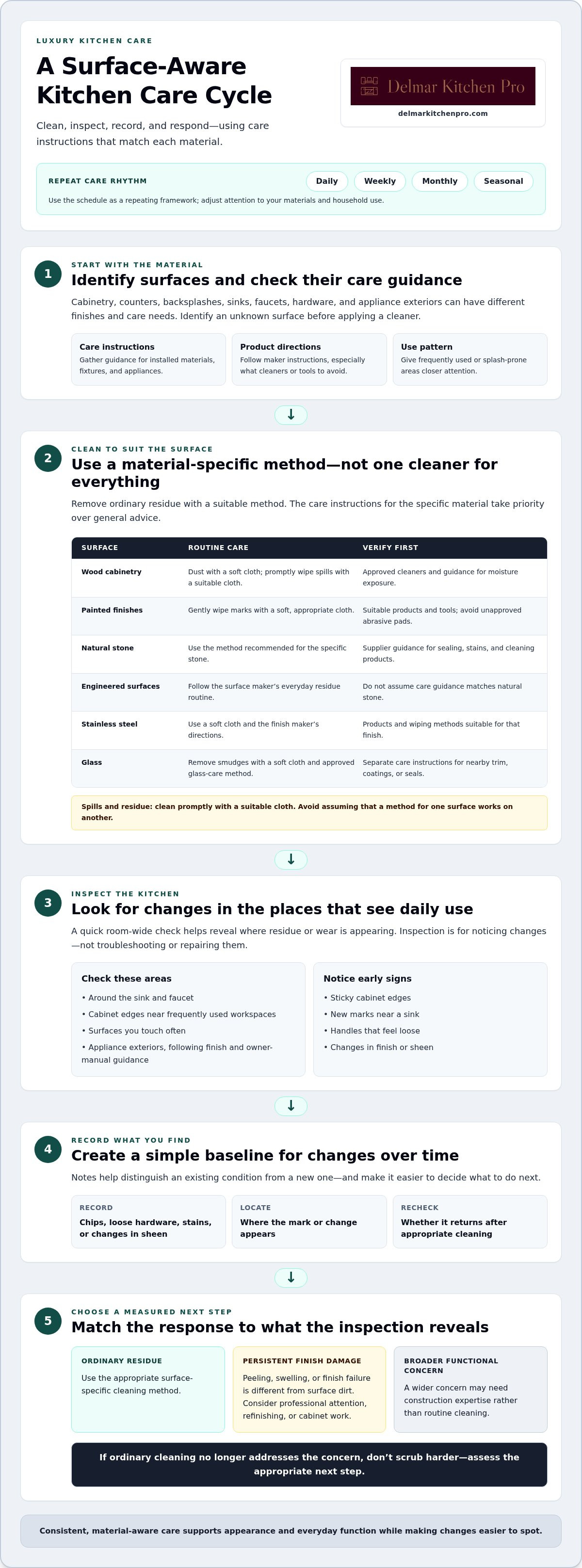
Think of care as a repeating cycle: remove everyday residue with a method suited to the surface, look for changes, and choose a measured next step if something seems different. A sticky cabinet edge, a new mark near a sink, or a handle that feels loose is worth noting. Not every change signals a serious problem, but a clear record helps you decide what to do next.
Which parts of a luxury kitchen need regular attention?
Include cabinetry, countertops, backsplashes, sinks, faucets, cabinet hardware, and appliance exteriors. These elements work together, but may have different finishes and care requirements. Wood, paint, stone, metal, and glass can respond differently to cleaners, moisture, and abrasive tools. Identify the material before cleaning rather than assuming one method suits every surface.
A Kitchen contains connected work surfaces and fixtures, so a quick room-wide inspection can reveal where residue or wear is appearing. Check around the sink and faucet, cabinet edges near frequently used workspaces, and surfaces you touch often. For appliance exteriors, follow the finish and owner-manual care guidance. Keep troubleshooting and repair outside a routine cleaning check.
Cleaning removes ordinary residue; inspection helps you notice changes; timely action means responding appropriately rather than scrubbing harder. Persistent finish damage may call for refinishing or cabinet work, while broader functional concerns may need construction expertise. The checklist helps you recognize that distinction, but it does not replace repair or renovation work.
How to use this maintenance checklist
Before you start, gather care instructions for installed materials, fixtures, and appliances in a digital folder or binder. Product-specific directions take priority over general advice, especially when they identify cleaners or tools to avoid. If you don’t know what a surface is made of, identify it before applying a cleaner.
- Record existing chips, loose hardware, stains, or changes in sheen so you can distinguish an existing condition from a new one.
- Note where a mark or change appears and whether it returns after appropriate cleaning.
- Adjust the routine to your materials and household use, giving frequently used or splash-prone areas closer attention.
Use these notes as a baseline, not a demand for a perfect kitchen. Consistent, material-aware care supports appearance and function while making changes easier to spot. If ordinary cleaning no longer addresses a visible concern, assess the next appropriate step rather than intensifying the cleaning method.
Match Luxury Kitchen Care to Cabinets, Countertops, and Finishes
Care should follow the surface, not a one-cleaner-fits-all rule. Wood, paint, stone, engineered countertop materials, stainless steel, and glass can respond differently to moisture, friction, and cleaning products. Use this comparison as a starting point, then follow the material or product maker’s care instructions. That keeps your luxury kitchen maintenance checklist practical without relying on a universal cleaner recipe.
| Material | Routine care | What to verify |
|---|---|---|
| Wood cabinetry | Dust with a soft cloth and promptly wipe spills with a suitable cloth. | Check the finish maker’s approved cleaners and guidance for moisture exposure. |
| Painted finishes | Wipe marks gently with a soft, appropriate cloth. | Confirm which products and tools the finish can tolerate; avoid abrasive pads unless approved. |
| Natural stone | Clean using the method recommended for the specific stone. | Follow supplier guidance for sealing, stain response, and suitable cleaning products. |
| Engineered surfaces | Use the surface maker’s recommended routine for everyday residue. | Do not assume care or stain guidance is the same as for natural stone. |
| Stainless steel | Use a soft cloth and the finish maker’s cleaning directions. | Verify which products and wiping methods are suitable for the particular finish. |
| Glass | Remove smudges with a soft cloth and an approved glass-care method. | Check whether nearby trim, coatings, or seals have separate care instructions. |
How should you care for luxury cabinets and painted finishes?
Clean spills promptly rather than letting moisture or residue sit on cabinet surfaces. Use a soft, suitable cloth and avoid abrasive pads or harsh products unless the finish maker specifically approves them. For guidance on wood choices and cabinetry, explore this overview of custom wood kitchen cabinets.
Ordinary surface dirt should respond to appropriate cleaning. Persistent peeling, swelling, or finish failure is different. Don’t try to correct it by scrubbing harder. Note the affected area and consider whether the finish needs professional attention.
What changes when countertops are stone or engineered surfaces?
Keep natural stone and engineered surfaces in separate care categories. Stone types can have different care needs, while engineered countertops follow the instructions for their specific product. Use the supplier’s directions for cleaning, sealing, and stain response rather than assuming a method that works on one counter is suitable for another. For food-contact areas, the FDA’s Food Safety in Your Kitchen guidance offers additional kitchen-safety information.
If cleaning no longer resolves worn or damaged cabinet finishes, a finish update may be worth considering. Cabinet refacing is one approach to changing existing cabinetry. Delmar Kitchen Pro provides cabinet refacing and painting, as well as cabinet and kitchen construction expertise for visible wear or broader functional concerns.
Choose the Right Care for Fixtures, Hardware, and Kitchen Equipment
Fixtures and equipment need attention, but more force is not better care. A soft cloth and a cleaner approved for the specific material may take longer on stubborn residue than an abrasive pad or improvised solution. That measured approach helps avoid scratching, dulling, or affecting a finish. Keep appliance troubleshooting outside the cleaning routine: inspect visible conditions and use the owner’s manual for maintenance steps.
Never assume one cleaner is safe for every kitchen finish. A product that suits one material may dull, scratch, or damage another. Check the manufacturer’s instructions before trying a new product. Don’t combine cleaners or use an unapproved method to speed up the job. Keep this rule beside the material-specific guidance in your luxury kitchen maintenance checklist.
How do you maintain sinks, faucets, and cabinet hardware?
After regular use, dry splash-prone areas if the fixture maker’s care guidance permits. Use gentle cleaning methods approved for the sink, faucet, and hardware finish. The same cleaner may not suit every component, even when they sit side by side. Avoid abrasive pads and harsh or improvised products unless the manufacturer says they’re suitable.
As you clean, look closely at the parts you touch and use every day. Check whether a handle feels loose, whether you see corrosion or mineral deposits, and whether a faucet or cabinet pull has changed in operation. Note what you observe rather than forcing a stiff part or attempting an adjustment you’re unsure about. A change that persists after suitable cleaning deserves follow-up.
What can homeowners safely check around ventilation and appliances?
Keep routine checks visual and follow each appliance’s owner manual for exterior cleaning and homeowner maintenance. Wipe accessible surfaces only as directed. Don’t remove covers, reach into equipment, or attempt repairs based on a symptom alone. The manual provides cleaning steps for the specific appliance, while your observations can help identify when something goes beyond routine upkeep.
Pay attention to changes such as reduced airflow, unusual odors, or visible buildup around accessible areas. Record when you noticed the change and whether it continues, but don’t assume you know what caused it. If an odor persists, airflow remains reduced, or buildup is inaccessible, don’t disassemble the equipment. If you’re concerned about immediate safety, stop using the affected equipment and follow the manufacturer’s safety instructions.
Cleaning can address accessible residue, but it can’t establish whether a hidden component is working properly. That distinction keeps maintenance within a homeowner’s safe limits. Use the same judgment with hardware and fixtures: clean gently, observe carefully, and follow up when a change remains or affects normal use.
Follow a Daily, Weekly, Monthly, and Seasonal Kitchen Care Schedule
A useful schedule should fit your household and the materials in your kitchen. A busy prep area may need more frequent wipe-downs than a rarely used counter, while specific finishes may have care instructions that set different limits. Use the rhythm below as a starting point, then adjust tasks to the maker’s guidance and your kitchen’s actual use. The goal is a repeatable routine, not a rigid rulebook.
What belongs on a daily and weekly kitchen checklist?
Keep daily care brief. Address spills as they happen and wipe food-preparation surfaces with a method approved for that material. During normal cleanup, look for standing water around sinks, faucets, and nearby cabinet edges. Dry these areas if the surface maker’s instructions allow it. Clearing counters after use also makes new marks or changes easier to see.
- Daily: Clear food residue and promptly clean spills using suitable materials and methods.
- Daily: Check around the sink for standing water and wipe it up when appropriate for the surfaces.
- Weekly: Clean frequently touched cabinet fronts, hardware, faucet surfaces, and appliance exteriors according to their care instructions.
- Weekly: Clear enough of the counter to inspect visible edges and the areas around the sink.
Keep the weekly pass manageable. You don’t need to move every item or deep-clean every surface on the same day. Focus on areas that see regular use, and don’t apply a cleaner simply because it works elsewhere in the kitchen.
What should a monthly or seasonal kitchen review include?
Once a month, take a deliberate look around the room. Check visible caulk lines, cabinet hardware, counter edges, and sink areas for changes. Notice leaks or moisture, movement in handles or doors, finish changes, and unusual wear. This is an observation check, not a diagnosis. Record what you see and where it appears, especially if a change returns after routine cleaning.
- Monthly: Look over cabinet doors and drawers for movement, loose hardware, or changes in the finish.
- Monthly: Inspect accessible counter edges, sink surrounds, and visible caulk lines for new gaps, stains, or moisture.
- Seasonally: Review exterior-facing openings and nearby finishes, particularly if your home is exposed to coastal air. Follow the relevant material instructions before cleaning deposits or treating a surface.
- Seasonally: Revisit care notes and update your record if a stain, chip, or other change has appeared.
A kitchen care routine works best when small checks become part of ordinary cleanup, with a brief monthly review to catch changes worth following up on. For homeowners in San Diego, Encinitas, Rancho Santa Fe, La Jolla, and Del Mar, Delmar Kitchen Pro provides cabinet and kitchen construction services for updates beyond routine care.
Know When Luxury Kitchen Maintenance Needs Professional Attention
Routine care has limits. If a mark remains after cleaning with a method approved for the surface, or a finish keeps changing, more scrubbing may not help. Persistent stains, peeling paint, swelling, loose components, and recurring water exposure are signs to pause, record what you see, and consider whether the concern needs professional attention. They don’t automatically mean a renovation is needed, but they are worth looking into beyond routine cleaning.
When is routine cleaning no longer enough?
Take note when a concern returns or continues to change. A cabinet finish that peels, a component that stays loose, or moisture that repeatedly appears near a sink deserves follow-up. Avoid covering a damaged area or using aggressive cleaners before you understand the surface and its care instructions. A clear record of where the issue appears and when you notice it can help guide the next step.
Keep the response measured. One stain or small chip may be cosmetic, while persistent moisture or movement may call for a closer look. Don’t assume the cause from appearance alone. If cleaning doesn’t resolve the concern, or normal use is affected, routine maintenance may no longer be enough. The right next step depends on the condition and the scope of work needed.
How can Delmar Kitchen Pro help with worn cabinets or a larger update?
For cabinetry that needs a visual update, cabinet refacing and painting can refresh existing cabinets without replacing the entire kitchen. Broader construction work may suit a kitchen that needs a more extensive transformation. The distinction is practical: a finish update focuses on the cabinets, while a larger project can address wider kitchen needs. Delmar Kitchen Pro brings more than 25 years of industry experience to cabinet and kitchen projects.
If you’re weighing a cabinet update against a broader change, the luxury kitchen design and construction guide offers context for thinking through a larger project. Your notes from the luxury kitchen maintenance checklist can help clarify what has changed and which areas you want to address. Describe the visible wear or functional concerns you’ve observed without trying to diagnose them yourself.
Professional input can bring the next steps into focus when routine care no longer addresses the issue. For worn cabinetry, cabinet refacing or painting may be relevant; for broader needs, custom kitchen construction may be the better direction. Match the scope to the condition and your goals, rather than assuming every mark calls for a renovation.
If you’re ready to discuss the condition of your cabinets or a larger kitchen update, discuss your kitchen project with Delmar Kitchen Pro. A clear conversation can help you consider a practical path forward.
Make Your Kitchen Care Routine Work for You
Turn what you’ve learned into a routine that fits the way your household uses the kitchen. Keep material-care instructions close at hand, choose a regular moment for brief inspections, and update your notes when a surface or fixture changes. A luxury kitchen maintenance checklist should be a practical reference, not another demanding task on your schedule.
As your needs change, your kitchen may need more than routine attention. Persistent cabinet wear or a desire to rethink how the space works can be a reason to explore professional cabinet refacing, painting, or a broader kitchen project. You don’t need every detail decided before considering those options.
When you’re ready to consider a thoughtful next step, discuss your kitchen project with Delmar Kitchen Pro. Share what you’ve noticed and what you’d like to improve to start a conversation about a suitable path forward.
Frequently Asked Questions
Can I use vinegar on luxury kitchen countertops?
Vinegar isn’t suitable for every luxury countertop. Whether it’s safe depends on the exact material and its care instructions, and the maker may warn against acidic cleaners. Check the surface supplier’s maintenance guidance before using vinegar, and choose an approved cleaner instead if needed. If a spill or cleaner has already affected the counter, don’t scrub aggressively. Follow the material maker’s advice for stains or surface damage.
What should I do if water gets inside a cabinet?
Remove standing water promptly and gently dry the accessible area with a soft cloth. Don’t apply heat or dismantle the cabinet to reach hidden areas. Watch for swelling, persistent dampness, an unusual odor, or repeated water exposure, and note where the moisture appears. The right response depends on the cabinet’s construction and how much water reached it. Check product guidance, and if visible changes continue, have the condition assessed.
Can steam cleaning damage luxury kitchen cabinets?
Yes, steam may affect some cabinet finishes, adhesives, joints, or wood components, so don’t assume it’s safe. Follow the cabinet maker’s care guidance, and avoid steam unless the manufacturer explicitly approves it for that exact finish. For ordinary cleaning, use a compatible method and keep heat and moisture away from seams and edges. If you’re unsure which finish is installed, identify it before choosing a cleaning method.
How can I remove a stain from a luxury kitchen surface without making it worse?
Identify the surface before treating the stain, then consult its care instructions. Avoid abrasive pads, strong chemicals, and mixing cleaners, since a method suitable for one material may harm another. If the manufacturer allows it, test an approved product in an inconspicuous area first, then follow its directions carefully. If the stain remains, stop rather than escalating to a stronger treatment that could change the surface finish.
How do I know whether cabinet damage is cosmetic or a sign of moisture?
A single surface mark may be cosmetic, but swelling, recurring dampness, peeling, or changes near plumbing deserve closer attention. Appearance alone can’t confirm the source. Note where the change occurs, when you first see it, and whether it returns after the area has been dried. Keep the area dry without covering the damage. If the condition persists or worsens, have it assessed rather than assuming it needs only a touch-up.
Should I use the same cleaner throughout a luxury kitchen?
No. Don’t assume one cleaner is compatible with cabinets, natural stone, engineered countertops, metal finishes, and glass. Each material may have different care requirements, even if the surfaces are close together. Keep product instructions for installed materials accessible and choose cleaners accordingly. If you don’t recognize a surface or finish, avoid experimenting with household mixtures. Consult its manufacturer’s guidance before cleaning so you don’t turn a small mark into a finish problem.
Does a luxury kitchen need professional maintenance every year?
There’s no universal annual schedule that applies to every kitchen. For homeowners in San Diego, Encinitas, Rancho Santa Fe, La Jolla, and Del Mar, a sensible plan starts with routine checks, the care instructions for each material, household use, and visible changes. Follow any maintenance interval specified by a product maker, and address new concerns as they appear. If regular care is working and nothing unusual is developing, a yearly professional visit isn’t automatically necessary. Let the condition of the kitchen guide the next step.


