

Replacing your cabinets may be the wrong first move. If the cabinet boxes are sound and the kitchen layout works, kitchen cabinet restoration may offer a durable way to refresh the room without replacing everything. The key is figuring out whether the cabinets are worth keeping or whether hidden damage calls for a larger change.
It’s reasonable to worry that a cosmetic update won’t last, or that a kitchen project will bring more disruption than expected. The right choice depends on the condition of the boxes and finish, how well the current layout serves your household, and what you want to change. Restoration, refinishing, refacing, and replacement address different needs.
This guide will help you assess those factors, compare practical options, and choose an approach for your San Diego-area kitchen. You’ll also learn what to consider when planning a professionally managed project, from evaluating the cabinets to coordinating the finished look. Delmar Kitchen Pro offers cabinet refacing and painting alongside broader kitchen construction options, so the plan can account for both the cabinets you have and the kitchen you want.
Key Takeaways
- Start kitchen cabinet restoration by checking the cabinet boxes, finish, layout, and your goals, rather than assuming replacement is necessary.
- Learn how solid wood, veneer, MDF, and plywood can affect restoration options, and why surface wear differs from structural damage.
- Compare repair, refinishing, refacing, and replacement to understand what changes with each approach and what may remain in place.
- Plan with fewer surprises by documenting damage, the cabinet layout, and the visual changes you want before choosing the project scope.
- See how Delmar Kitchen Pro’s cabinet refacing and painting can fit into broader kitchen projects in San Diego and nearby communities.
Kitchen Cabinet Restoration Starts with the Condition of What You Have
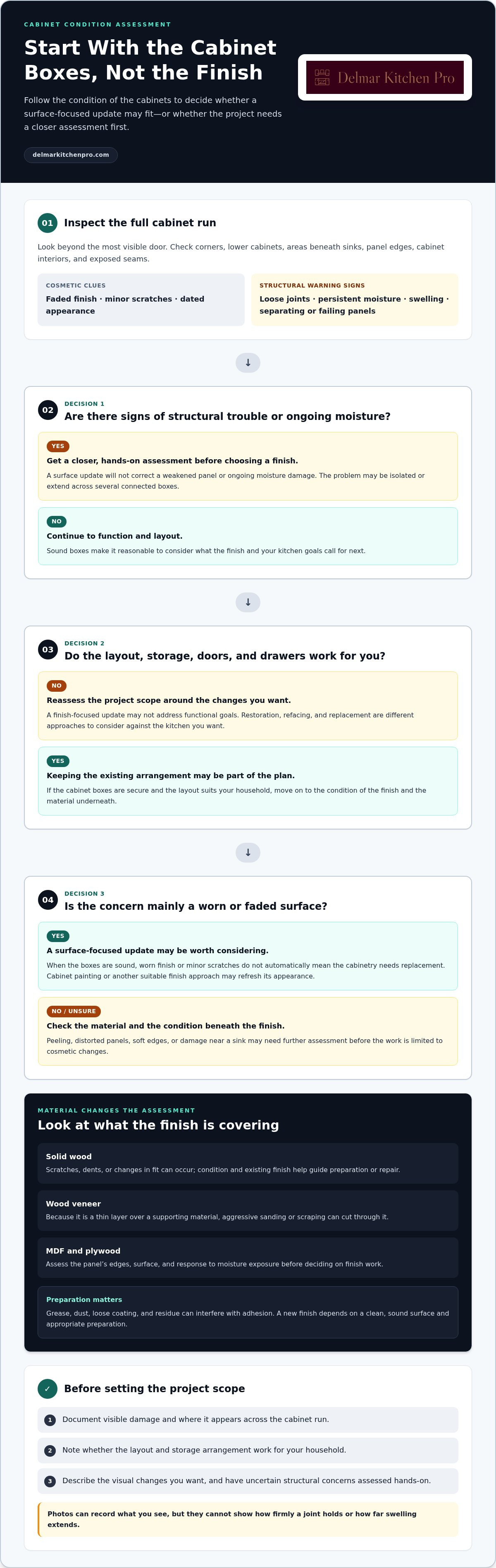
Kitchen cabinet restoration means improving existing cabinetry that is still suitable to keep. Depending on its condition, the work may involve addressing limited damage, refreshing the finish, or choosing a professional service such as cabinet painting or refacing. The right scope depends on four things: the integrity of the cabinet boxes, the state of the finish, whether the layout works, and what you want the kitchen to look and function like.
Cosmetic wear changes how cabinets look; structural damage affects whether they can reliably serve their purpose. A faded finish or minor scratches don’t automatically mean the boxes need replacement. A surface update may improve appearance, but it won’t correct a weakened panel or ongoing moisture damage.
Cabinets include more than doors and drawer fronts. Their boxes, panels, shelves, hardware, and finishes all contribute to how they function and look. A general overview of kitchen cabinet construction and components can help you understand what you’re looking at, but determining what can be retained requires examining the actual cabinetry.
Which signs suggest cabinets may be suitable for restoration?
Worn or faded finishes, minor scratches, and a dated appearance are often cosmetic concerns. They may be good reasons to consider an update, especially when the cabinet boxes feel secure and the doors open and close properly. If the kitchen layout already suits your household, keeping the cabinetry may preserve a functional arrangement while changing its appearance.
Inspect the entire cabinet run, not only the most visible door. Check corners, lower cabinets, areas beneath sinks, and panel edges. A thorough evaluation considers how the cabinets hold together as well as how they look. One attractive section doesn’t establish that every box is sound.
Which warning signs call for closer assessment?
Loose joints, persistent moisture damage, swelling, and cabinet-box panels that are separating or failing deserve closer attention. Check especially near plumbing and around edges or seams that may have been exposed to moisture. These signs don’t automatically mean every cabinet must be replaced, but they should be understood before choosing a finish or setting the project scope.
Damage can be isolated or widespread. A problem confined to one panel may call for a different plan than deterioration across several connected boxes. Photos can document what you’ve noticed, but they can’t show how firmly a joint holds or how far swelling extends. A hands-on assessment helps distinguish visible surface damage from a deeper concern.
Before settling on a cosmetic update, consider whether the storage arrangement works and whether the doors, drawers, and boxes function as expected. If the boxes are sound but the finish is tired, a surface-focused approach may make sense. If there are signs of structural trouble, address those first. A careful evaluation gives you a more reliable basis for comparing restoration options and choosing a finish that suits the condition underneath.
How Cabinet Materials and Damage Affect Restoration Results
A finish can look worn while the material beneath it remains sound, or it can look intact while hidden damage affects the cabinet’s strength. Kitchen cabinet restoration works best when the material, existing finish, and condition are considered together. The cabinet’s material and condition determine which restoration method is suitable and how carefully the surface must be prepared.
Start by distinguishing a finish problem from a substrate or box problem. Peeling paint, faded stain, and surface scratches affect appearance. Swelling, soft or crumbling edges, and panels that no longer hold together point to damage beneath the finish. Covering those signs with a new coating won’t address the cause.
How do wood, veneer, and engineered panels respond differently?
Solid wood can show scratches, dents, or changes in fit as the material responds to its environment. Its condition and existing finish help determine the appropriate preparation or repair. Wood veneer is a thin layer over a supporting material, so sanding or scraping too aggressively can cut through it. MDF and plywood also need individual assessment. The panel’s edges, surface, and response to moisture exposure affect whether it’s ready for finish work.
Why preparation and finish condition matter
A new finish depends on a clean, sound surface. Grease near cooking areas, dust, loose coating, and residue can interfere with adhesion. Preparation may involve cleaning, addressing surface defects, and preparing the existing coating so the new finish can be applied evenly. Peeling or an unknown prior coating calls for care. Applying another layer without understanding the surface can lead to an inconsistent result.
Moisture deserves particular attention. A swollen edge on an engineered panel, for example, may not respond to finish work in the same way as a scuffed area on solid wood. The affected section may need further assessment before the project is limited to cosmetic work. Don’t assume every mark signals a failing cabinet, but don’t treat every damaged area as a surface-only issue either.
For a useful first look, inspect door fronts and drawer faces alongside cabinet interiors, exposed edges, and areas near sinks. Note where the finish is lifting, whether panels appear distorted, and whether the same issue appears in several places. This record helps clarify what needs attention and what may simply need a refreshed finish.
Durability depends on the material, the quality of the preparation, the selected finish, and everyday use. No single coating or process suits every cabinet. A careful assessment can guide a tailored plan, including professional cabinet refacing and painting as part of a broader kitchen update. The goal is a finish that suits the surface beneath it, not a quick cover-up.
Cabinet Restoration vs. Refacing, Repainting, and Replacement
These terms describe different scopes of work, not interchangeable names for the same update. Kitchen cabinet restoration is a broad way to describe improving existing cabinetry. The practical choice depends on what needs to change, what can remain, and whether the cabinet boxes are suitable to keep.
| Approach | What changes | What remains | May suit |
|---|---|---|---|
| Repair | A damaged or loose component is addressed. | Most cabinets and their finish remain as they are. | Localized damage with otherwise serviceable cabinetry. |
| Refinishing or repainting | The cabinet surface or color is refreshed. | Cabinet boxes, doors, and layout generally remain. | Sound cabinetry with a finish or appearance that needs updating. |
| Refacing | Visible cabinet components or surfaces are updated. | Suitable existing cabinet boxes and the general layout remain. | Boxes that are in good condition when a more substantial visual change is wanted. |
| Replacement | Cabinetry is removed and new cabinets are installed. | Depending on the project, the kitchen layout may be retained or changed. | Widespread cabinet damage or goals that call for a broader layout change. |
When can repair or refinishing be a practical route?
Repair addresses a specific problem, such as a loose component or damaged section. Refinishing changes the cabinet surface; repainting gives it a new painted appearance. Neither approach automatically changes the layout or replaces the cabinet boxes. These options may fit when the underlying cabinetry is suitable to keep and the main goal is to improve its condition or appearance.
Set expectations around what the cabinets can support. The result depends on the existing material and finish, the preparation required, and how closely the desired appearance matches the cabinet’s condition. A finish update won’t correct a structural issue, while a limited repair won’t transform the entire look of a kitchen. Defining your goal first helps keep the scope clear.
When might refacing or replacement fit better?
Refacing updates visible cabinet surfaces or components while retaining suitable boxes. It can make sense when the cabinets are sound but a finish-only change wouldn’t deliver the visual update you want. For a closer look at what the work involves, explore this cabinet refacing guide.
Replacement may be a better fit if deterioration affects many cabinets, or if the current arrangement doesn’t serve the kitchen and the project calls for a layout change. It also allows the cabinetry to be considered as part of a broader kitchen construction project. The choice isn’t simply “keep or replace.” It’s about matching the work to the cabinets’ condition and the result you want.
Painting is one possible finish update, while the right scope depends on the whole project. For a separate discussion of professional painting costs, see the professional cabinet painting cost guide.
How to Plan a Cabinet Restoration Project with Fewer Surprises
A clear plan connects what you want from the kitchen with the work the existing cabinets need. Before settling on a finish or scope, record the current layout, visible damage, and changes you hope to see. A few notes and well-lit photos make decisions easier to compare and help keep the project focused.
Use this sequence to organize your thinking:
- Define your goals. Decide whether appearance, damaged components, storage, or layout is the main concern.
- Assess the cabinets. Document worn areas, loose parts, and signs that need closer attention.
- Select the scope. Separate finish work from repairs, refacing, or broader construction.
- Plan the finishes. Consider cabinet color or finish alongside counters, hardware, flooring, and nearby surfaces.
- Coordinate the work. Plan how the kitchen will function while cabinet contents are cleared and access to storage is limited.
Set the scope around function and appearance
Be specific about the outcome you want. If the cabinets work well and the layout suits your household, keeping that arrangement may limit the project to the areas that need attention. Changes to storage or kitchen structure can broaden the scope. For a project that reaches beyond the cabinets, this guide to luxury kitchen design can help you consider the room as a whole.
Design choices should work together. A cabinet finish can look different beside a warm countertop than it does beside a cooler one. Hardware affects the overall impression, while flooring and nearby finishes shape the palette. Gather samples or reference images, then consider them together under the kitchen’s lighting before making final selections.
Prepare the kitchen and coordinate project decisions
Before work begins, clear cabinet contents and decide where frequently used items will go. Plan for temporary limits on access to kitchen storage, and keep essentials easy to reach elsewhere. Coordinating decisions about finish, hardware, and countertops can help reduce last-minute changes and keep the design consistent.
For broader changes, Delmar Kitchen Pro brings cabinet refacing and painting together with custom kitchen construction and countertop options. The scope can be tailored to the existing kitchen and the result you have in mind. Learn about professional cabinet painting as one option for a kitchen cabinet restoration project.
Professional Cabinet Restoration in San Diego and Nearby Communities
A cabinet project should start with the kitchen in front of you, not a one-size-fits-all solution. Delmar Kitchen Pro provides professional cabinet refacing and painting as part of its broader kitchen construction services. The company’s work is backed by more than 25 years of industry experience, with a licensed contractor holding License #892702.
That broader perspective can help connect cabinet decisions with the rest of the room. A finish update may be the main goal, or the cabinets may need to be considered alongside custom kitchen construction and countertop options. The right direction depends on the existing cabinetry, how you use the kitchen, and the changes you want to make. Scope and material choices are tailored to the individual project.
What homeowners can expect from a considered restoration plan
A considered plan starts with understanding the cabinet condition and your priorities. It brings the desired appearance and the kitchen’s practical needs into the same conversation. Cabinet refacing or painting may suit the project, while broader construction options can be considered if your goals reach beyond the cabinet surfaces. The plan should reflect the actual kitchen and the result you want.
Coordination matters in the details as well as the overall scope. Cabinet finishes sit beside countertops, flooring, walls, and hardware. A choice that looks appealing on its own may feel different beside those surfaces. Thinking through the combination early helps create a more cohesive direction and prevents finish decisions from being made in isolation.
Delmar Kitchen Pro serves homeowners in San Diego, Encinitas, Rancho Santa Fe, La Jolla, and Del Mar. Local projects differ in layout, cabinet condition, and design goals, so planning should reflect the home and the intended result. The aim is to identify which options fit the kitchen and how the selected work relates to the larger project.
A local next step for Del Mar-area homeowners
If you’re in Del Mar or a nearby community, professional guidance can help turn a broad goal for kitchen cabinet restoration into a clear direction. Sharing what you hope to change, along with photos or notes about the existing cabinets, gives the conversation a practical starting point. From there, the cabinet work can be considered in context with the kitchen you want.
For a focused discussion about your cabinets, connect with the Delmar Kitchen Pro team.
Choose the Next Step That Fits Your Kitchen
A useful next step is to clarify what you want your kitchen to do and how you want it to feel. Think beyond the cabinet finish: consider how you use storage, whether the current layout serves you, and which details you want to preserve. These priorities can shape a kitchen cabinet restoration plan around your home rather than a one-size-fits-all makeover.
You don’t need to settle every design choice before moving forward. A thoughtful discussion can connect your goals with a practical scope, whether that means refreshing the cabinets or considering a broader kitchen update. Delmar Kitchen Pro brings cabinet refacing and painting into its wider kitchen construction work, with planning tailored to the project.
Discuss your kitchen cabinet restoration project with Delmar Kitchen Pro and take the next step toward a kitchen that feels right for you. A sound plan starts with your needs and the condition of the cabinets.
Frequently Asked Questions
Is kitchen cabinet restoration worth it?
It can be worthwhile if the cabinets still serve your needs and the planned work addresses the issues you care about. For a San Diego-area kitchen with a workable layout, updating existing cabinets may help you avoid changing parts of the room that function well. Consider how long you expect to keep the home, whether the storage meets your needs, and whether a refreshed appearance would feel like a meaningful improvement.
Can damaged kitchen cabinets be restored?
Some damaged cabinets can be restored, particularly when the problem is limited to a component or surface and the surrounding structure remains sound. A loose door, for example, is different from a cabinet box with widespread deterioration. If moisture is involved, the source and extent of the damage matter too. A close assessment can show whether targeted work is practical or a broader cabinet change makes more sense.
How long does kitchen cabinet restoration take?
There isn’t one reliable duration for every project. The schedule depends on the number of cabinets, their condition, the chosen scope, and the preparation and finishing work involved. Painting, refacing, and projects that include cabinet repairs have different steps. Discuss the expected sequence and how the kitchen will be affected during the work, including when you’ll need to clear cabinets or plan around reduced storage access.
What is the difference between cabinet restoration and refacing?
Restoration is a broad term for improving existing cabinets through suitable repair or finish work. Refacing is a more specific approach that updates visible cabinet components while retaining boxes that are suitable to keep. The distinction helps set expectations: refacing changes more than a simple paint refresh, but it doesn’t necessarily replace the cabinet interiors or alter the kitchen’s footprint.
Can you restore cabinets without changing the kitchen layout?
Yes. Painting, refinishing, repair, and refacing can often be planned around the existing cabinet arrangement, so the kitchen footprint stays the same. This can suit a homeowner who likes the current locations of the sink, cooking area, and storage but wants a different cabinet appearance. If better access or storage is the priority, consider whether that goal can be addressed within the existing layout.
Does cabinet restoration include countertops?
Not automatically. Cabinet work and countertops are distinct parts of a kitchen project, though they can be planned together for a coordinated result. If you’re considering a new counter, decide whether it should remain in place or be part of the broader update, since that choice can affect project coordination. Delmar Kitchen Pro offers counter options alongside cabinet and kitchen construction services.
How do I know if my cabinet boxes are strong enough to keep?
Look beyond the door fronts. Check whether shelves sit securely, doors stay aligned, and box corners or interior panels show separation, swelling, or soft areas. Open and close drawers and doors to notice shifting or looseness, but treat these checks as clues, not a final diagnosis. A professional assessment can examine the cabinetry in place and help determine whether keeping the boxes is a sound plan.


