

The finish matters, but the preparation underneath matters just as much. Professional cabinet painting in Del Mar depends on selecting suitable paint and carefully preparing, priming, and applying it to each surface for a smooth, durable result. Coastal sun, moisture, and salt air make thoughtful material and process choices especially relevant for local kitchens and bathrooms.
It’s understandable to want a refreshed look without replacing cabinets that are still in good condition. A lasting finish takes more than a fresh coat of paint: cleaning, surface preparation, primer, and careful application all affect how cabinets look and wear.
This guide explains what cabinet painting involves, how paint and application methods affect the finish, and which details matter when planning a project. You’ll also learn when painting makes sense for existing cabinetry and how to plan your next step with clear expectations.
Key Takeaways
- Choose cabinet paint suited to cabinetry and the demands of the room; product choice alone cannot make up for poor preparation.
- Clean and prepare surfaces carefully, then prime and spray with attention to even coverage and a smooth finish.
- Consider how kitchen and bathroom use, moisture, and light affect the finish you want and how you care for it.
- Compare contractors by the details of their process and the substance of their reviews, not by appearance alone.
- Painting can refresh sound cabinets, while refacing or new cabinetry may better fit a project that calls for a broader change.
Cabinet paint products and durability
For professional cabinet painting in Del Mar, durability depends on the paint system and the condition of the cabinet surfaces. Coastal moisture, salt air, and sunlight make careful product selection and preparation especially important.
Durable Cabinet Paint Finishes
Cabinet finishes need to withstand frequent contact around pulls, doors, drawer fronts, and work areas. Compare sheen and texture in the room’s actual lighting, then consider how readily fingerprints and everyday marks will show. A smooth, even finish depends on matching the paint and primer to the prepared surface, not simply choosing a color that looks right on a sample.
Del Mar’s coastal conditions can affect kitchens and bathrooms in different ways. Cabinets near a sink, for example, face regular splashes, while sunlit doors may get stronger light exposure. Discuss these locations when selecting a finish with Delmar Kitchen Pro. Cabinet material, existing coating, and wear along edges or corners also affect which preparation and paint system suits the project.
Compare painting with refacing or replacement by assessing the cabinet boxes, doors, and layout. Painting can refresh sound cabinetry while retaining its structure. Refacing updates visible cabinet surfaces, while replacement suits plans that call for new cabinets or a different configuration.
Cabinet size and condition, finish choice, and the amount of repair and preparation all affect painting cost. The cost depends on the project and is provided after a quote request. Damaged surfaces and intricate details require different work than smooth, intact doors.
A professional estimate from Delmar Kitchen Pro should outline the work in clear steps, including cleaning, surface preparation, repairs, primer, paint, and application method. It should also specify which parts are included, such as doors, drawer fronts, and cabinet frames, so the scope is clear.
Cabinet painting takes the time needed to clean, prepare, prime, apply the finish, and let it dry before handling. Cabinet quantity, surface repairs, application method, and drying conditions affect the schedule. Doors and frames may also move through different stages.
Paint Durability and Maintenance
Professional cabinet paint can provide a durable finish when surfaces are prepared properly and the coating is applied as directed. For daily care, use a soft cloth and gentle cleaner, especially around handles and cooking areas. Wipe spills promptly, avoid abrasive pads, and take care not to scrape edges with cookware or cleaning tools. Let freshly painted surfaces dry fully before regular use.
Protect the painted finish from impact by hard or abrasive objects. Homes in Del Mar are exposed to coastal sun, moisture, and salt air, so keep routine care gentle and attend to residue before it builds up. Use a soft cloth instead of forceful scrubbing, and dry cleaned areas rather than leaving moisture on the finish. Follow the coating maker’s directions when choosing a cleaner, and test it on a less visible area first. Avoid combining cleaning products or applying a new product without checking that it is suitable for the painted surface.
Pay attention to edges, corners, and areas around handles as you clean, since these spots often get frequent contact. If the finish looks worn or a mark doesn’t come off with gentle cleaning, avoid aggressive scrubbing. Ask your Delmar Kitchen Pro painter which care or touch-up approach suits the coating used on the cabinets. Consistent, gentle cleaning makes routine maintenance easier and reduces unnecessary wear on the finish.
Cabinet cleaning, preparation, priming, and spraying
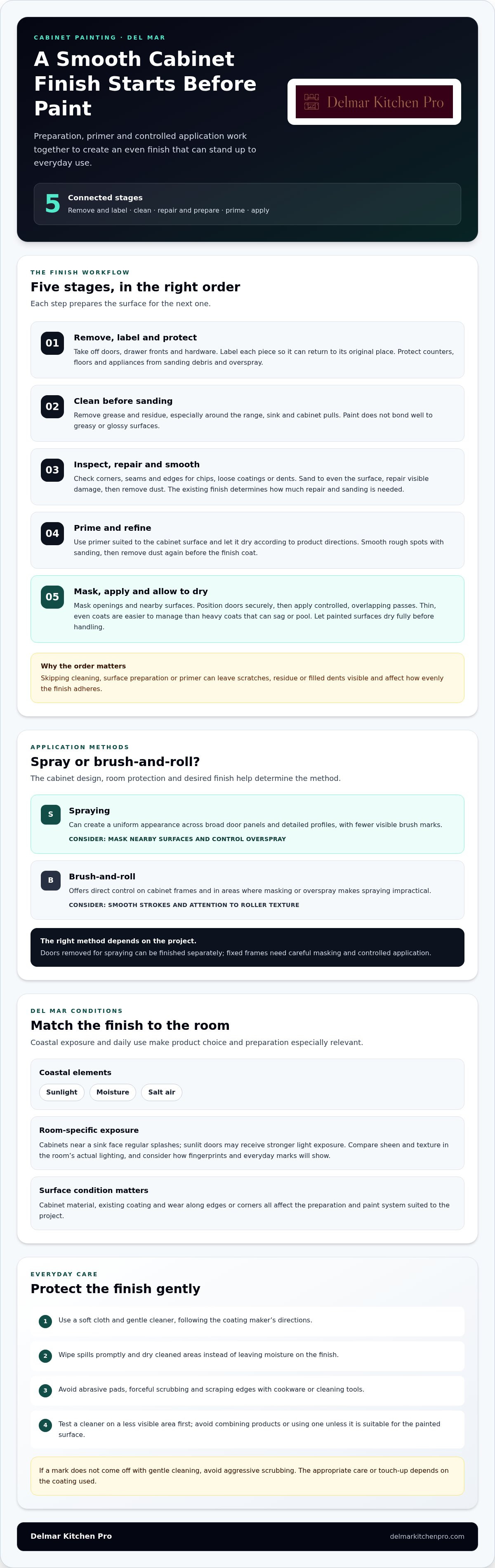
A smooth cabinet finish starts before paint reaches the surface. In California kitchens, a careful sequence of cleaning, sanding, repairs, priming, and application helps create a lasting result.
Cabinet Cleaning and Preparation
Start by removing doors, drawer fronts, and hardware, then label each piece so it can be returned to its original place. Clean grease and residue from areas around the range, sink, and cabinet pulls. Paint won’t bond well to greasy or glossy surfaces, so clean before sanding.
After cleaning, inspect corners, seams, and edges for chips, loose coatings, or small dents. Sand to even the surface, repair visible damage, then remove dust before applying primer. Protect nearby counters, floors, and appliances from sanding debris and overspray. The existing finish determines how much repair and sanding each cabinet needs.
Apply primer after preparation. Choose one suited to the cabinet surface and let it dry according to the product directions. Check for rough spots, sand them smooth, and remove dust again. This sequence helps the finish coat adhere evenly instead of highlighting scratches, residue, or filled dents.
Before spraying, mask openings and cover nearby surfaces. Set doors flat or position them securely so paint reaches the edges without running. Apply controlled, overlapping passes, and avoid holding the sprayer too close to one spot. Thin, even coats are easier to manage than a heavy coat that can sag or pool in corners.
Spray Versus Brush-and-Roll Painting
Spraying can create a uniform appearance across broad door panels and detailed profiles, with fewer visible brush marks. Brush-and-roll application gives direct control on cabinet frames and in areas where masking or overspray makes spraying impractical. The better method depends on cabinet design, room protection, and the finish you want.
A professional work plan should account for the application method. Doors removed for spraying, for example, can be finished separately, while fixed frames need careful masking and controlled application. Brush-and-roll work calls for smooth, deliberate strokes and attention to roller texture. Either method depends on clean surfaces, the right primer, and adequate drying between coats.
Ask how the process handles dust, hardware, masking, and door edges. These details reveal whether refinishing covers the full cabinet surface or only the most visible faces. For a project involving a broader kitchen update, cabinet refacing and painting can be considered alongside the preparation and finish plan.
For a Del Mar home's exterior, professional preparation can include pressure washing, cleaning, scraping loose paint, sanding, caulking, repairs, priming, and protecting landscaping. PaintGreen says ocean air in Del Mar can damage a home's exterior, making suitable products and preparation important. Exterior painting can therefore involve several distinct preparation tasks, including addressing loose paint, cleaning surfaces, making repairs, applying primer, and protecting nearby landscaping. A residential exterior painting project typically takes several days to two weeks, depending on the home's size, preparation, weather, and complexity.
Cabinet painting for Del Mar kitchens and bathrooms
Kitchen and bathroom cabinets serve different routines, even in the same Del Mar home. Plan the finish around each room’s light, moisture, storage needs, and daily use.
Whether a permit is needed depends on the scope: painting cabinet surfaces differs from changing walls, plumbing, electrical, or room layout. Treat those construction changes as separate work because their requirements may differ from those for a finish-only repaint.
In a kitchen, inspect cabinets beside the range, sink, and dishwasher. Cooking residue, splashes, and frequent handling affect how surfaces need to be cleaned and protected. Doors beside a cooking area, for example, may need more attention to grease than pantry fronts across the room. Note these zones before choosing a repaint plan.
Bathroom cabinets face a different routine. Sink-side doors and drawer fronts encounter water droplets, hand products, and repeated wiping. Identify areas where moisture collects, including lower edges near the floor and seams around the sink. A finish plan should account for these surfaces, while household habits such as wiping spills promptly support routine care.
Del Mar’s coastal setting brings salt air, sunlight, and moisture into the broader home environment. Interior cabinets differ from exterior surfaces, but local conditions still make ventilation and drying part of project planning. Protect the work area from dust and avoid using painted doors until the coating has dried according to its product directions.
Light also changes how cabinet color and sheen appear. Strong daylight can reveal uneven coverage more clearly than dimmer light. Compare a sample against the actual cabinet surface in morning and evening light. In a bathroom, check the color beside tile, counters, and mirrors, since these materials reflect light differently.
Before work begins, decide which components need a new finish. A kitchen plan might include doors, drawer fronts, and visible frames, while a bathroom plan may focus on the vanity and linen storage. A clear scope helps prevent missed edges and mismatched areas. Photograph each room and mark damaged spots to give the project team specific details to review.
Painting suits cabinets whose structure and layout still work for the room. If a kitchen needs a different storage arrangement or bathroom cabinetry has damaged sections, painting alone may not solve the underlying problem. Separate cosmetic goals from construction goals, then decide whether repainting fits each room’s condition and use.
Company experience and craftsmanship
Craftsmanship shows in details homeowners can inspect: clean door edges, consistent sheen, and smooth transitions around cabinet frames. A beautiful finish also depends on a work plan that accounts for coastal conditions, existing coatings, and everyday kitchen use.
Before hiring, look for a painting company that is licensed, bonded, and insured. Ask for written warranty terms that explain what the warranty covers, how long it lasts, and how workmanship concerns are handled.
Review the proposed process, not just finished photos. A clear scope explains which cabinet parts are included, how damaged areas will be treated, and whether doors and drawer fronts will be painted separately. For example, a proposal that names cabinet frames, door backs, and exposed sides makes omissions easier to catch before work begins.
Ask how the painter will protect nearby surfaces and manage dust. A practical plan may include covering counters and floors, isolating work areas, and keeping hardware organized during removal. In a coastal Del Mar home, discuss how the team will plan around room ventilation and drying conditions without promising a fixed outcome when conditions can change.
Portfolio images can help you assess consistency. Look closely at corners, panel grooves, and areas around hinges, rather than judging only the overall color. If available, compare examples with similar cabinet profiles and finishes. Smooth, flat-front doors and detailed raised-panel doors call for different attention to edges and recesses.
Use reviews to assess communication and project care, not as a substitute for a written scope. Look for specific descriptions of preparation, protection, cleanup, and follow-through. A review mentioning that doors were labeled and hardware returned to the correct cabinets offers more useful detail than a general comment about a pleasant experience.
Clarify the project sequence before scheduling begins. Confirm how the painter will manage kitchen access, where removed doors will be finished, and when surfaces can be used again. The schedule should account for preparation, primer, finish coats, and drying, not just the visible painting stage.
- Scope: Check that included surfaces and repairs are named.
- Preparation: Look for cleaning, sanding, and dust control in the work plan.
- Protection: Confirm how counters, floors, and nearby rooms will be covered.
- Warranty: Read the written terms and understand their limits.
- Finish review: Inspect edges, corners, and panel details in completed examples.
For custom cabinetry, attention to fit and finish matters as much as color choice. Comparing these practical details helps homeowners choose a painter whose approach matches the cabinets, the room, and the standard of work they expect.
Which cabinet painting contractors serve Del Mar and have strong reviews?
For a cabinet project in Del Mar, look for a contractor whose service area includes your home and whose work focuses on cabinets. Reviews are most useful when they describe the actual process, such as surface preparation, masking, spraying, cleanup, and communication. A general painting review may say little about detailed cabinet work.
Read individual reviews instead of relying only on an overall rating. Look for specific examples: doors returned to the right locations, consistent coverage around panel edges, or careful protection of counters. Recent comments can help you understand current communication and project practices. Repeated mentions of missed areas, schedule confusion, or unresolved concerns deserve attention.
Photos offer another way to judge workmanship. Inspect finished cabinet doors, drawer fronts, corners, and frames in the examples shown. Bright, wide room photos can hide surface texture, so close-ups are more informative. Compare similar cabinet profiles when possible: smooth slab doors and grooved panels present different finishing challenges.
Make a short comparison record for each contractor you consider. Note whether the written scope describes the areas to be painted, preparation steps, application method, and cleanup. Also record how the contractor explains repairs, kitchen access, and hardware handling. Clear answers make project plans easier to compare fairly.
- Service fit: Confirm the contractor works in Del Mar and handles cabinet projects.
- Review detail: Prioritize firsthand comments about preparation and finish quality.
- Work examples: Examine edges, corners, and cabinet frames in close-up photos.
- Written scope: Compare included surfaces, repairs, and application steps.
- Communication: Notice whether project details are explained clearly and consistently.
Reviews should support, not replace, a clear written agreement. A positive comment about a beautiful kitchen doesn’t explain which surfaces were included or how defects were handled. Compare each review theme with the proposed scope. If comments praise careful masking, for example, make sure the work plan explains how nearby counters and floors will be protected.
Strong reviews are specific, consistent, and relevant to cabinet painting. They can show what homeowners experienced, while project details explain what the contractor plans to do in your home. Use both to assess fit, then compare the preparation and finish plans with your cabinets’ condition and your expectations.
For a cabinet project in Del Mar, explore cabinet painting options and consider how the planned finish fits your kitchen or bathroom.
Delmar Kitchen Pro: Luxury Custom Kitchen
Delmar Kitchen Pro offers Cabinet Reface & Paint for homeowners ready to refresh existing cabinetry. If your cabinet boxes are in suitable condition but the finish feels dated, painting or refacing can update the room without changing its entire layout.
For a broader transformation, explore Cabinets, Counter Options, or a Luxury Custom Kitchen. These options suit goals that painting alone won’t address, such as changing the cabinetry or coordinating a larger kitchen update. Consider what should stay, what needs a new finish, and whether counters or cabinetry should be part of the plan.
Share your kitchen priorities and the changes you’re considering with Delmar Kitchen Pro. Visit delmarkitchenpro.com to take the next step.
Choose the Right Scope for Your Next Step
Before planning professional cabinet painting in Del Mar, decide how you want the room to feel when the work is complete. Is your goal a refreshed look within the existing layout, or a broader change to the cabinetry and kitchen? That distinction can help shape a practical project plan.
Delmar Kitchen Pro offers Cabinet Reface & Paint, Cabinets, and Luxury Custom Kitchen options for different renovation goals. If painting fits your plans, focus the conversation on the transformation you want and which parts of the room should stay unchanged. If your plans extend beyond the cabinet finish, consider how a wider kitchen update could bring everything together.
A clear starting point is a short list of priorities: the look you want, the cabinetry you hope to retain, and any changes you’re considering. With those priorities in hand, take the next step at Contact Delmar Kitchen Pro today. A thoughtful plan can make your kitchen update feel more manageable.
Frequently Asked Questions
What paints and finishes are best for kitchen cabinets in coastal Southern California?
Choose a cabinet-rated coating that suits the cabinet material and existing finish. In coastal Southern California, consider how sunlight, kitchen humidity, and frequent handling affect the room. Sheen changes both appearance and upkeep: higher-sheen finishes reflect more light and can make surface marks more noticeable, while lower-sheen finishes soften reflections. Compare samples beside your counters and tile, then follow the coating manufacturer’s instructions for application and care.
How do professionals prepare cabinets for painting, including cleaning, sanding, and priming?
Professionals first identify the existing coating and look for residue that ordinary dusting may miss, including grease or furniture polish. They clean and dry the surface, then sand glossy areas and smooth damaged edges without flattening cabinet profiles. After removing sanding dust, they apply a primer suited to the substrate and finish system. A small test area can reveal adhesion or surface issues before painting all the doors.


