

The average cost of a high-end kitchen remodel in San Diego depends on the renovation scope, not just the kitchen’s size. Keeping the layout generally requires different work than changing it or rebuilding the room. That distinction is the clearest place to start when planning costs.
It’s reasonable to want a useful budget before making design decisions. The challenge is that premium cabinetry, countertops, appliances, and construction work can all shape the project scope. This article explains how renovation level affects cost, which choices carry the most weight, and how to consider resale value without treating it as a guaranteed return.
A focused refresh differs from a full-gut renovation or a project that changes the layout. Understanding those differences helps you weigh materials and features, compare options, and set priorities for the kitchen you want.
Key Takeaways
- Kitchen size shapes the budget, but premium finishes and structural changes can matter just as much as square footage.
- Cabinetry can take a substantial share of the budget, so compare custom and semi-custom options in light of your storage and design priorities.
- Appliances, countertops, plumbing, and electrical work all affect the total. Understanding how these choices interact helps you set priorities before finalizing the design.
- Resale value is one consideration, not the only measure of a remodel’s value; durability, function, and how well the kitchen fits your needs matter too.
Custom cabinetry and appliance costs
Cabinetry and appliances can affect a high-end kitchen budget in different ways. Separate cabinet decisions from appliance and fixture allowances to see where each choice has the greatest impact.
Custom Cabinetry Costs
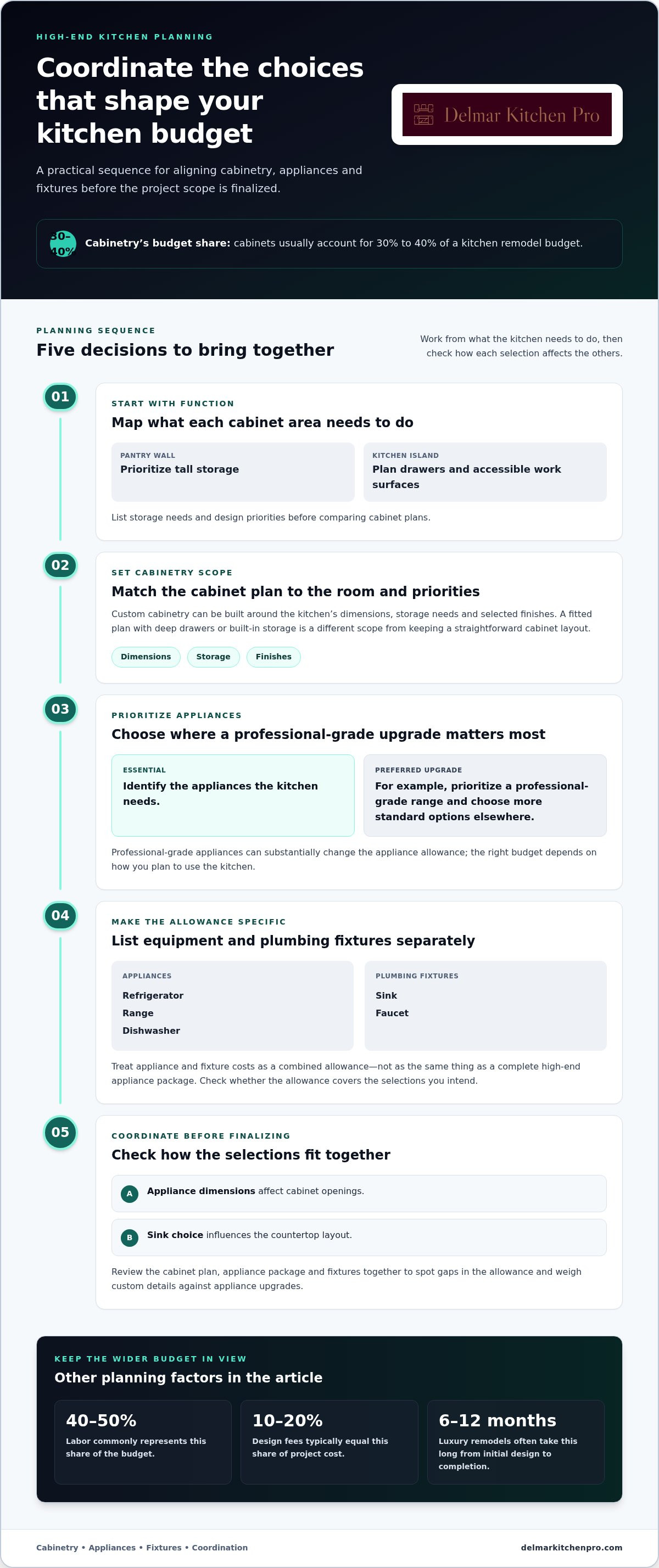
Custom cabinetry is built around a kitchen’s dimensions, storage needs, and selected finishes. Cabinets usually account for 30% to 40% of a kitchen remodel budget, so their design can influence the project’s overall balance. A homeowner planning deep drawers, built-in storage, and cabinetry fitted to an unusual wall is choosing a different scope from someone keeping a straightforward cabinet layout. The details matter.
Start by listing what each cabinet area needs to do. A pantry wall, for example, may prioritize tall storage, while an island may need drawers and accessible work surfaces. Those choices affect the cabinet plan and how it works with countertops and appliances. A clear layout makes it easier to compare priorities before finalizing the project scope.
Professional-Grade Appliance Costs
Professional-grade appliances are higher-specification kitchen appliances, and their price can substantially change the appliance allowance. These ranges show why it helps to consider the appliance package and tier together.
For a practical comparison, separate essential appliances from preferred upgrades. You might prioritize a professional-grade range, then choose more standard options elsewhere. The right budget depends on which appliances matter most to how you plan to use the kitchen.
Appliance and Fixture Costs
Appliance and fixture costs include equipment and plumbing fixtures selected for the kitchen. Treat this as a broad combined allowance, not the same as a complete high-end appliance package. The package scope and specific fixtures determine how these costs fit into the remodel budget.
Make a separate list of appliances and fixtures before comparing package costs. Include the refrigerator, range, and dishwasher, then list plumbing fixtures such as the sink and faucet. This helps show whether a preliminary allowance covers your intended selections and clarifies trade-offs: a premium appliance package and upgraded fixtures compete for budget with other finishes.
Coordinate the cabinet plan, appliance package, and fixture selections. Appliance dimensions affect cabinet openings, for example, while sink choice influences the counter layout. Reviewing these decisions together helps prevent an allowance from overlooking a major selection and gives you a clearer basis for weighing custom details against professional-grade appliances.
What Is the Average Cost of a Kitchen Remodel in San Diego?
Labor commonly represents 40% to 50% of the budget, and design fees typically equal 10% to 20% of project cost. Luxury remodels often take 6 to 12 months from initial design to completion.
Costs by Kitchen Size
Kitchen size is a useful starting point for estimating total luxury remodel costs, but it doesn’t determine the project scope on its own.
Compare these ranges with your planned layout. A smaller kitchen with premium finishes can still require a substantial budget.
Major Component and Labor Costs
Component and labor allowances show how materials, installation, and design contribute to the total.
Labor typically takes 40% to 50% of the remodel budget. These categories measure different parts of project planning, so homeowners should account for both when comparing a proposed scope.
Countertop, Backsplash, and Construction Costs
Premium surfaces and behind-the-wall work can add substantial costs beyond cabinets and appliances.
These costs matter when the plan relocates a sink or changes major services, rather than simply replacing visible finishes.
Remodeling Costs per Square Foot
Cost per square foot divides an estimated project total by the kitchen’s area, making it useful for broad comparisons.
That calculation isn’t a complete project estimate. Cabinetry, appliances, labor, and construction changes can all shift the total. Use square-foot figures as an initial planning guide, then compare the actual components in your design.
If you’re refining a premium kitchen plan, explore luxury kitchen design as a way to align the room’s layout, finishes, and construction scope.
Luxury remodel resale value and ROI
A high-end kitchen remodel can improve daily use and influence a home’s appeal to buyers. The Cost vs. Value Report puts resale cost recoupment for high-end kitchens at 36%.
Resale Value and Cost Recoupment
Cost recoupment compares a remodel’s cost with the value recovered when a home sells. The cited 36% figure is a benchmark for high-end kitchens, not a promise about an individual San Diego home. It helps homeowners separate resale expectations from the personal value of a more functional kitchen.
For example, marble countertops may suit your preferences, but the remodel’s total cost and its resale recoupment are different measures. Buyers see the kitchen as part of the home, not as a receipt for each material choice. Consider both everyday use and the project’s contribution to the whole property.
Timing matters to the decision. A homeowner planning to stay and use the kitchen for years may weigh durable flooring and storage differently from someone preparing to sell. In either case, the 36% benchmark offers context, while the choices should reflect the home and the owner’s priorities.
Maximizing Remodel Value
Maximizing value means balancing buyer appeal, durability, and personal use instead of choosing finishes by price alone. Start by identifying updates that solve real problems, such as awkward storage, worn flooring, or a layout that interrupts meal preparation.
Then compare material choices by their role in the room. Natural stone can create a strong visual feature, while marble may suit a particular design direction. Pair these surfaces with cabinetry and lighting that support the kitchen’s function. A coordinated plan helps each update contribute to a cohesive result.
Scope matters, too. If you want a better appearance, you may prioritize visible updates. If the layout is inefficient, you may value changes that improve movement and work areas. These goals lead to different project decisions, even before you choose materials.
Use the Cost vs. Value Report’s 36% cost recoupment figure as a reference point, not the sole measure of success. A well-considered remodel can serve the homeowner’s needs while presenting a finished kitchen that feels deliberate. Clear priorities, durable materials, and consistent design choices give each update a defined purpose.
San Diego kitchen remodel cost ranges by renovation level
Luxury costs rise most with layout changes, construction scope, kitchen size, and premium materials.
Renovation-Level Cost Differences
Renovation level describes how much of the kitchen changes, helping homeowners compare budgets by project scope.
High-end work costs more when it includes premium finishes or extensive replacement.
The clearest distinction is whether the existing layout stays in place. Replacing finishes and fixtures within the current footprint differs from rebuilding the room.
Factors Affecting Luxury Remodel Costs
Luxury remodel costs depend on the work required, the kitchen’s size, and the selected materials. A premium finish package alone doesn’t describe the construction scope or labor involved.
Layout changes can add significant work. Expanding a kitchen can also require broader construction than keeping existing walls and service locations.
Materials create another distinction between projects. Custom cabinetry, high-end stone, and professional-grade appliances can raise a budget beyond a simpler finish package.
Use the ranges to compare scopes, not as a fixed price for every kitchen. If you’re keeping the footprint, compare pull-and-replace work with a full gut. If you’re changing the layout, account for added construction. Defining the renovation first gives you a more useful starting point than choosing finishes before setting the project scope.
Typical costs reflect how much the project changes, not simply whether the materials are premium. Define the renovation level first, then weigh kitchen size, construction needs, cabinetry, and finish selections against that scope.
How much do cabinets, countertops, appliances, and labor cost in a high-end San Diego kitchen remodel?
A useful budget separates four areas: cabinetry, counters, appliances, and labor. Costs depend on the selections and scope, so compare each allowance with the actual design rather than relying on one broad estimate.
Cabinet pricing varies with linear footage, storage configuration, materials, finish, and installation needs. Custom cabinetry is typically measured by the linear foot, while semi-custom cabinets offer a different level of tailoring. An island with deep drawers, pantry storage, and finished panels requires a different plan from a simple run of base cabinets. That distinction affects the cabinet specification and how it coordinates with appliances.
Countertop costs depend on the material, surface area, edge details, and installation. Natural stone is priced by the square foot, so a larger island can use more material than a compact counter run. When comparing stone countertops, consider the full surface plan, including backsplashes and seams, rather than evaluating the material alone. Sink placement and cutouts also affect fabrication requirements.
Appliances have clearer published market ranges. Compare package scope carefully: a basic package and a professional-grade suite are not equivalent allowances.
Labor reflects the work sequence and trades involved, not just the number of cabinets or appliances. Demolition, cabinet installation, countertop fitting, plumbing, and electrical work all require coordination. Keeping the existing layout avoids some relocation work, while moving a sink or changing appliance locations can add construction tasks. An island relocation, for example, may affect cabinet placement, electrical routing, and countertop fabrication at once.
To compare estimates, match the scope in each category: cabinet layout and finish, countertop material and area, appliance models, and included installation tasks. Note exclusions separately, such as plumbing changes or electrical adjustments. A detailed comparison shows whether proposals describe the same kitchen, rather than asking you to judge them by a single line item.
For a coordinated plan covering cabinetry, counter options, appliances, and construction scope, plan your kitchen remodel around the priorities that matter most.
Delmar Kitchen Pro: Luxury Custom Kitchen
Delmar Kitchen Pro helps San Diego homeowners shape kitchen renovations around their layout, storage needs, and finish priorities. Full custom kitchens suit projects that call for a tailored design and installation, while custom kitchen re-facing can refresh existing cabinetry. Homeowners can also explore cabinet and countertop options when updating specific parts of the room.
Start by defining what needs to change: the whole kitchen, the cabinet appearance, or the counters. That distinction focuses the design discussion and keeps decisions tied to your priorities. If you’re planning a high-end remodel in San Diego, contact Delmar Kitchen Pro to discuss your kitchen goals.
Turn Your Priorities Into a Kitchen Plan
Your next decision is not which finish to choose. It’s which parts of the kitchen matter most to your household. The average cost of a high-end kitchen remodel in San Diego becomes more useful when you connect it to specific priorities: how you cook, what you need to store, and how you want the room to feel.
Before discussing a design, write down the changes you consider essential and those you could set aside. Note whether the cabinetry needs a full redesign or a visual refresh, and whether the countertops need to change with it. This gives the conversation a clear starting point instead of a long list of disconnected preferences.
Delmar Kitchen Pro offers full custom kitchens, custom kitchen re-facing, and cabinet and countertop options for different remodeling goals. A focused discussion can help you consider which direction fits the kitchen you want to create.
Contact Delmar Kitchen Pro to talk through your kitchen plans. A thoughtful first step can make the design process feel clearer and more manageable.
Frequently Asked Questions
Do high-end kitchens increase home value?
A high-end kitchen can contribute to a home’s resale appeal, but its full cost isn’t necessarily recovered at sale. The cited Cost vs. Value Report records a 36% cost recoupment for high-end kitchens. Homeowners can use that figure to frame resale expectations, then weigh it against the kitchen’s daily value. For example, improved storage or a more usable work area may matter to the household even when resale recovery is partial.
Is a high-end kitchen renovation worth the investment?
A remodel can be worthwhile when it solves lasting problems and fits your plans for the home. Consider how long you expect to use the kitchen, whether the current layout creates daily friction, and which updates will make the room more functional. Better storage, for example, may matter more to your routine than a costly finish upgrade. Resale recoupment is one factor, but personal use and project priorities also shape value.
What is the average cost of a high-end kitchen remodel in San Diego?
A useful next step is to define whether the project keeps the current layout or involves a full-gut renovation. Then separate the main allowances, such as cabinets, counters, appliances, labor, and design. This gives you a clearer way to compare project scopes instead of relying on one broad range.
What is the typical cost per square foot for a luxury kitchen remodel in San Diego?
Treat this as an early comparison tool, not a substitute for a project budget. Make sure the area measurement uses the same kitchen boundaries across estimates, especially in an open-concept space. Then compare what each estimate includes, since construction changes, finish selections, and installation scope affect the total represented by a square-foot figure.
How do full-gut kitchen remodel costs compare with partial remodels in San Diego?
The key difference is the work scope. A pull-and-replace project updates the kitchen while retaining its basic layout; a full gut involves more extensive demolition and rebuilding. Identify whether walls, service locations, or the room’s footprint will change before comparing these ranges.
What hidden costs and budget overruns should homeowners expect in a San Diego kitchen remodel?
Construction changes can add costs beyond visible finishes. Homeowners can make room for these items by listing planned layout changes separately from finish selections. A homeowner planning a remodel was advised to allow a 20% contingency for unexpected costs.


