

A waterfall edge changes more than the look of a countertop. It also calls for careful planning and precise fabrication. For waterfall countertop installation in San Diego, the project depends on the material, slab layout, edge fabrication, and how the sides fit the island or cabinets. These details shape the work beyond the style choice alone.
It’s reasonable to want a clear budget before choosing a design. This guide explains the main cost factors without assigning a price before the project scope is known. It also shows how material choices affect the finished look and practical demands of installation.
You’ll also learn what to compare when evaluating San Diego providers and what customer reviews can reveal about preparation, cutting, and project timing. The goal is a more informed decision, with a clearer sense of what the work involves and which questions matter as you plan.
Key Takeaways
- Estimate the project by considering material, slab layout, edge fabrication, and installation complexity; these factors shape the final scope.
- Compare countertop materials by their appearance, care needs, and performance. California Countertop says quartz ranks fourth on the Mohs scale and number one in Consumer Reports’ kitchen countertop rankings.
- Use customer reviews to understand how preparation and fabrication can affect the work sequence: reported San Diego projects included a 5-6-hour first-day preparation and a three-day replacement.
- Compare local options with a clear view of the work involved; Houzz lists 119 custom countertop professionals serving San Diego.
- See how countertop choices fit into a broader kitchen plan, including cabinets, refacing, and custom construction.
How much does countertop installation cost?
The project price depends on its scope and is provided after a quote request. Material, slab layout, waterfall edges, demolition, fabrication, and plumbing work all affect that scope.
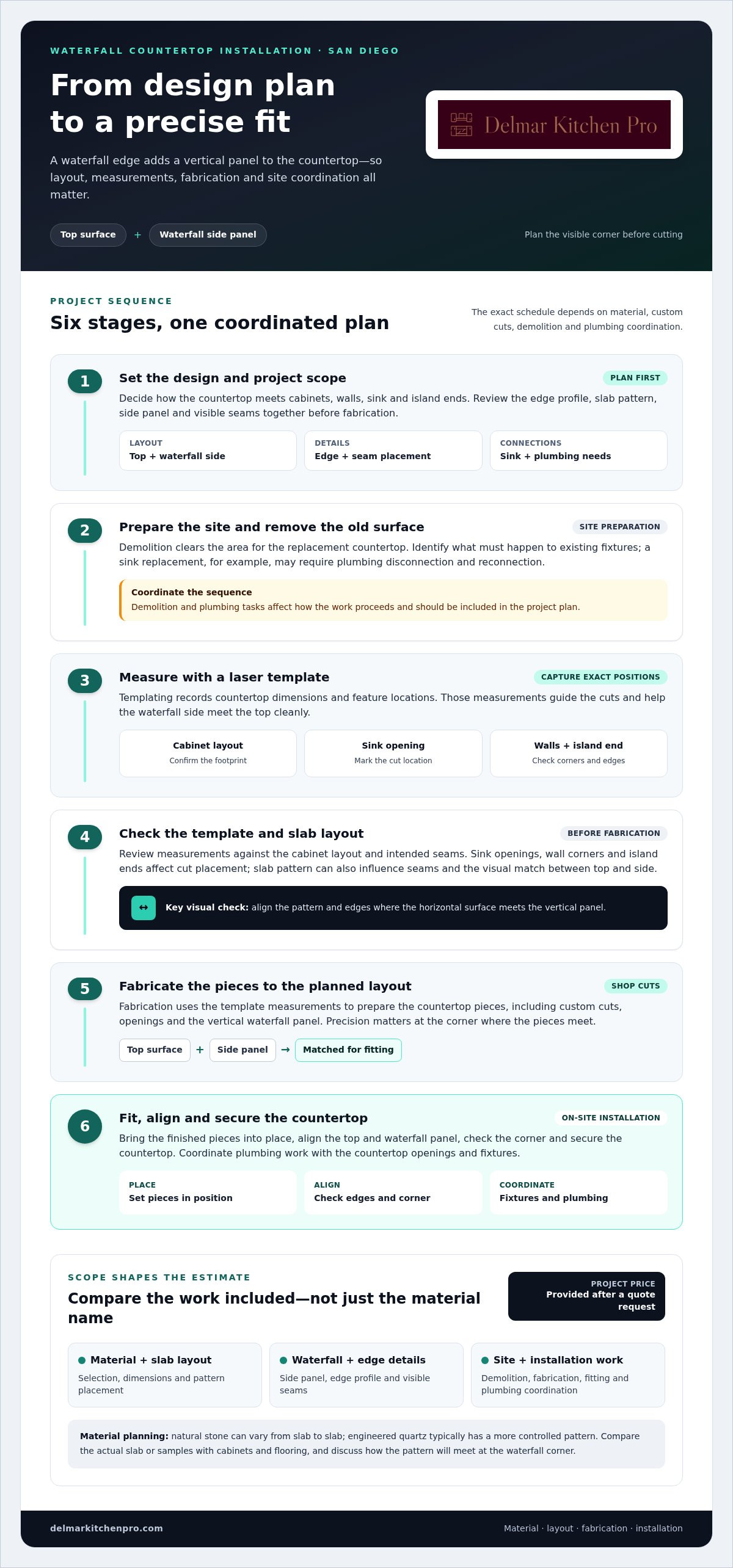
Fabrication and installation happen in stages, from measuring and preparing the site to cutting, fitting, and securing the countertop. The schedule depends on material selection, custom cuts, demolition, and plumbing coordination.
Custom Design and Installation
Custom design establishes how the countertop meets the cabinets, walls, sink, and island ends. With a waterfall edge, the countertop continues down the side, so the plan must account for the side panel and its visible seams. Review the layout, edge profile, and slab pattern together before fabrication begins.
Installation planning also covers what needs to happen to the existing countertop. Demolition removes the old surface, while plumbing coordination addresses fixtures connected through it. For example, replacing a countertop with a sink may require plumbing disconnection and reconnection as part of the project sequence. Each task affects how the work proceeds.
Compare quartz and soapstone by considering the look you want and how the chosen slab fits the design. Material, surface pattern, and waterfall side all affect the finished appearance. A clear design plan helps bring those choices together before the countertop is cut.
Templating and Fabrication Precision
Laser templating records the countertop’s dimensions and the positions of features such as sink openings and wall edges. Those measurements guide fabrication, where the slab is cut to match the planned layout. Accurate templates are especially important at a waterfall edge, where the side piece must meet the top cleanly.
Before fabrication, review the template against the cabinet layout and intended seams. A sink opening, wall corner, or island end can affect where cuts belong. Precise countertop fabrication follows those measurements to prepare the pieces for fitting, rather than relying on approximate site dimensions.
Demolition, fabrication, and installation are separate steps, but coordinating them affects the overall schedule. Removing an existing countertop prepares the area, then template measurements guide the shop cuts. The finished pieces are brought in for placement, alignment, and securing. Plumbing work is coordinated with the countertop openings and fixtures.
For a waterfall design, fabrication must account for both the horizontal surface and the vertical panel. The installer aligns their edges and checks how the pattern meets at the corner. Slab layout matters too: the selected material’s pattern can influence seam placement and the visual match between the top and side.
Compare project estimates by matching the scope, not just the material name. Check whether the work covers the countertop dimensions, waterfall sides, edge details, demolition, fabrication, installation, and plumbing coordination. These details clarify what the project includes and why two quartz designs may still involve different work.
Before work begins, confirm the design choices and sequence of site tasks in the project plan. A settled template gives fabrication a defined layout, while coordinated demolition and plumbing prepare the space for installation. A clear scope makes the project’s cost factors easier to understand.
Countertop material selection
Choose a countertop by weighing appearance, daily use, and the design’s visible surfaces. With a waterfall edge, the material continues down the island side, making its color and pattern part of the room. Compare samples with your cabinets and flooring, then consider how the pattern will look across the top and vertical panel.
Quartz, granite, and soapstone each have distinct visual character. Natural stone varies from slab to slab, so inspect the actual piece when possible. Veining, mineral marks, and color shifts can affect how the countertop looks across a broad island. Engineered quartz typically has a more controlled pattern, which can help create a consistent appearance.
Durability also deserves a practical comparison. California Countertop says quartz ranks fourth on the Mohs scale of hardness. The same source says quartz countertops rank number one in Consumer Reports’ kitchen countertop rankings. These facts can frame a comparison, but your choice should also reflect the surface’s care requirements and how you use the kitchen.
Consider how each option fits your household’s routines. A busy cooking area may see spills, food preparation, and frequent cleaning. Ask how the selected surface should be maintained, and follow its care guidance. With natural stone, review the slab’s finish and pattern closely. With quartz, compare available colors and patterns with cabinet samples.
- Quartz: Compare pattern consistency, color, and the planned waterfall edge.
- Granite: Review the specific slab’s natural movement and visible variation.
- Soapstone: Assess its appearance alongside cabinetry and other kitchen finishes.
- Natural stone: Judge the actual slab, not only a small sample.
For any material, consider how fabrication will preserve the look you selected. A prominent vein may need careful placement at the island corner. A patterned slab can create a noticeable transition where the vertical side meets the top. Discuss your visual goal before the pieces are cut, especially if the waterfall edge is a focal point.
Compare samples in the kitchen’s lighting and beside the intended cabinet finish. This simple step helps reveal differences that showroom lighting can hide. If you’re comparing countertop options, consider the whole composition, not just the surface alone. The right match balances appearance, upkeep, and the way the countertop connects with the rest of the room.
Kitchen countertop installation in San Diego
A kitchen countertop project connects surface fitting with nearby cabinets, fixtures, and finishing work. Permit and building-code requirements depend on the project scope. Replacing a surface differs from altering plumbing, electrical, or structural elements.
Waterfall Edge Countertops
A waterfall edge extends the countertop down an island’s side, making the corner and vertical panel part of the finished design. Before installation, review where the edge meets the floor, cabinets, and adjacent surfaces. A visible seam, for example, can affect pattern continuity, while an uneven cabinet base can complicate alignment.
Kitchen countertops with waterfall edges also need a stable supporting structure. The plan should show how the horizontal slab and side panel meet, and how the island accommodates that design. Confirming these details before installation helps the pieces fit the intended layout.
In a kitchen remodel, countertop installation depends on the condition and layout of the existing cabinets. The installer needs a clear work area and an agreed plan for appliances, sinks, and other items attached to the old surface. For example, a sink cutout must align with the basin and plumbing connections below it.
Coordinate plumbing with the countertop sequence. Removing an existing counter may require disconnecting fixtures, and fitting the replacement means matching openings to those fixtures. A change in sink position also affects the cabinet layout and plumbing route. Coordinating these decisions helps prevent conflicts between countertop fitting and plumbing reconnection.
Installation Problems and Risks
Common problems include a poor fit against a wall, misaligned seams, chips during handling, and a waterfall panel that does not meet the top cleanly. A misplaced cutout can also interfere with a sink or cooktop. Review the layout, openings, and seam locations before fabrication, then protect the finished edges during transport and placement.
Uneven or inadequately prepared cabinets can affect how the countertop sits. An unsupported span or rushed placement can stress the slab, especially around openings and corners. The installation plan should address the cabinet surface, support points, kitchen access, and the path used to carry each piece.
For a remodel, sequence the work so demolition, cabinet preparation, countertop placement, and plumbing coordination do not conflict. Keep sink and faucet choices aligned with the planned cutouts. If the project changes the kitchen layout or connected systems, include those changes in the scope before work begins.
During the final walkthrough, inspect the countertop’s contact with the wall, seams, edge alignment, and fixture openings. Check that the waterfall side sits as designed and that the sink and faucet align with their cutouts. These visible details can help identify fit issues during the installation review.
Customer reviews of countertop projects
Customer reviews can show how countertop work unfolds beyond finished photos. San Diego accounts describe different project stages, from removing an old surface to cutting replacement pieces. Read them as examples of individual experiences, not as a fixed schedule for every kitchen. Focus on the tasks described, their sequence, and how closely they match your planned work.
One San Diego customer reported that a countertop team spent 5-6 hours removing old countertops and preparing the site on the first day. That account highlights a useful review detail: installation begins before the new surface is placed. Site preparation can be a substantial part of the work, so look for reviews that describe what happened before fitting.
A separate San Diego customer said their countertop replacement took three days from start to finish. That timeline offers context for a completed replacement, but the review may describe a different scope from your custom project. Compare the work mentioned, such as removal and replacement, rather than treating three days as a standard installation duration.
Another San Diego customer reported that a contractor cut their countertops in less than 30 minutes. This describes one cutting task, not necessarily the full project. A brief cutting step does not show how long measuring, preparation, fitting, or finishing took. Read the surrounding review details before using a short task time to estimate the entire installation.
Use a consistent method to assess reviews. First, identify the project type: replacement, new kitchen work, or custom design. Next, note the stages the reviewer mentions. Then compare those stages with your own project. A review describing demolition, for example, may be more relevant if your existing countertop needs to be removed.
- Scope: Does the review describe countertop replacement or another project?
- Sequence: Does it explain removal, preparation, cutting, or fitting?
- Specificity: Does it give a concrete example, such as the reported 5-6-hour first day?
- Outcome: Does the reviewer describe how the finished surface and seams looked?
For waterfall designs, look for reviews that mention custom edges, island sides, or visible seams. These details offer a closer comparison than a review about a simple straight countertop. If a review only says the work was fast, note which task was completed and whether it describes the full project timeline.
Customer accounts help you form practical questions about project stages and finish quality. The reported three-day replacement and the under-30-minute cutting example describe different measures. Keep those distinctions clear as you compare custom projects, then use reviews alongside the planned scope and design details.
San Diego countertop installation providers
San Diego homeowners have a broad local market to consider. Houzz lists 119 local custom countertop professionals serving San Diego, California. That figure describes the directory’s listed professionals, not a ranking or assessment of their work. For a waterfall project, focus on whether the described scope covers the complete design, fabrication, and installation process.
Start with the project itself. A straight kitchen counter and an island with a waterfall edge involve different visible details. The waterfall design includes a vertical side panel, so the plan should address its alignment, seams, and relationship to the top. These details help you compare project scopes meaningfully instead of relying only on provider count.
Material selection also shapes the work. A marble slab, for example, may have prominent veining that needs thoughtful placement across the island corner. Quartz countertops may offer patterns that look more uniform across connected surfaces. In either case, the slab layout and edge details should suit the appearance you want after installation.
Use a simple comparison process:
- Scope: Identify whether demolition, template measurements, fabrication, installation, and plumbing coordination are addressed.
- Design: Look for the waterfall panel, edge profile, seams, and material layout in the project description.
- Finish: Consider how the countertop meets cabinetry, walls, and fixtures, such as a sink cutout.
- Reviews: Compare accounts that describe similar work, such as island installation or custom edges.
Keep the comparison tied to your kitchen. If the project includes a sink replacement, plumbing coordination matters alongside countertop fit. If the island has a visible waterfall side, pay attention to the finished seam and pattern transition. A review about a basic replacement may not cover those custom details, even if it describes a smooth installation.
Houzz’s listing of 119 professionals can help explain the size of San Diego’s directory landscape, but the number alone cannot determine which project scope fits your needs. Compare the details that affect your design: material, island configuration, cutouts, edge treatment, and the relationship between fabrication and installation. A clear scope makes those choices easier to evaluate.
For a kitchen project centered on surface selection, explore countertop options for your design. Consider how the chosen surface will work with the island, cabinets, and the waterfall edge before settling on a final layout.
Delmar Kitchen Pro: Luxury Custom Kitchen
Delmar Kitchen Pro brings countertop choices into a broader kitchen plan. If a waterfall edge is part of a remodel, consider how the surface will work with the cabinets, layout, and overall room design. Luxury Custom Kitchen projects and kitchen construction can connect these decisions, while Counter Options help shape the surface choice. For an existing kitchen, Cabinet Reface & Paint can support a coordinated update without replacing every cabinet.
Turn to Delmar Kitchen Pro when planning a custom kitchen or weighing countertop and cabinet choices together. Share your design goals and the changes you’re considering to start a focused conversation.
Contact Delmar Kitchen Pro to discuss your kitchen project.
Plan the Kitchen Around Your Vision
Before moving forward, decide what you want the island to contribute to the room. Should the waterfall edge draw attention, connect with existing finishes, or anchor a broader kitchen redesign? A clear design priority helps shape your choices and gives the project a practical starting point.
Planning waterfall countertop installation in San Diego is also an opportunity to consider the kitchen as a whole. Delmar Kitchen Pro offers Luxury Custom Kitchen projects, Cabinet Reface & Paint, and Cabinets to help homeowners coordinate countertop decisions with cabinetry and the wider room design.
Bring your preferred look, existing kitchen details, and remodeling goals into the conversation. This gives the next planning step a clear focus, whether you’re updating cabinets or developing a more complete kitchen design.
Contact Delmar Kitchen Pro to discuss your kitchen plans. A thoughtful design starts with the choices that matter most to you.
Frequently Asked Questions
What is a waterfall countertop and how is it installed?
A waterfall countertop extends the top surface down one or more island sides. The vertical panel creates a continuous visual line and a finished island end. Installation starts by confirming the island’s final dimensions and design, then preparing the countertop and side panel to fit. The pieces are positioned and joined so their edges align. Sink openings, seams, and the visible pattern should all be considered in the layout.
How much does waterfall countertop installation cost in San Diego?
The project price depends on its scope and is provided after a quote request. In San Diego, the scope depends on the selected material, countertop dimensions, waterfall sides, fabrication details, and any removal or plumbing work. A large island with custom cutouts involves different work from a simple replacement. Compare the written scope, including the preparation and installation tasks it covers, rather than judging by material name alone.
What factors affect waterfall countertop installation pricing?
Pricing reflects more than the countertop’s surface area. The number of waterfall sides, slab layout, edge details, sink or cooktop openings, and backsplash work can change fabrication needs. Site access can also matter if island pieces must pass through narrow doorways or turns. Cabinet condition and plumbing changes may add preparation tasks. A useful estimate explains how these project details affect the work instead of listing only a material choice.
Which countertop materials are best for waterfall edges: quartz, granite, marble, or porcelain?
No single material is best for every waterfall design. Compare quartz, granite, marble, and porcelain by the specific slab’s appearance, the pattern you want across the island corner, and how the material suits your kitchen plan. A strongly veined slab may call for careful pattern placement. Bring cabinet and flooring samples into the decision, and discuss how the selected material will form the vertical panel and its visible edges.
How do waterfall countertop costs compare with standard countertop edges?
A waterfall edge generally involves more material and fabrication than a standard finished edge because the surface continues down the island side. The added panel also needs accurate alignment with the top. The difference depends on the island’s design, material, and cut details, so a fixed comparison may not reflect your project. Compare estimates using the same countertop material and scope, with the waterfall sides identified separately.
What measurements and cabinet preparation are needed for a waterfall countertop?
The layout needs the island’s length, depth, finished height, side-panel dimensions, and positions for fixtures or cutouts. Measurements should reflect the cabinets in their final installed position, including planned changes to the island. Cabinet tops must provide a stable, suitable base for the countertop pieces. Before templating, settle choices such as sink placement and overhangs, since later changes can affect the cut plan and panel fit.
How can I find reputable waterfall countertop installers in San Diego?
Look for a clear project scope that connects countertop selection with design, cabinet fit, fabrication, and installation planning. Make sure the project details address waterfall sides, seams, cutouts, and material layout. Delmar Kitchen Pro offers Counter Options, Cabinets, and Luxury Custom Kitchen services for homeowners considering countertops as part of a wider kitchen project. Choose a plan that reflects your actual layout and design priorities.


