

Can your existing wood cabinets take on a durable new look without a full replacement? Often, the answer depends less on the color you choose and more on the condition of the cabinet surfaces. Wood cabinet refinishing can refresh sound cabinets, but worn coatings, damaged areas, or unsuitable materials may affect how even the finish looks and how well it holds up.
If you’re deciding whether refinishing, painting, or refacing fits your kitchen, start by looking at what needs to change. Refinishing renews visible surfaces, while refacing replaces visible cabinet components and painting changes the surface with an opaque coating. A careful assessment helps you set realistic expectations before work begins. This guide explains what each approach changes and which condition and design factors shape the result.
For homeowners in San Diego, Encinitas, Rancho Santa Fe, La Jolla, and Del Mar, Delmar Kitchen Pro provides professional cabinet refacing and painting, along with luxury kitchen design and construction. The right next step depends on your cabinet condition, preferred look, and whether the kitchen needs more than a surface update.
Key Takeaways
- Check cabinet surfaces, joints, and edges to distinguish cosmetic wear from problems that may call for broader work.
- Wood cabinet refinishing renews the visible finish, while painting, refacing, and replacement change different parts of the cabinetry.
- Match the approach to the cabinet material, existing condition, and look you want.
- A well-planned project moves from assessment and preparation through finish work and a final review.
- Coordinate cabinet updates with your wider kitchen goals. Delmar Kitchen Pro offers cabinet refacing and painting, as well as kitchen design and construction.
What Wood Cabinet Refinishing Changes, and What It Leaves in Place
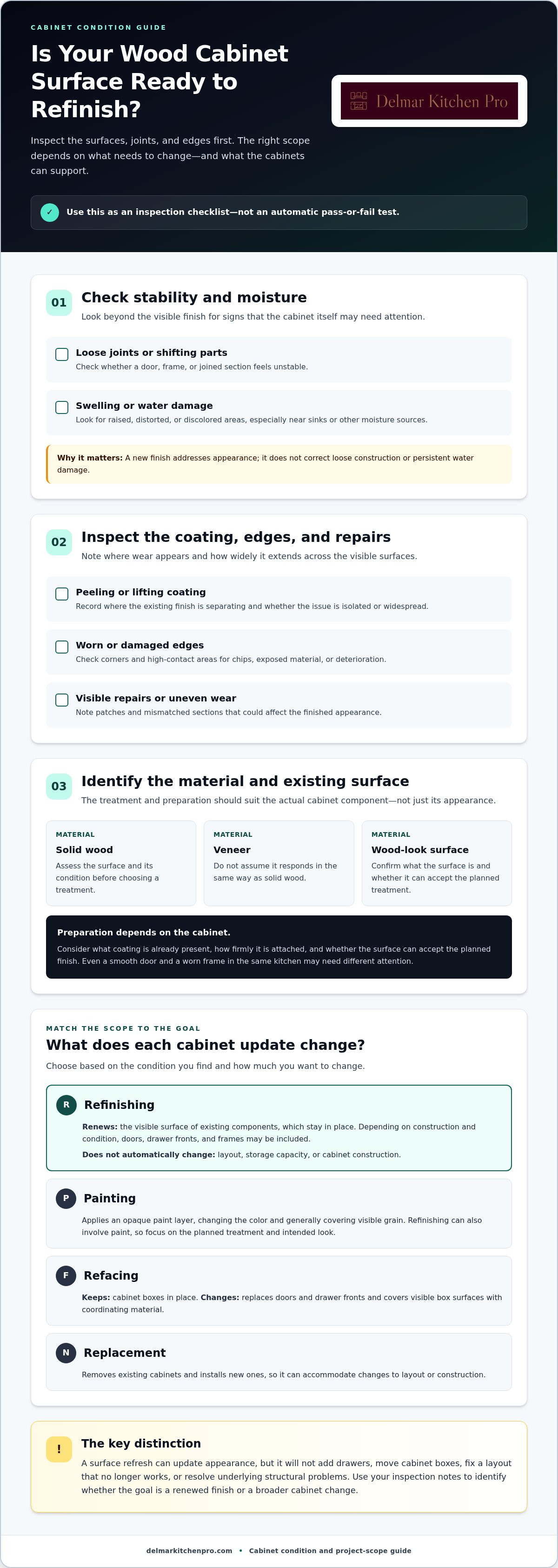
Wood cabinet refinishing renews the visible surface of existing cabinet components while keeping those components in place. The work may involve removing or preparing the old coating and applying a new finish suited to the surface. It changes the cabinets’ appearance, not automatically their layout, storage capacity, or construction.
This distinction helps set expectations. A refreshed finish can bring existing cabinets in line with the rest of the kitchen, but it won’t add drawers, move cabinet boxes, or fix a layout that no longer works. If the cabinets have structural damage or you want a different configuration, consider a broader solution.
What parts of a wood cabinet can be refinished?
Depending on their condition and construction, visible doors, drawer fronts, and cabinet frames may be included. The right preparation and finish depend on what is already on each surface, how firmly the existing coating is attached, and whether the material can accept the planned treatment. Solid wood, veneer, and wood-look surfaces shouldn’t be assumed to respond identically. Inspect each component to identify where the finish may be renewed and where repairs or a different approach may be needed.
Surface preparation is central to the result. The wood finishing process can involve different preparation steps, materials, and application methods. The appropriate choices depend on the cabinet itself. For example, a smooth door and a worn frame may need different attention, even when they are part of the same kitchen.
How is refinishing different from painting or refacing?
Refinishing renews an existing surface, using an approach suited to its condition and the intended appearance. Painting applies an opaque paint layer, changing the color and generally covering visible grain. Refinishing can also involve paint, so the terms sometimes overlap. Focus on the planned surface treatment and the look it is intended to achieve.
Refacing keeps cabinet boxes in place but replaces doors and drawer fronts and covers the visible box surfaces with coordinating material. This creates a more substantial visual change than renewing the existing finish. Replacement removes the existing cabinets and installs new ones, so it can also accommodate changes to layout or construction. For a fuller explanation of the process, see the cabinet refacing guide.
These approaches solve different problems. Start with the cabinets’ condition and the changes you want, then choose a scope that fits.
How to Tell Whether Your Wood Cabinets Are Suitable for Refinishing
A close inspection can help show whether the main concern is a tired surface or a deeper cabinet problem. Look at doors, drawer fronts, frames, joints, and areas near sinks or other sources of moisture. A mark or worn patch may be cosmetic; swelling, looseness, or recurring damage deserves closer evaluation before you choose a finish.
Use this checklist to record what you see. These are signs to assess, not automatic pass-or-fail rules:
- Loose joints or shifting parts: Notice whether a door, frame, or joined section feels unstable.
- Swelling or water damage: Look for raised, distorted, or discolored areas, especially near moisture.
- Peeling or lifting coating: Note where the existing finish is separating and how broadly the problem appears.
- Worn or damaged edges: Check corners and high-contact areas for chips, exposed material, or deterioration.
- Visible repairs: Record patches or mismatched sections that could affect the finished appearance.
Which surface and condition details matter most?
The cabinet material and existing surface shape the work plan. Solid wood, veneer, and previously coated surfaces can respond differently, so don’t assume a wood-look surface can be treated like solid wood. Existing repairs, uneven wear, and coatings that no longer hold well matter, too. Damaged edges and failing coatings need attention before you choose a finish, because a new surface treatment won’t resolve the underlying condition. An assessment can help interpret uncertain areas and identify a suitable cabinet update.
When might refinishing not solve the main problem?
Refinishing addresses appearance, not every cabinet concern. A new finish won’t correct loose construction, persistent water damage, a layout that no longer suits the kitchen, or storage that doesn’t meet your needs. The right next step depends on what the inspection reveals and how much you want to change. If new cabinetry is part of the broader plan, explore this custom wood kitchen cabinet guide.
For wood cabinet refinishing, match the treatment to the actual surface and condition rather than assuming every cabinet needs the same solution. Delmar Kitchen Pro provides professional cabinet refacing and painting, as well as kitchen design and construction. Explore professional cabinet and kitchen planning to consider how cabinet work may fit your project.
Wood Cabinet Refinishing vs. Painting, Refacing, and Replacement
Choose an approach based on what you want to change. A surface refresh is different from new doors, and neither necessarily solves a layout or construction problem. Use this comparison to match the project scope to your kitchen goals.
| Option | Scope | What remains | Visual change | Condition considerations |
|---|---|---|---|---|
| Refinishing | Renews the finish on existing cabinet components. | Existing boxes, doors, and drawer fronts generally stay in place. | Updates the visible surface; the result depends on the finish approach. | Existing material, coating, and surface condition influence what can be done. |
| Painting | Applies paint to cabinet surfaces. | Cabinet components generally remain in place. | Changes the color and typically covers visible wood grain. | Surface preparation and the condition of the existing coating matter. |
| Refacing | Replaces doors and drawer fronts and covers exposed cabinet-box surfaces. | Cabinet boxes remain in place. | Can change the door style and give the exterior a more substantial update. | Existing boxes need to suit the planned work. |
| Replacement | Removes existing cabinets and installs new cabinetry. | Existing cabinets are removed. | Allows a broad change to cabinet appearance and can support a layout change. | May be relevant when construction or layout needs exceed a surface update. |
When does refinishing fit the homeowner’s goals?
If you like the cabinet layout and door style, and your main goal is to refresh the visible surfaces, wood cabinet refinishing may be worth considering. Retaining existing components can make sense when the cabinet construction is sound. The final approach still depends on the cabinets’ condition and the appearance you want. Surface wear and structural issues call for different responses.
When should you compare refacing or replacement instead?
Consider refacing if you want a noticeable exterior change, such as different doors, while keeping the cabinet boxes. Replacement may be a better fit if the layout needs to change or the existing cabinet construction is part of the problem. These options are not interchangeable, and refinishing is not a universal substitute for either one.
Painting is a surface treatment, while refinishing describes renewing existing surfaces through an approach suited to their condition. If you’re comparing a painting scope, see this guide to professional cabinet painting. A clear project assessment connects the cabinet condition, desired visual change, and wider kitchen plans before you choose the work.
What to Expect During a Professional Wood Cabinet Refinishing Project
A well-managed project follows a clear sequence: assess the cabinets, plan the finish work, prepare the kitchen, complete the surface treatment, then review the result. The exact methods depend on cabinet condition and the agreed scope. For homeowners in San Diego, Encinitas, Rancho Santa Fe, La Jolla, and Del Mar, careful planning helps keep the work organized and decisions clear from the outset.
How is the project planned and the kitchen prepared?
Planning brings together three things: the cabinet surfaces’ condition, the appearance you want, and which components are included. Existing coatings, repairs, and worn areas inform the preparation and finish approach. Before work begins, confirm the scope and how the work area will be organized so you know which cabinets and nearby surfaces are involved.
Homeowner preparation can make the kitchen easier to work in. Clear items from the cabinets being addressed, and follow the project plan for access to counters and surrounding areas. Nearby surfaces can be protected, with tools and materials kept within a designated work area. These steps help contain the work and reduce unnecessary disruption. The sequence and household arrangements depend on the project, so don’t assume every kitchen follows the same schedule.
What happens during the finish work and final review?
Preparation comes before the new finish. Depending on the surface, the work may address existing coating, wear, or minor irregularities before the selected treatment is applied. Doors, drawer fronts, and frames may each need different attention. Once the finish work is complete, a review helps identify areas that need attention and gives you a chance to understand the care guidance for the finished surfaces.
Wood cabinet refinishing involves connected decisions, not simply a color choice. Keeping the scope, preparation, and review aligned makes the process easier to follow. Delmar Kitchen Pro provides professional cabinet services and kitchen design and construction for projects in San Diego, Encinitas, Rancho Santa Fe, La Jolla, and Del Mar.
What helps maintain the refinished appearance?
Follow the care guidance for the finished surface, since appropriate cleaning depends on the materials and treatment used. Wipe spills promptly with a suitable soft cloth, and avoid unnecessarily abrasive cleaners or scrubbing tools that could mark the surface. Gentle, consistent care can help keep cabinets looking their best, but no finish is immune to everyday wear.
To plan a cabinet update around your kitchen, explore Delmar Kitchen Pro’s cabinet services.
Plan Your Wood Cabinet Refinishing Project with Delmar Kitchen Pro
A useful project discussion starts with three things: how you want the cabinets to look, what condition they’re in, and whether the kitchen needs other updates. Wood cabinet refinishing may suit a focused surface update, or the cabinet work may need to fit within a wider kitchen plan. Defining those priorities helps shape a practical scope.
What information helps shape a useful project discussion?
Bring a simple description of the cabinetry and your goals. Note what the cabinet surfaces appear to be made of, where you see peeling, swelling, worn edges, or past repairs, and what kind of change you want. Photos can help show visible concerns and the overall look of the room.
Also consider whether the project includes other kitchen updates. Counter options, surrounding finishes, and planned changes to the space can influence how the cabinets fit into the finished room. If you’re considering a broader renovation, the luxury kitchen design guide offers more perspective on coordinating design and construction decisions.
How does cabinet work connect with a larger kitchen plan?
Cabinets are a prominent part of the kitchen’s visual balance. Their finish, the counters, and nearby design choices work together, so consider a cabinet update in context. Delmar Kitchen Pro provides professional cabinet refacing and painting as part of its broader luxury kitchen design and construction services. This makes it possible to consider how cabinet work fits with the materials and goals for the whole space.
Delmar Kitchen Pro is privately owned and operated by a licensed contractor, License #892702, with more than 25 years of industry experience. For homeowners in San Diego, Encinitas, Rancho Santa Fe, La Jolla, and Del Mar, a project discussion can begin with the cabinet concerns you’ve noticed and the result you want. Consider the scope alongside any related kitchen plans, including the existing materials and details that matter to you.
Ready to plan a cabinet update? Talk with Delmar Kitchen Pro about your kitchen plans.
Choose the Right Next Step for Your Cabinets
A successful wood cabinet refinishing project starts with an honest look at the existing cabinets and a clear idea of the change you want. Refinishing can renew visible surfaces, but it won’t change the layout or fix every structural concern. Comparing refinishing with painting, refacing, or replacement helps match the work to your cabinets’ condition and your wider kitchen plans.
For homeowners in San Diego, Encinitas, Rancho Santa Fe, La Jolla, and Del Mar, Delmar Kitchen Pro provides professional cabinet services alongside luxury kitchen design and construction. The company is privately owned and operated by a licensed contractor, License #892702, with more than 25 years of industry experience.
Start with the details: your cabinets’ current condition, the finish you have in mind, and any other updates you’re considering. Discuss your cabinet project with Delmar Kitchen Pro and take a thoughtful next step toward a kitchen that feels right for your home.
Frequently Asked Questions
Can wood kitchen cabinets be refinished without replacing them?
Yes, wood kitchen cabinets can often be refinished without replacing them if their material, construction, and condition suit the project. Refinishing renews visible surfaces while retaining existing cabinet components. Loose joints, water damage, swelling, or failing coatings may call for repairs or a different approach. If you want to change the kitchen layout or storage, refinishing alone won’t meet that goal. An assessment considers the actual surfaces and the result you want.
What is the difference between wood cabinet refinishing and painting?
Refinishing renews an existing cabinet surface; painting applies a paint finish that can substantially change its appearance. In practice, the terms can overlap because paint may be used as the new finish. The result depends on the cabinet material, existing coating, preparation, and chosen look. If preserving visible grain matters, make that a priority during planning. Compare the options based on the surface you have and the change you want, rather than treating the labels as interchangeable.
How long does wood cabinet refinishing last?
How long a refinished finish lasts depends on the cabinet material, preparation, finish system, daily use, and ongoing care. These factors vary from kitchen to kitchen, so a specific number of years or guaranteed lifespan wouldn’t be reliable. Follow care instructions for the actual finished surface, and address spills promptly. If peeling or damage appears, distinguish normal surface wear from a problem with the cabinet beneath it.
Can veneer cabinets be refinished?
Veneer cabinets may be candidates for refinishing, but they need an assessment suited to their surface. Veneer has a visible wood layer over another material, so its condition and existing finish affect the appropriate approach. Look for peeling, damaged edges, and past repairs, and consider the appearance you want. Use the actual surface and project goals to shape the plan instead of assuming every veneer cabinet can be treated the same way.
Is cabinet refinishing better than refacing?
Neither option is universally better. Refinishing focuses on renewing existing surfaces, while refacing changes visible exterior components, such as doors and drawer fronts, while generally retaining cabinet boxes. The right choice depends on cabinet condition and the scale of the visual change you want. If you want a different door style, compare refacing; if the existing surface suits your goals, refinishing may be worth considering. Base the decision on project scope, not a generic ranking.
How should I clean refinished wood cabinets?
Use care instructions matched to the specific cabinet finish. Wipe spills promptly, and avoid abrasive pads or harsh cleaning products unless they’re approved for that surface. Coatings and materials differ, so general cleaning advice shouldn’t override guidance for your project. For routine care, use a gentle approach and a soft cloth, and follow any product-specific directions for the finished cabinets. This helps limit avoidable wear without assuming a particular lifespan.
Does Delmar Kitchen Pro provide cabinet refinishing in Del Mar and San Diego?
Delmar Kitchen Pro provides professional cabinet painting and refacing, alongside luxury kitchen design and construction. The company serves homeowners in San Diego, Encinitas, Rancho Santa Fe, La Jolla, and Del Mar. Privately owned and operated by a licensed contractor, License #892702, Delmar Kitchen Pro brings more than 25 years of industry experience. Share your cabinet concerns, desired look, and wider kitchen plans to discuss a suitable cabinet update.


