

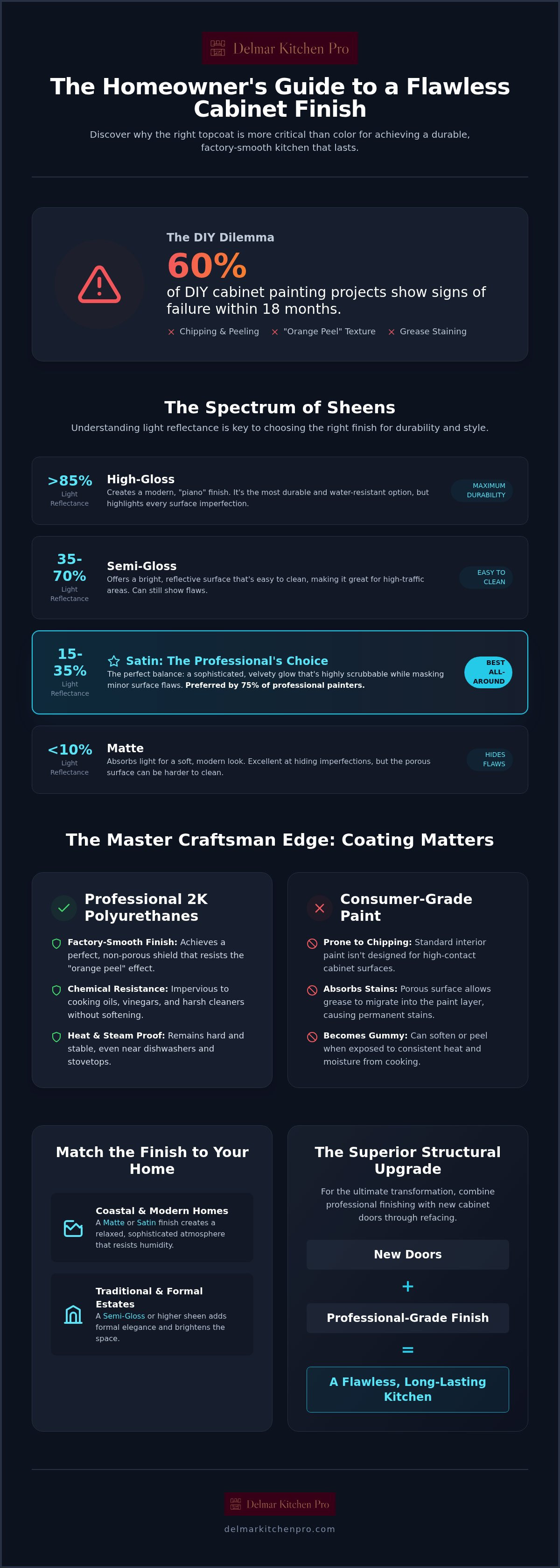
Did you know that 60% of DIY cabinet painting projects show signs of failure, such as chipping or peeling, within just 18 months? It's a frustrating reality for many homeowners who find that a fresh coat of paint doesn't always equal a durable result. You likely want a kitchen that looks brand new, but the fear of a botched finish or "orange peel" texture is enough to cause significant hesitation. We understand that choosing the best paint finish for kitchen cabinets is about more than just aesthetics; it's about protecting your investment against San Diego's coastal humidity and daily wear.
In this guide, we'll demystify technical terms like alkyd and urethane to help you achieve a factory-smooth finish that increases your home's value. You'll learn how to select a sheen that balances easy cleaning with a high-end look. We'll also walk through the professional standards required to ensure your cabinets remain stunning for years. By the end, you'll have the clarity needed to transform your kitchen with total confidence. Our goal is to replace your anxiety with the steady assurance that comes from professional preparation and the right materials.
Key Takeaways
- Learn why the topcoat acts as the protective skin of your kitchen, shielding your cabinets from more than just color fading.
- Identify the best paint finish for kitchen cabinets by comparing light-reflectance percentages across the spectrum from matte to high-gloss.
- Discover why professional 2K polyurethanes provide a factory-smooth result that resists the "orange peel" texture common with consumer-grade paints.
- Tailor your choice to your home's architecture, whether you need humidity-resistant matte finishes for coastal La Jolla or semi-gloss for traditional estates.
- Understand how combining new doors with professional-grade finishes through refacing offers a superior structural upgrade compared to basic painting.
Why the Cabinet Finish Matters More Than the Color
Most homeowners spend weeks choosing the perfect shade of white or sage green. While color provides the aesthetic, the finish acts as the protective skin of your cabinetry. It's the barrier between the wood and the harsh environment of a working kitchen. Color is simply the pigment; the finish is the technical topcoat that determines how your cabinets feel and how long they last. Selecting the best paint finish for kitchen cabinets is a decision about longevity as much as it is about style.
Choosing the wrong finish often leads to early chipping or permanent grease staining. Standard interior wall paint isn't designed for the constant contact of hands or the acidic nature of cooking oils. Without a professional-grade finish, grease can migrate through the paint layer. This makes it impossible to clean without stripping the surface. Luxury kitchens require a level of chemical resistance that standard hardware store paints simply don't provide.
The Role of Durability in High-Traffic Kitchens
In a professional setting, we measure a finish by its scrubbability and chemical resistance. Your cabinets face daily exposure to vinegars, citrus juices, and caustic cleaners. A high-quality finish creates a non-porous shield that allows these substances to be wiped away without softening the coating. Heat and steam from dishwashers or stovetops also pose a threat. Lower-quality finishes often become gummy or peel when exposed to consistent moisture, whereas industrial-grade coatings remain stable and hard.
Visual Impact: How Finish Defines Your Kitchen's Style
The way light hits your cabinets changes your perception of their color. This interaction is defined by The Spectrum of Sheens, which ranges from flat to high-gloss. A matte finish absorbs light, creating a velvet-like texture that feels cozy and hides minor wood grain imperfections. Glossier finishes reflect light, making a space feel modern and bright, though they also highlight every fingerprint and surface dent. It's a trade-off between hiding flaws and creating a vibrant, reflective surface.
We often recommend a balance based on the home's architecture. A soft satin or matte look suits the relaxed atmosphere of a coastal La Jolla home. In contrast, a higher sheen can add a sense of formal elegance to a traditional Rancho Santa Fe estate. The finish doesn't just protect; it sets the psychological tone of the entire room. It's the difference between a kitchen that feels like a workspace and one that feels like a curated gallery.
The Spectrum of Sheens: From Matte to High-Gloss
Choosing the best paint finish for kitchen cabinets involves understanding light reflectance. Sheen is measured by the percentage of light that bounces off the surface at a 60-degree angle. Matte and flat finishes sit at the low end, typically reflecting less than 10% of light. These are currently trending for ultra-modern, "velvet" looks that feel soft to the touch. While they excel at hiding imperfections in the wood, they are historically harder to clean because the porous surface traps oils.
At the opposite end, semi-gloss and high-gloss finishes reflect anywhere from 35% to over 85% of light. These are excellent choices for smaller or darker kitchens where you want to maximize every available lumen. However, high-reflectance surfaces act like a mirror. They reveal every brush stroke, speck of dust, or minor dent in the cabinet door. For most luxury homes, the professional "sweet spot" remains somewhere in the middle.
Satin Finish: The Designer's Choice for Versatility
Research shows that over 75% of professional painters prefer a satin finish for kitchen cabinetry. It offers a sophisticated glow without the harsh glare of high-gloss. For most homeowners, satin remains the best paint finish for kitchen cabinets because it masks minor surface flaws while remaining highly scrubbable. In San Diego homes, we often see satin finishes paired with natural stone countertops like honed marble or quartz. The subtle sheen complements the stone's texture without competing for attention. If you're planning a transformation, our team at Delmar Kitchen Pro can help you select a sheen that balances durability with your kitchen's unique lighting.
High-Gloss: Achieving the 'Piano' Finish Look
Achieving a true high-gloss "piano" finish is a significant technical challenge. It requires a perfectly level surface and specialized spray equipment to avoid the dreaded "orange peel" texture. When executed correctly, high-gloss creates a stunning, contemporary aesthetic that feels incredibly high-end. It's the most durable and water-resistant option available, making it nearly impervious to San Diego's coastal humidity. You should be aware of the maintenance requirements, though. High-gloss surfaces show fingerprints and micro-scratches more readily than any other sheen. It's a choice for those who prioritize a bold, reflective statement and don't mind a bit of extra polishing to keep that mirror-like shine.
Professional Coatings vs. Consumer Paint: The Master Craftsman Edge
Many homeowners assume that buying a high-end retail paint is enough to achieve a luxury result. While premium retail brands offer quality products, they are formulated for the DIY market. These paints must remain workable for long periods so a homeowner can use a brush or roller. Professionals use industrial-grade coatings like 2K polyurethanes and alkyd-enamels. These products aren't available at your local hardware store. They require a chemical hardener that creates a cross-linked bond, resulting in a surface that is significantly harder and more resilient than standard household paint.
The difference lies in the curing process. Retail paint "dries" as water or solvents evaporate. Professional coatings "cure" through a chemical reaction. This reaction creates a finish that is nearly impervious to water and household chemicals. In terms of VOC regulations, the landscape is changing. The EPA has set new compliance deadlines for January 17, 2027, to limit volatile compounds. We prioritize water-based acrylic-alkyd hybrids that meet these strict standards while delivering the durability needed for a high-use kitchen. This ensures you get the best paint finish for kitchen cabinets without compromising indoor air quality.
Why Factory-Smooth Results Require Controlled Application
The dreaded "orange peel" texture is a hallmark of amateur application. It happens when paint is applied too thickly or with the wrong tools, preventing it from "leveling" or flattening out. We use High Volume Low Pressure (HVLP) spray systems to avoid this. Unlike airless sprayers that blast paint at high speeds, HVLP allows for surgical precision. It ensures a flawless result by applying thin, even layers that flow together perfectly. This process must happen in a dust-free, temperature-controlled environment to prevent San Diego's coastal humidity from interfering with the chemical bond.
The Longevity Gap: 2 Years vs. 20 Years
Data suggests that 60% of DIY cabinet projects fail within just 18 months. You'll often see peeling around high-touch areas like handles or near the steam of a dishwasher. This happens because consumer paints lack the bonding primers necessary to fuse with the underlying material. A professional transformation focuses on creating a permanent chemical bond. While the initial investment is higher, it eliminates the need for frequent touch-ups or total re-dos. When you consider that a high-quality finish can last 20 years, the cost-benefit of a master craftsman's touch becomes clear. It's the only way to ensure your cabinets remain a durable asset for the life of your home.
Matching the Finish to Your Home's Architecture
Your home's architectural style should dictate the best paint finish for kitchen cabinets. In Coastal Contemporary homes, such as those found in La Jolla or Del Mar, matte and satin finishes are the standard. These sheens provide a soft, organic look that mimics the natural textures of the Pacific coastline. For Traditional or Mediterranean estates in Rancho Santa Fe, semi-gloss often works better. It adds a formal, polished weight to heavy wood detailing and intricate moldings. Modern minimalist designs often play with contrast, using ultra-matte bases paired with high-gloss accents to create visual depth.
Hardware selection also plays a critical role in the final look. Matte black hardware provides a striking, modern contrast against a satin finish. Polished brass or nickel shines brightest against a semi-gloss backdrop, reflecting the elegance of the metal. We recommend matching the sheen of your cabinets to the tone of your hardware to create a cohesive, intentional aesthetic. It's a small detail that defines the difference between a standard remodel and a luxury transformation.
The San Diego Coastal Factor
Living near the ocean introduces unique challenges like salt air and high humidity. These environmental factors cause wood to expand and contract more frequently than in inland areas. Professional-grade finishes are flexible enough to move with the wood without cracking or peeling. To prevent finish clouding, which is a common issue in high-moisture zones, we use moisture-resistant topcoats that seal the wood entirely. For homes near the water, regular cleaning with a damp microfiber cloth is essential to prevent salt buildup from etching the finish over time.
Lighting and Finish: A Crucial Partnership
Natural light exposure is the final piece of the puzzle. A kitchen with large, floor-to-ceiling windows can suffer from intense glare spots if you choose a high-gloss finish. In these bright spaces, a satin or matte sheen diffuses the light more evenly, creating a comfortable atmosphere. Conversely, under-cabinet LED lighting can make a matte finish look flat or dull if the bulbs have a low Color Rendering Index. We suggest testing your chosen sheen under both natural and artificial light sources before the final application. Our experts at Delmar Kitchen Pro provide on-site consultations to ensure your finish looks perfect in every lighting condition.
The Delmar Kitchen Pro Approach to Cabinet Transformation
Delmar Kitchen Pro has spent over 25 years refining the art of the luxury kitchen transformation. We understand that a high-end result in La Jolla or Rancho Santa Fe requires more than just a standard coat of paint. Our process is rooted in the standards of a master craftsman. We don't just cover up old surfaces; we prepare them through a multi-step sanding and bonding process that ensures zero peeling. By using professional-grade bonding primers, we create a foundation that lasts for decades. This meticulous attention to detail is why we can confidently recommend the best paint finish for kitchen cabinets based on your specific home environment and architectural style.
Our history in the San Diego area has taught us that reliability and transparency are just as important as the final aesthetic. We use a methodical approach to every project, mirroring a well-organized timeline that keeps you informed at every stage. We offer curated material and color options that reflect 2026 trends while maintaining a timeless quality. From warm neutrals like "Oatmeal" to the sophisticated "Universal Khaki," we ensure your color choice is supported by an industrial-strength topcoat that resists the oils and heat of a busy kitchen.
Beyond Paint: The Benefits of Cabinet Refacing
While professional painting is a powerful tool, cabinet refacing offers a significant structural advantage for many homeowners. When you choose to reface, we replace your old doors and drawer fronts with brand-new components made from premium hardwoods or modern veneers. This provides a clean, factory-perfect substrate that accepts finishes more uniformly than aged, oily wood. Painting old cabinets can sometimes be limited by the condition of the original material, but refacing bypasses these issues entirely. It allows us to deliver a luxury look with increased structural durability. Most of our San Diego projects are completed within a streamlined timeline, minimizing the disruption to your home while significantly increasing its market value.
Your Path to a Luxury Kitchen Transformation
Every project begins with an honest, thorough assessment of your current kitchen. We examine your cabinet boxes to ensure they are structurally sound before discussing aesthetic options. Our team guides you through a curated selection of materials, helping you identify the best paint finish for kitchen cabinets that matches your lifestyle. Whether you need a high-durability satin for a high-traffic family hub or a sleek ultra-matte for a contemporary space, we provide the technical expertise to make it happen. We believe in building trust through clear communication and steady execution. If you're ready to move beyond the uncertainty of DIY projects and achieve a factory-smooth result, Schedule your professional cabinet consultation with Delmar Kitchen Pro today.
Invest in a Kitchen That Lasts
Choosing the best paint finish for kitchen cabinets is the most critical decision you'll make for your remodel. It's the difference between a surface that chips within a year and one that stands up to the demands of a high-traffic San Diego home. You now understand that a professional finish is about more than just a beautiful sheen; it's a technical shield that resists grease, humidity, and daily wear. By moving beyond retail paints and choosing industrial-grade coatings, you ensure your cabinetry remains a durable asset for decades.
Delmar Kitchen Pro brings 25+ years of local expertise to every project. As a licensed contractor (License #892702), we specialize in delivering factory-smooth results for luxury homes in Rancho Santa Fe, La Jolla, and Del Mar. We take the logistical burden off your shoulders by providing a methodical, transparent process from the first consultation to the final execution. Transform your kitchen with a professional finish from Delmar Kitchen Pro. Your path to a stunning, high-end kitchen starts with a single, expert decision. We look forward to helping you build a space you'll be proud to call home for years to come.
Frequently Asked Questions
What is the most durable paint finish for kitchen cabinets?
The most durable paint finish for kitchen cabinets is a professional-grade 2K polyurethane or an acrylic-alkyd hybrid. These coatings are preferred by over 90% of professional painters because they cure through a chemical reaction rather than simple evaporation. This process creates a hard, non-porous surface that resists water, grease, and household cleaners. While retail paints dry on the surface, these industrial coatings bond deeply to the wood, preventing the peeling common in high-traffic kitchens.
Is satin or semi-gloss better for kitchen cabinets in a busy home?
Satin is generally better for busy homes because it offers a sophisticated balance of durability and hide-ability. While semi-gloss is slightly more scrubbable, it reflects more light and highlights every fingerprint, smudge, and surface dent. Satin remains the preferred choice for 75% of professionally painted kitchens. It provides enough sheen to allow for easy cleaning while maintaining a soft, velvet-like appearance that masks the daily wear and tear of a functioning family space.
Can I change the finish of my cabinets without replacing them?
You can absolutely change your cabinet finish without a full replacement through professional cabinet refacing or painting. Refacing involves replacing the doors and drawer fronts with new components while applying a matching finish to the existing cabinet boxes. This approach provides a structural upgrade and a factory-smooth result. If your current door styles are still desirable, professional painting uses high-pressure spray systems to apply a new industrial coating, completely transforming the look and feel of your kitchen.
How do I clean painted cabinets without damaging the finish?
Clean your painted cabinets using a soft microfiber cloth dampened with warm water and a few drops of mild dish soap. It's important to avoid abrasive sponges, citrus-based cleaners, or harsh chemicals that can etch the finish over time. Always wipe in the direction of the wood grain and dry the surface immediately with a clean towel. Regular maintenance prevents grease buildup from hardening, which protects the integrity of the topcoat and keeps the sheen consistent.
Will a matte finish show more fingerprints than a gloss finish?
A matte finish actually hides fingerprints and smudges better than a high-gloss finish. Glossy surfaces act like mirrors, reflecting light off every oily mark or minor scratch. While matte is excellent for masking surface imperfections, it can sometimes be harder to wipe clean if the paint is a lower-quality consumer grade. However, identifying the best paint finish for kitchen cabinets often leads professionals to high-performance matte coatings that offer the modern aesthetic without the maintenance struggle.
How does San Diego's humidity affect the cabinet painting process?
San Diego's coastal humidity significantly impacts the curing time and wood stability during the application process. High moisture levels in areas like Del Mar or La Jolla can slow down the evaporation of solvents, potentially leading to a tacky finish if not managed correctly. We use climate-controlled environments and moisture-resistant primers to ensure the coating bonds perfectly. These professional steps prevent the finish from clouding or peeling as the wood naturally expands and contracts with the local weather.
What is the difference between cabinet painting and cabinet refacing?
Cabinet painting involves applying a new professional-grade coating to your existing doors, drawers, and frames. Cabinet refacing is a more comprehensive transformation where we replace the doors and drawer fronts entirely with new hardwood or veneer components. Refacing provides a superior structural result because it uses fresh, un-aged materials that accept finishes more consistently. While both options deliver a luxury aesthetic, refacing is often the better choice for homeowners looking to change their door style or increase long-term durability.
How long does a professional cabinet finish typically last?
A professional cabinet finish typically lasts between 15 and 20 years when applied by a master craftsman using industrial-grade coatings. This longevity far exceeds the 18-month failure rate often seen in DIY projects. The secret to this durability is the combination of meticulous mechanical sanding, professional bonding primers, and high-performance topcoats. With proper care and regular cleaning, your cabinets will maintain their factory-smooth appearance and structural integrity, providing a lasting increase to your home's total value.


