

Why do some painted cabinets look like a weekend hobby project while others look like they just rolled off a luxury showroom floor? The difference isn't just the paint; it's a meticulous, multi-stage professional cabinet painting process designed for durability. You likely want a kitchen that feels brand new, but you're worried about a "DIY look" devaluing your home or the anxiety of long-term kitchen downtime. It's a valid concern because a kitchen is a high-traffic environment that demands more than a standard coat of house paint.
This 2026 master guide reveals the exact steps our craftsmen take to achieve a factory-smooth finish that withstands heat, moisture, and daily wear. We'll explain the technical distinctions between refinishing and painting, the importance of surgical-level cleaning, and the precision application techniques used to justify the cost of hiring a pro. You'll gain a clear understanding of how we deliver a livable luxury result that feels like a firm handshake from a trusted expert. By the end, you'll know exactly how to secure a kitchen that looks brand new for years to come.
Key Takeaways
- Learn why professional industrial coatings provide a higher return on investment than full cabinet replacement for high-end San Diego homes.
- Understand how a multi-stage professional cabinet painting process uses industrial degreasers and meticulous disassembly to create a factory-grade foundation.
- Discover the technical differences between retail latex paint and the specialized primers required to prevent peeling in a busy kitchen.
- Explore the precision of HVLP spray application and the benefits of finishing your cabinet doors in a dust-free, controlled booth environment.
- Master the critical 30-day curing window and specific cleaning protocols to maintain the beauty and durability of your new finish.
Understanding the Value of a Professional Cabinet Painting Process
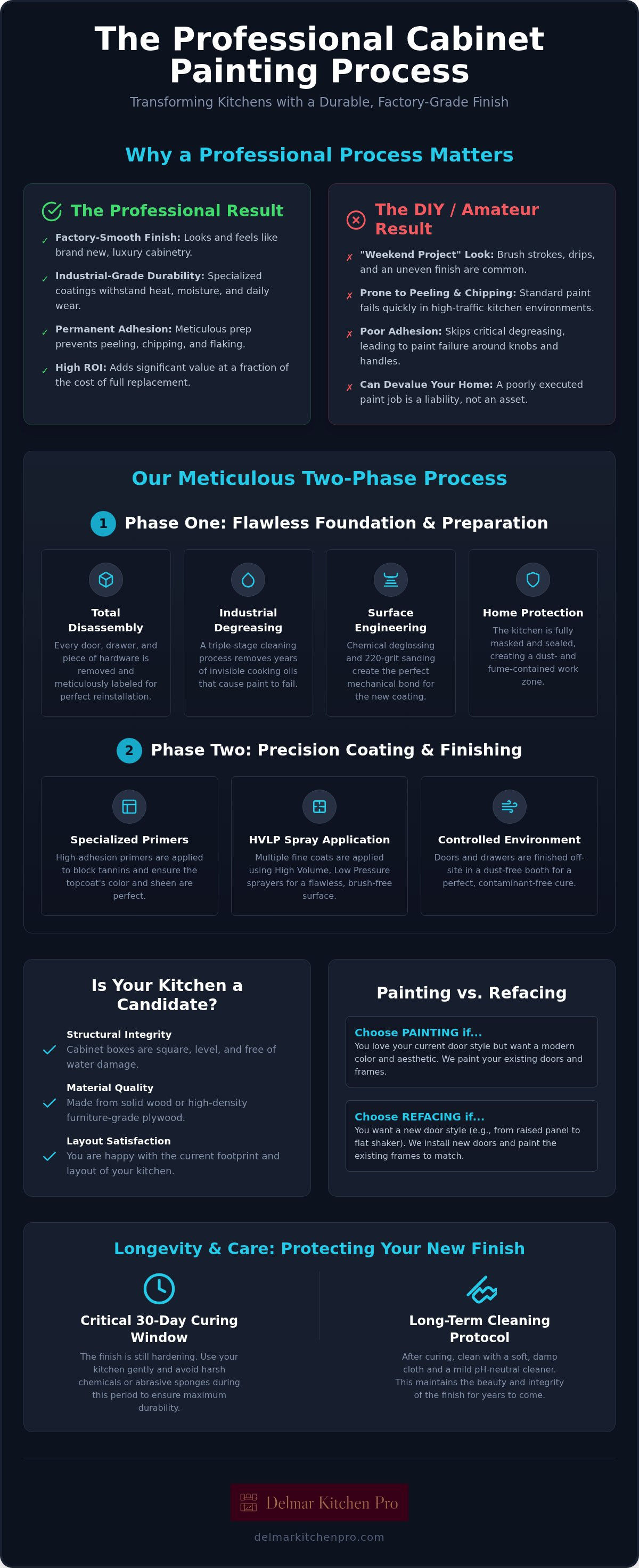
Professional cabinet painting isn't just about changing a color. It's a precision engineering project. In high-end San Diego homes, the goal is a factory finish that feels permanent and looks original. A true professional cabinet painting process involves an industrial coating system designed for high-use environments. Unlike a DIY project using standard wall paint, we use specialized chemical binders. By understanding paint composition, you can see why industrial coatings adhere better and resist the oils common in a kitchen. We don't just "paint" cabinets; we apply a durable skin that protects your investment.
For homeowners in coastal areas like La Jolla or Del Mar, the return on investment is significant. Replacing custom cabinetry can cost six figures and take months of demolition. By following a rigorous professional cabinet painting process, we ensure the finish matches the original quality of your custom cabinetry at a fraction of the replacement cost. This standard directly impacts home value. Buyers look for quality and longevity, not a quick fix. We focus on achieving a surface so smooth it looks like it was manufactured that way.
Before starting, we evaluate the structural integrity of your kitchen. Not every kitchen is a candidate for painting alone. We look for specific criteria:
- Structural Integrity: Your cabinet boxes must be level, square, and free of water damage.
- Material Quality: Solid wood or high-density furniture-grade plywood offers the best foundation for a factory finish.
- Layout Satisfaction: Painting is the best choice if you're happy with the current footprint of your kitchen.
Painting vs. Refacing: Choosing the Right Path
Evaluating your kitchen starts with the bones of the cabinetry. If your boxes are solid wood and in good condition, they're worth preserving. Painting is ideal when you love your current door style but want a modern aesthetic. However, if you want to change from a raised panel to a flat shaker style, we often combine painting with refacing. This total transformation uses new doors while painting the existing frames for a seamless look. It's a cost-effective way to modernize a luxury kitchen without the waste of full demolition.
The 'Livable Luxury' Formula for 2026
In 2026, homeowners prioritize durability as much as design. Coastal living presents unique challenges like salt air and humidity. Our process uses high-performance coatings that resist these elements better than traditional finishes. Beyond the technical specs, there's a psychological benefit to our workflow. We take the logistical burden off your shoulders. A professionally managed project reduces downtime and eliminates the stress of a messy job site. You get a kitchen that withstands a busy home's demands while maintaining a high-end, sophisticated appearance.
Phase 1: Meticulous Surface Preparation and Protection
The foundation of a high-quality finish isn't the paint itself. It's the work done before a single drop of color is applied. A professional cabinet painting process begins with total disassembly. We remove every door, drawer front, and piece of hardware. Each item is labeled with a systematic numbering scheme. This ensures that when we reinstall your cabinets, every hinge aligns perfectly and every door hangs straight. Many contractors skip this step, leading to crooked doors and hardware that doesn't quite fit.
Cleaning is the next critical hurdle. Kitchens are naturally covered in a fine layer of cooking oils and steam residue. Standard household cleaners aren't enough for industrial-grade prep. We utilize a triple-stage cleaning process with industrial-strength degreasers. This removes contaminants that would otherwise prevent the paint from sticking. If you've ever seen painted cabinets peel around the handles, it's usually because this step was rushed or ignored.
The Science of Adhesion: Degreasing and Deglossing
Professional coatings require a specific surface profile to stay permanent. We use chemical deglossers to break down the existing factory finish. This prepares the wood for sanding without damaging the grain. A mechanical bond is the physical interlocking of the new coating into the microscopic scratches created by precision 220-grit sanding. This dual approach of chemical and mechanical prep ensures the primer becomes part of the wood rather than just sitting on top of it.
Protecting Your Home: Dust and Fume Containment
We treat your home with the respect it deserves. Before sanding begins, we create a "clean room" environment. We use heavy-duty plastic and specialized tapes to seal off the kitchen from the rest of the house. Countertops, floors, and appliances are double-masked to prevent any overspray or dust settling. For older properties, we adhere to lead-safe work practices to keep your environment healthy. High-powered HEPA air scrubbers run throughout the day to filter the air and manage fumes. This meticulous containment is what makes a cabinet reface & paint service different from a standard house painting job. We focus on a stress-free experience that keeps your living space livable while we work.
Choosing the Right Materials: Primers, Coatings, and Finishes
Retail latex paint is formulated for walls. It's designed to be flexible and soft. Cabinets require a completely different chemistry. A professional cabinet painting process utilizes industrial wood coatings that cure to a hard, durable shell. These materials are engineered specifically for the vertical surfaces and high-touch areas of cabinetry. They resist the constant opening, closing, and cleaning that kitchen surfaces must endure. Using the wrong material is the most common reason for finish failure.
In San Diego, environmental safety is a priority for every project. We use coatings that comply with local 2026 VOC (Volatile Organic Compound) regulations. This ensures you get a high-performance finish without compromising the indoor air quality of your home. It's about delivering a result that's both beautiful and responsible. We select products that offer the durability of traditional finishes with modern, low-emission technology.
Industrial Primers: Blocking Tannins and Stains
Primer is the most critical layer we apply. It isn't just a base coat; it's a chemical bridge. We use shellac-based or high-solids primers to act as a permanent barrier. Without this step, natural wood tannins can bleed through the finish. This often results in unsightly yellow or brown spots on white cabinets. Our primers also serve to level the surface. They fill the micro-grain of the wood, creating the smooth foundation needed for a factory-grade look. We don't move to the topcoat phase until we've confirmed a perfect bond.
1K vs. 2K Polyurethane Coatings
The final layers define the longevity of your kitchen. We typically use 1K or 2K polyurethane coatings. A 1K coating is a high-quality, single-part product. A 2K coating is a two-part system involving a chemical catalyst. This reaction creates a finish with superior resistance to scratches and household chemicals. It's essentially a liquid plastic that hardens into a protective shield.
We rely on the "Kitchen Test" for every material we select. Your cabinets should withstand spills from lemon juice, vinegar, and cooking oils without staining or softening. The sheen you choose also plays a role in daily maintenance. Ultra-matte finishes are popular for their modern, understated look. High-gloss finishes offer a dramatic, luxury feel. For many families in La Jolla, a satin sheen provides the best balance. It offers a soft glow that hides daily wear while remaining easy to wipe down. We help you select the finish that matches your design vision and your lifestyle.
Phase 2: Professional Application and the Path to a Factory Finish
The application phase is where technical skill meets the vision for your kitchen. A professional cabinet painting process relies on High Volume Low Pressure (HVLP) spraying technology. Unlike brushes or rollers that leave texture and visible strokes, HVLP systems atomize the coating into a fine mist. This creates a surface so smooth it mirrors the finish of a brand new car. We don't just apply paint; we engineer a flawless skin over your cabinetry.
We utilize a hybrid workflow to ensure the highest quality results. Your cabinet doors and drawer fronts are removed and transported to our controlled spray booth. This "off-site" advantage allows us to work in a dust-free environment where temperature and airflow are perfectly regulated. Meanwhile, we perform on-site spraying for the cabinet frames and gables. This ensures a seamless, uniform look throughout the entire kitchen. We treat the on-site portion with the same surgical precision as the booth work, maintaining the "factory finish" standard across every square inch.
Patience is a luxury virtue during this stage. It's vital to distinguish between drying times and curing times. While a coating might feel dry to the touch within an hour, it hasn't yet reached its full chemical hardness. We follow a strict schedule that allows each layer to bond and stabilize before moving to the next. Rushing this step leads to a finish that's prone to chipping or imprinting. If you're ready for a durable transformation, you can start your cabinet reface & paint project with our experienced team.
Spray Technique: Achieving an Orange-Peel-Free Surface
Achieving a glass-like finish requires more than just a spray gun; it requires a Master Craftsman's touch. We carefully adjust fluid tips and air pressure based on the specific coating's viscosity. We never rely on a single heavy coat. Instead, we apply multiple thin, even layers. We perform meticulous hand-sanding between every single coat. This removes any microscopic imperfections and provides the physical "tooth" needed for the next layer to lock into place. This repetitive, methodical approach is what prevents "orange peel" texture and ensures long-term durability.
San Diego Environmental Controls: Humidity and Temperature
San Diego's coastal climate presents unique challenges. In areas like Encinitas or Del Mar, high humidity can slow down the "flash" time of a coating, potentially trapping moisture. We don't leave this to chance. We use industrial dehumidifiers and climate control systems to maintain an optimal environment. Proper airflow is managed to prevent dust nibs from settling into the wet finish while it's most vulnerable. By controlling these variables, we ensure the coating cures to the specific hardness required for a high-use kitchen environment.
Longevity and Care: Maintaining Your Newly Painted Luxury Kitchen
The final stage of a professional cabinet painting process is the transition from a project site back into a functional home. While your cabinets will be dry to the touch upon reinstallation, they haven't yet reached their maximum hardness. This 30-day "full cure" window is a vital period where the chemical binders in the coating reach their peak durability. During this first month, you should treat the surfaces with extra care. Avoid using heavy cleaning agents or hanging damp towels over the cabinet doors. This patience ensures the finish remains resilient against the high-use environment of a busy San Diego home.
Professional finishes are designed to be low-maintenance, but they aren't indestructible. We provide every client with a specialized touch-up kit. This kit includes the exact color match and sheen used in your project. It allows for quick, invisible repairs should an accidental impact occur. We also stand behind our work with a clear guarantee. This commitment to quality is why homeowners in Rancho Santa Fe and Del Mar trust us with their luxury investments. We ensure the results of your professional cabinet painting process stay perfect for years to come.
Daily Maintenance for Professional Finishes
Cleaning your new cabinets doesn't require expensive chemicals. In fact, harsh cleaners can eventually break down the topcoat and dull the sheen. We recommend a simple solution of mild dish soap and warm water. Pay close attention to "high-impact" areas like trash pull-outs, sink bases, and the cabinets around your range. These spots are most likely to collect grease and moisture. To preserve the depth and clarity of luxury sheens, use only clean microfiber cloths for all dusting and wiping. This simple habit prevents the fine scratches that abrasive sponges or paper towels can leave behind.
The Delmar Kitchen Pro Partnership
Choosing a contractor is a matter of trust. Our team brings over 25 years of industry experience to every project we manage. We understand the logistical challenges of a kitchen remodel and work to minimize the impact on your daily life. As a licensed San Diego contractor (License #892702), we provide the moral clarity and technical reliability you expect for a luxury home improvement. We don't just finish a job; we build a lasting relationship centered on high standards and meticulous care.
Your journey toward a factory-grade kitchen finish starts with a conversation. We can help you evaluate your current cabinetry and determine if painting or refacing is the best path forward for your home. Start your kitchen transformation with a professional consultation from Delmar Kitchen Pro today.
Your Path to a Factory-Grade Kitchen Finish
A high-end kitchen transformation relies on more than just a fresh color. It requires a commitment to a rigorous professional cabinet painting process that prioritizes structural integrity and industrial-grade durability. You've learned that success is found in the meticulous details; from triple-stage cleaning and precision sanding to the application of advanced 2K polyurethane coatings. These steps ensure your cabinets withstand the daily demands of a busy home while maintaining a showroom appearance for years to come.
We bring over 25 years of San Diego craftsmanship and a specialized focus on luxury coastal remodels to every project. As a Licensed Contractor (#892702), we take the logistical burden off your shoulders to deliver a stress-free experience. You don't have to settle for a "DIY look" when a permanent, factory-smooth finish is within reach. We're ready to help you restore the heart of your home with the precision and care it deserves. Your dream kitchen is closer than you think.
Schedule Your Professional Cabinet Consultation
Frequently Asked Questions
How long does the professional cabinet painting process take?
A typical project for a standard San Diego kitchen usually takes between five and ten business days. This timeframe includes the off-site spraying of doors and the meticulous on-site preparation of the cabinet boxes. Larger luxury kitchens in La Jolla or Rancho Santa Fe may require additional time for extensive masking and multiple coating layers. We prioritize a methodical pace to ensure every layer cures properly before we proceed to the next stage.
Will my kitchen be usable during the painting process?
Your kitchen will have limited functionality during the on-site phase of the professional cabinet painting process. We seal off the work area with heavy-duty plastic to contain dust and fumes; which means you won't have access to the stove or cabinets. However, we aim to minimize this downtime by completing the on-site spraying in just a few days. Most homeowners find it helpful to set up a temporary coffee station in another room.
Can you paint over laminate or thermofoil cabinets?
We can paint laminate or thermofoil cabinets if the underlying structure is still sound. The key is using specialized high-adhesion primers that create a chemical bond with non-porous surfaces. If the thermofoil is already peeling or delaminating; we often recommend refacing the doors instead to ensure a permanent result. We evaluate the condition of your specific cabinets during our initial consultation to determine the most reliable path for your San Diego home.
Is there a smell or significant VOC off-gassing during the project?
We use modern coatings that comply with 2026 San Diego VOC regulations to minimize odors and environmental impact. While there is a slight scent during the application phase; we use high-powered HEPA air scrubbers and localized ventilation to filter the air constantly. Most of the heavy spraying happens in our off-site booth; which significantly reduces the presence of fumes in your living space. Any remaining scent typically dissipates within twenty four hours.
How long will a professionally painted cabinet finish last?
A professionally applied finish can last eight to ten years or longer with proper maintenance. Unlike retail paint that might chip or peel within a year; our industrial coatings are engineered to resist the oils and moisture found in a busy kitchen. The durability of the finish depends on following the 30-day curing window and using mild cleaning protocols. We provide a touch-up kit to help you manage any accidental impacts over the years.
Do you paint the inside of the cabinet boxes?
We typically don't paint the interior of the cabinet boxes unless you have glass-front doors where the inside is visible. Painting the interiors adds significant cost and time because it requires more extensive masking and material. Most homeowners prefer to keep the original wood or laminate interior for ease of cleaning. If you want a cohesive look for open shelving; we can include those specific areas in your custom project plan.
What is the difference between painting and refacing?
Painting involves applying a new industrial coating to your existing doors and boxes. Refacing is a more comprehensive update where we replace the doors and drawer fronts entirely while painting the existing cabinet frames to match. Refacing is the better choice if you want to change your kitchen's door style; such as moving from a raised panel to a modern shaker design. Both options provide a luxury aesthetic without the cost of full replacement.
Why is the professional process so much more expensive than a DIY project?
A professional project is an investment in specialized equipment, industrial-grade materials, and decades of technical skill. We use HVLP spray systems and 2K polyurethane coatings that aren't available at big-box retail stores. A DIY project often lacks the triple-stage cleaning and mechanical bonding steps required for a factory finish. Our 25 years of experience ensures a durable result that adds real value to your home rather than a temporary cosmetic fix.


