

Why does the kitchen you love today often feel like a design mistake five years later? Many homeowners worry that choosing a specific transitional kitchen design will trap them in a passing trend. You might feel torn between the sleek lines of modern architecture and the inviting comfort of a classic home. It's common to feel overwhelmed when you're comparing materials like natural marble and durable quartz. You want a space that feels high-end. You want a space that feels cozy. Most importantly, you want a space that stands the test of time without requiring a total overhaul in a few years.
You can achieve a high-end kitchen that perfectly blends traditional warmth with modern polish. This guide provides a clear path to selecting materials, cabinetry, and layouts that ensure your kitchen remains a functional, high-value asset for decades to come.
Key Takeaways
- Learn how to balance traditional comfort with modern sophistication to create a space that feels both cozy and polished.
- Master the core elements of transitional kitchen design by pairing classic Shaker-style cabinetry with high-end, durable countertops.
- Identify the specific differences between modern and traditional styles to ensure your choices remain timeless and elegant.
- Follow a methodical, builder-approved process for selecting neutral palettes and textures that enhance your home’s value.
- Explore how expert cabinet refacing or custom construction provides a seamless path to a high-end, functional kitchen.
Defining the Transitional Kitchen: The Perfect Balance of Old and New
Transitional kitchen design represents a thoughtful marriage between two seemingly opposite worlds. On one side, you have the comfort and warmth of traditional architecture. On the other, you have the streamlined efficiency of modern aesthetics. This style doesn't ask you to choose between them. Instead, it creates a space that feels established yet fresh. It's a disciplined approach to luxury that relies on symmetry and clean lines rather than excessive ornamentation. For a homeowner, this means your kitchen won't feel like a museum or a cold laboratory. It feels like a home.
In high-end San Diego communities like La Jolla and Rancho Santa Fe, this design remains the gold standard for luxury remodels. It bridges the gap between a home's original architectural character and the lifestyle of a modern family. Whether you live in a coastal estate or a sprawling inland property, this style ensures your kitchen feels like a natural extension of the house. It's about creating a cohesive flow that respects the past while embracing the future.
The Evolution of the Transitional Aesthetic
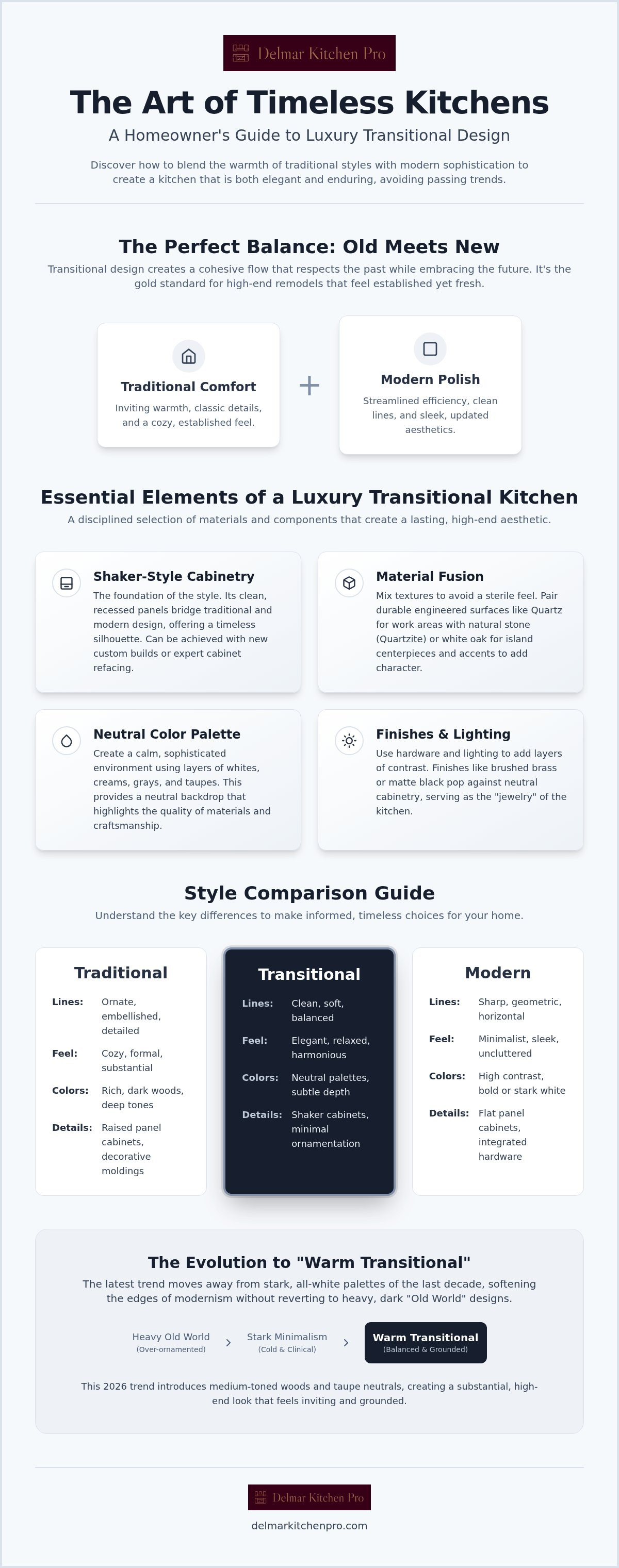
We've moved past the era of heavy, dark "Old World" kitchens. Those spaces often featured oversized corbels and dark, distressed woods that felt cramped. At the same time, the clinical, sharp edges of ultra-modern minimalism can feel uninviting for a family. The 2026 "Warm Transitional" trend solves this by softening the edges. It moves away from the stark, all-white palettes of the last decade. Instead, it introduces medium-toned woods and taupe neutrals. This shift creates a high-end look that feels substantial and grounded without being overbearing.
Key Characteristics You Need to Know
Successful transitional kitchen design relies on neutral color palettes with subtle, sophisticated depth. We use layers of whites, creams, and grays to create a calm environment. Visual weight is also a critical factor. A large, well-proportioned island provides a sense of permanence and durability that defines the room. It acts as the anchor for the entire space.
Integrating modern technology is the final piece of the puzzle. The goal is to include high-end appliances without breaking the classic silhouette of the cabinetry. We often use "disappearing" appliances that blend seamlessly into the woodwork. This keeps the focus on the craftsmanship of the cabinets rather than the gleam of stainless steel. It's a way to enjoy the convenience of a smart kitchen while maintaining a timeless, high-end appearance.
Essential Elements of a Luxury Transitional Kitchen
Building a high-end kitchen requires a disciplined selection of materials. It isn't about following every fleeting trend. It's about choosing pieces that work together to create a lasting aesthetic. Every element must serve a purpose. In a luxury home, the goal is to balance the tactile feel of traditional materials with the effortless performance of modern engineering. This section breaks down the specific components that define this sophisticated style.
Cabinetry: The Foundation of the Style
Shaker cabinets are the backbone of transitional kitchen design. Their clean, recessed panels offer a bridge between the intricate moldings of the past and the flat panels of the future. This style provides enough detail to feel substantial but remains simple enough to look modern. It's a versatile choice that adapts to your home's unique character.
For many homeowners in San Diego, achieving this look doesn't always require a full tear-out. Professional cabinet refacing and painting allows you to update the silhouette of your kitchen while maintaining the structural integrity of your layout. This approach delivers a high-end, custom finish with meticulous care. Whether you choose custom builds or expert refacing, the quality of the finish determines the longevity of the luxury feel.
Material Fusion: Mixing Textures and Finishes
The most common mistake in modern design is creating a space that feels sterile or cold. We prevent this by mixing textures. We often pair durable engineered surfaces with the organic beauty of natural stone or white oak. This fusion is intentional. Quartz provides the heat and stain resistance needed for heavy cooking zones. Natural stone or wood adds the unique grain and character that man-made materials can't perfectly replicate. Consider these pairings:
- Polished Quartzite: Use this on the island for a natural, sculptural centerpiece.
- Engineered Quartz: Select a neutral, durable slab for the perimeter work areas.
- White Oak Accents: Integrate wood on the island base or open shelving to ground the neutral colors.
- Geometric Backsplashes: Use classic tile shapes with traditional grout lines to add subtle patterns.
Hardware and lighting provide the final layers of contrast. We recommend selecting finishes like brushed brass or matte black. These metals pop against neutral cabinetry and ground the design. Lighting functions as the kitchen's jewelry. Large statement pendants over the island define the scale of the room. They draw the eye upward and complete the sophisticated look. Each choice works together to ensure the kitchen feels both curated and comfortable.
Transitional vs. Modern vs. Traditional: Comparison Guide
Understanding the structural differences between kitchen styles is the first step in planning a successful remodel. While many homeowners use these terms loosely, a builder looks at the specific lines, moldings, and finishes that define a space. Traditional design relies on heavy ornamentation. It features raised panel cabinet doors, intricate crown moldings, and corbels that feel formal and established. Modern design sits at the opposite end of the spectrum. It favors flat-panel doors, handle-less cabinets, and high-gloss surfaces that create a sleek, industrial atmosphere.
A transitional kitchen design finds the middle ground. It replaces the heavy, ornate details of traditional styles with streamlined moldings and recessed panels. Instead of the clinical coldness of modern minimalism, it uses mixed textures like wood and stone to add warmth. This balance is why transitional design consistently offers the highest long-term resale value. It appeals to the widest range of potential buyers by feeling both current and timeless. It doesn't date as quickly as a "trendy" modern kitchen, yet it lacks the stuffiness of an older traditional build.
Visual and Structural Differences
The differences are most apparent in the finishing touches. In a traditional kitchen, crown molding is often tiered and highly decorative. A modern kitchen might have no molding at all, allowing the cabinets to meet the ceiling with a sharp, clean edge. Transitional spaces use simple, flat crown moldings that provide a finished look without the visual clutter. Hardware follows a similar logic. While traditional kitchens use decorative pulls and modern kitchens use integrated grips, transitional designs often feature sleek bars or classic knobs in contemporary finishes.
- Traditional: Formal and heavy; uses dark woods and ornate carvings.
- Modern: Industrial and minimalist; uses man-made materials and hidden storage.
- Transitional: Relaxed-luxe; uses natural textures with clean, simple silhouettes.
Choosing Based on Your Home’s Architecture
In San Diego, your kitchen should complement your home's existing structure. For a classic Craftsman home, transitional elements add modern efficiency without stripping away the historical warmth. If you're updating a Mediterranean estate in Rancho Santa Fe, replacing heavy, raised panels with Shaker-style doors can instantly modernize the space. This approach allows you to maintain the luxury feel of a large estate while making the room feel more open and approachable. It ensures a seamless flow from the kitchen to the rest of your living areas.
Planning Your Remodel: The Master Craftsman’s Approach
A successful remodel follows a logical, methodical path. It starts with a broad vision of how you live and ends with the precision of a master craftsman. When you plan a transitional kitchen design, you aren't just choosing colors. You're building a system that must perform for decades. This process requires a steady hand and a commitment to detail to ensure the final result matches your expectations.
Step 1 involves defining your functional needs. Consider how many people cook at once and where guests gather. Step 2 focuses on your color story. We recommend layers of neutrals to provide a sophisticated backdrop for a transitional kitchen design. In Step 3, you'll select your cabinets and counter options. These are the workhorses of the room. Finally, Step 4 requires a consultation with a licensed professional to verify structural feasibility and local code compliance. This ensures your project stays on track and within budget.
Layout and Structural Considerations
Modern kitchen planning has evolved beyond the simple "Kitchen Triangle." In a larger transitional space, we design around "Work Zones." This creates dedicated areas for prep, cooking, and cleaning. It prevents foot traffic jams during busy mornings. If your project involves removing walls to create an open-concept flow, structural integrity is the priority. We also focus on proper ventilation. High-end professional appliances require robust exhaust systems to keep your air clean and your cabinetry protected from heat and moisture.
Coastal Design Influences for San Diego Living
Living in La Jolla or Del Mar requires a specific approach to material selection. The coastal light is unique. We maximize this by positioning reflective surfaces and light-colored cabinetry to brighten the room naturally. The salt air is another factor. We choose durable finishes that withstand the San Diego climate without corroding or fading. This is where 25 years of local experience becomes an asset for your home.
Southern California living is defined by the indoor-outdoor transition. Your kitchen should feel like a bridge to your outdoor living space. Large sliding glass doors or pass-through windows allow for seamless entertaining. If you're ready to start your journey, you can schedule a consultation for your kitchen construction with our experienced team. We hold License #892702 and specialize in delivering high-level results with meticulous care.
Executing Your Vision with Delmar Kitchen Pro
Delmar Kitchen Pro approaches every project with the steady confidence of a seasoned industry veteran. We've spent over 25 years refining our craft specifically within the San Diego community. Our team understands that a kitchen isn't just a construction site; it's the heart of your home. We prioritize transparency and moral clarity from the first handshake to the final walkthrough. You can expect direct communication and a methodical process that eliminates the stress often associated with major home improvements. We believe in doing things right the first time.
Our commitment to meticulous craftsmanship means we don't cut corners on materials or installation. Whether we're managing a full-scale structural build or an expert cabinet update, our goal remains the same: delivering high-level results that stand the test of time. We act as your comprehensive partner, taking the logistical burden off your shoulders so you can enjoy the transformation of your space. Our experience allows us to anticipate challenges before they arise, ensuring a seamless journey from your initial design consultation to the final construction phase.
Luxury Cabinet Refacing and Painting
Achieving a high-end transitional kitchen design doesn't always require a total demolition. If your current layout is functional, luxury cabinet refacing and painting offer a sophisticated path to a modern look. We use professional-grade finishes that provide superior durability compared to standard residential paints. This process allows you to update your cabinetry to the clean, recessed-panel style that defines the transitional aesthetic. It's a precise way to achieve a designer look with significantly less mess and downtime. We focus on the tactile and visual details that ensure your "new" cabinets feel substantial and high-end.
Custom Kitchen Construction in North County
For homeowners who require a complete layout change or structural expansion, we specialize in full luxury kitchen construction. We regularly serve the unique needs of estates in Rancho Santa Fe, Encinitas, and surrounding luxury communities. Our process handles everything from structural builds to the integration of high-end materials like quartzite and custom white oak accents. We ensure every technical detail, including proper ventilation for professional appliances and compliance with California building codes, is handled with precision. Our deep local roots mean we understand how to design for the Southern California lifestyle, focusing on light, flow, and durability.
We are a licensed contractor (License #892702) dedicated to professional integrity and personal care. If you're ready to create a space that balances traditional warmth with modern polish, we're here to lead the way. Schedule your consultation with Delmar Kitchen Pro today to discuss your project with a trusted master craftsman.
Build a Kitchen That Lasts for Decades
A high-end kitchen is a significant investment in your home's value and your daily life. Choosing a transitional kitchen design ensures you don't have to sacrifice classic comfort for modern efficiency. You've learned how to balance Shaker-style cabinetry with durable stone surfaces and why a methodical planning process leads to a stress-free remodel. The key to success is working with a partner who values transparency as much as craftsmanship.
Delmar Kitchen Pro brings over 25 years of San Diego kitchen expertise to your home. As a Licensed Contractor (#892702), we provide direct owner oversight on every project to ensure our high standards are met. We take the logistical burdens off your shoulders so you can focus on the final results. Whether you need a full custom build or luxury cabinet refacing, we remain committed to delivering a space that feels both cozy and sophisticated. You can Request a Professional Design Consultation today to discuss your vision with a master craftsman. Let's create a kitchen that remains timeless for years to come.
Frequently Asked Questions
What is the most popular color for a transitional kitchen in 2026?
Warm neutrals like taupe and medium-toned natural woods are the most popular choices for 2026. While all-white kitchens remain a classic option, many San Diego homeowners now prefer the depth and character of "Warm Transitional" palettes. These tones create an inviting atmosphere that feels established yet modern. Using these colors on custom cabinetry adds a layer of sophisticated warmth to your transitional kitchen design.
Can I achieve a transitional look with cabinet refacing?
You can absolutely achieve a high-end transitional look through professional cabinet refacing. This process involves replacing your existing door and drawer fronts with a new style, such as the timeless Shaker silhouette. It's an efficient way to transform your kitchen's aesthetic without the disruption of a full structural demolition. Our team ensures the new components match the quality of a custom build, providing a durable update for your home.
What is the difference between transitional and farmhouse kitchen design?
Transitional design is more polished and sophisticated than the rustic, distressed look of farmhouse style. Farmhouse design often relies on elements like apron-front sinks and reclaimed wood. In contrast, transitional spaces use clean lines and symmetry to bridge the gap between traditional and modern architecture. It avoids heavy ornamentation in favor of a streamlined, luxury feel that suits properties from La Jolla to Rancho Santa Fe.
Are Shaker cabinets considered transitional?
Shaker cabinets are the foundational element of the transitional style. Their simple, recessed-panel design offers the perfect balance between the ornate details of traditional cabinetry and the flat panels of modern minimalism. This versatility allows them to adapt to almost any home architecture in San Diego. We often use them as a starting point for luxury remodels because they provide a clean, high-end look that never goes out of style.
How much does a luxury transitional kitchen remodel cost in San Diego?
The cost of a remodel in San Diego depends entirely on the scope of construction and the materials you choose. A full-scale structural build with custom cabinetry requires a different budget than a cosmetic update or professional cabinet refacing. Factors like layout changes, appliance integration, and local building permit requirements all play a role in the final investment. We provide detailed, transparent consultations to help you understand your project's specific requirements.
Which countertop material is best for a transitional kitchen?
Engineered quartz and natural quartzite are the best countertop options for this style. Quartz offers exceptional durability and stain resistance, making it ideal for busy work zones. Quartzite provides the unique, sculptural beauty of natural stone that many homeowners in Encinitas and Del Mar desire for their kitchen islands. Pairing these materials allows you to enjoy both high-end performance and a one-of-a-kind aesthetic that enhances home value.
How do I mix metals in a transitional kitchen design?
Mix metals by selecting one dominant finish and one accent metal for contrast in your transitional kitchen design. For example, pairing matte black handles with brushed brass pendant lights creates a curated, high-end look. Limiting your palette to two or three finishes ensures the design remains cohesive and grounded. This approach acts as the "jewelry" of your kitchen, providing a modern touch that complements the traditional elements of the space.
Does transitional design work in a small kitchen layout?
Transitional design works very well in small kitchen layouts because its clean lines reduce visual clutter. By using neutral colors and streamlined cabinetry, you can make a compact space in a coastal La Jolla condo feel much larger and more open. Focus on maximizing natural light and choosing integrated appliances to maintain a smooth, uninterrupted silhouette. This style delivers a functional, luxury feel regardless of the square footage available.


