

Replacing kitchen cabinets isn’t always the best way to make a kitchen feel new. If the cabinet boxes are sound and the layout works, updating kitchen cabinets without replacing them may refresh worn finishes or dated doors without requiring a larger project.
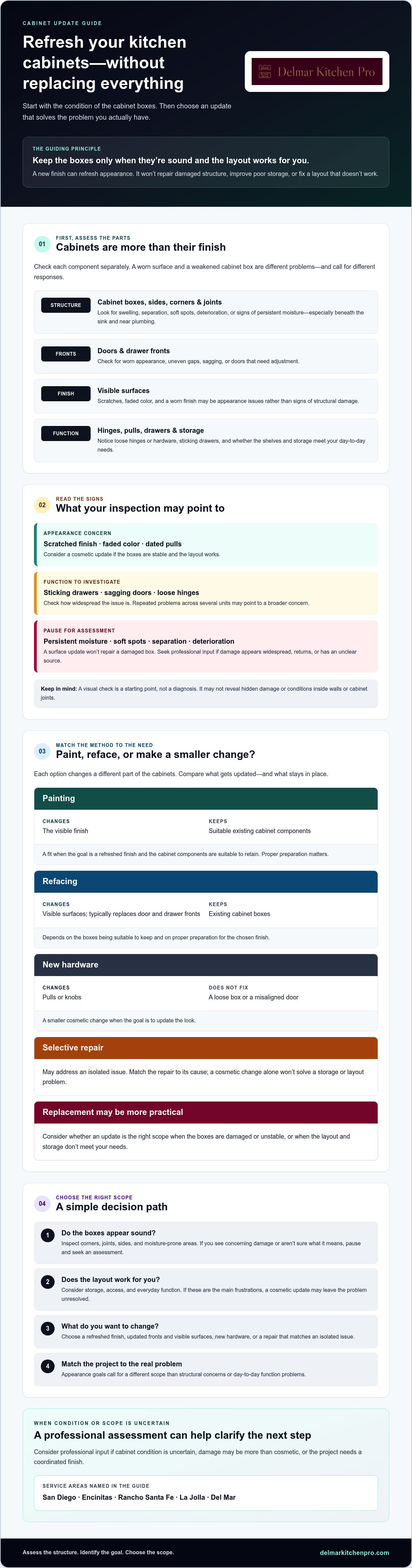
Before choosing an update, identify what needs to change. Painting can refresh the finish, while refacing updates visible surfaces and typically replaces the door and drawer fronts. New hardware is a smaller cosmetic change. None of these options will fix damaged boxes, poor storage, or a layout that doesn’t work for you.
This guide explains how to assess which cabinet parts may be kept, compare painting, refacing, and smaller updates, and match the project scope to your goals. You’ll also learn when a professional assessment can clarify the condition of your cabinets and when replacement may be more practical. The aim is to choose an update that addresses the real problem, not just its appearance.
Key Takeaways
- Assess the cabinet boxes separately from the doors, drawer fronts, hardware, and finish.
- Look for damage or loose construction before deciding whether the cabinets are suitable for an update.
- Compare painting, refacing, hardware changes, and replacement by what each option changes and leaves in place.
- When updating kitchen cabinets without replacing them, choose a scope that matches your goal, whether that’s a refreshed look or better day-to-day function.
- Consider professional input in San Diego, Encinitas, Rancho Santa Fe, La Jolla, or Del Mar if cabinet condition is uncertain or the project needs a coordinated finish.
Updating kitchen cabinets without replacing them: what can you change?
Updating kitchen cabinets without replacing them means improving their appearance or usability while keeping cabinet boxes that are suitable to retain. The boxes form the fixed structure attached to the wall or floor. Doors, drawer fronts, hinges, pulls, and the visible finish are separate parts, so you can assess and update them individually.
Let cabinet condition guide the method. A worn finish is different from a swollen box or a cabinet that shifts when opened. If the structure is sound and the layout works, painting, refacing, new hardware, or a limited repair may be appropriate. If the boxes are damaged or unstable, a surface update won’t address the underlying issue.
Which cabinet parts can stay?
Assess the boxes, doors, drawer fronts, and hardware separately. Scratches, faded color, or dated pulls are usually signs of visible wear. Check function as well as appearance: open doors to see whether hinges hold securely, slide drawers to notice sticking or sagging, and inspect cabinet interiors and edges around the sink for swelling, softness, or persistent moisture damage. These signs may warrant a professional assessment before you choose a finish.
Cabinet construction and materials can affect which updates are suitable. This overview of what your cabinets are made of can help you identify the material, but the material alone doesn’t tell you whether a cabinet is sound. Check the condition of each part.
What counts as a cabinet update?
Painting changes the visible finish while retaining suitable cabinet components. Refacing updates visible surfaces and typically replaces doors and drawer fronts while keeping the existing boxes. Both approaches depend on the boxes being suitable to retain and on proper preparation for the chosen finish.
New hardware is a smaller visual update. Replacing pulls or knobs can change the look, but it won’t strengthen a loose box or correct a misaligned door. Selective repairs may address isolated issues, but the work should match the cause. If the layout or storage is what frustrates you, cosmetic changes alone may not deliver the improvement you need. Identify the problem first, then choose a scope that can address it.
How to tell whether your existing kitchen cabinets are worth keeping
Before choosing a finish or ordering new doors, inspect the cabinets you already have. Separate surface wear from signs that the structure or everyday function may be compromised. A visual check can help you decide what to ask next, but it can’t confirm hidden damage or conditions inside walls or cabinet joints.
Sound cabinet boxes are essential if you plan to keep them. If the boxes are stable and the layout suits your household, an appearance-focused update may be appropriate. When considering updating kitchen cabinets without replacing them, assess structure and function first, then choose a scope that fits what you find.
Inspect cabinet boxes, joints, and moisture-prone areas
Look along cabinet sides, corners, and joints for visible swelling, separation, soft spots, or deterioration. Pay close attention beneath the sink and near plumbing, where moisture may be present. A mark alone may not reveal the full extent or cause of damage. If deterioration appears widespread, returns, or has an unclear source, pause before choosing an update and seek a professional assessment.
Surface scratches and worn finish may be cosmetic. Softened or separating material needs closer attention because paint or new fronts won’t repair a damaged box.
Check doors, drawers, and everyday function
Open and close each door and drawer. Note sticking, sagging, uneven gaps, loose hinges, or shifting hardware. A door that needs adjustment doesn’t automatically mean the cabinets need replacing, but repeated problems across several units may point to a broader concern. Check whether drawers move smoothly and whether shelves and storage still work for your daily needs.
Then consider the layout. If the cabinets are structurally sound but don’t provide the storage or access your household needs, a cosmetic update may leave the main frustration unresolved.
- Visible wear: scratched finish, faded color, or dated hardware.
- Function to investigate: sticking drawers, sagging doors, or loose hinges.
- Reason to seek assessment: persistent moisture, soft spots, separation, or deterioration.
This inspection is a starting point, not a diagnosis. A contractor can assess whether the existing cabinets suit the work you have in mind. If you’re unsure what your findings mean, explore professional cabinet painting and refacing as options for suitable existing cabinetry.
Paint, reface, or replace: compare ways to update kitchen cabinets
The right choice depends on what you want to change and which cabinet parts are suitable to keep. Painting changes the finish; refacing renews visible surfaces and fronts; hardware updates make a smaller visual difference. Replacement allows a broader change and may be worth considering if the cabinets’ condition, layout, or function doesn’t meet your needs.
| Option | What changes | What remains | Suitable starting point |
|---|---|---|---|
| Painting | The visible finish | Suitable boxes, doors, and drawer fronts | Cabinet components are appropriate for refinishing |
| Refacing | Visible surfaces and typically doors and drawer fronts | Suitable cabinet boxes | Boxes can stay, but visible fronts need a more substantial refresh |
| Hardware update | Pulls, knobs, or other cabinet hardware | Cabinet boxes, fronts, and finish | The cabinets function well and need a smaller visual change |
| Replacement | The cabinets, with scope depending on the project | Parts are determined by the project plan | Condition, layout, or function calls for broader work |
When painting or hardware changes may be enough
Painting may suit cabinets whose components are in appropriate condition for refinishing. The appearance depends on the existing surfaces and materials, preparation, and application. A professional cabinet painting service can help when you want a consistent finish and prefer to have the work assessed and handled as a coordinated project.
New pulls or knobs can change the look without changing the boxes or fronts. They’re a focused update, not a fix for loose construction, damaged surfaces, or an impractical layout. If your main concern is visual, this smaller scope may be a sensible place to start.
When refacing or replacement deserves consideration
Refacing updates visible cabinet surfaces and fronts while retaining boxes that are suitable to keep. It may make sense when the cabinet framework and layout still work, but the doors or finish look dated or worn. A professional can help determine whether the boxes suit the project and whether painting or refacing better matches the result you want.
Consider replacement if the cabinets have condition concerns or if storage and layout problems require broader changes. No method is right for every kitchen. When updating kitchen cabinets without replacing them, compare options by whether they address the actual problem, not just by which looks newest. Preparation, materials, and the cabinets’ existing condition all affect the result.
Plan a cabinet update that looks cohesive and works day to day
A good plan connects the look you want with how you use your kitchen. Before choosing a finish, decide whether your main goal is cosmetic or functional. A new color may refresh the room, but it won’t create storage or correct a layout that makes daily tasks harder. Keep the project focused on the problem you want to solve.
Set priorities before choosing finishes
Use this sequence to turn ideas into a workable project plan:
- Define your goals. Write down what feels dated and what causes daily frustration. Separate essential changes from optional upgrades.
- Inspect the cabinets. Record visible concerns and note how the doors, drawers, and storage work for your household.
- Select the scope. Decide whether your priorities point toward a finish update, new fronts, a smaller change, or broader kitchen work.
- Coordinate finishes. Consider the cabinets alongside the counters, backsplash, flooring, and surrounding colors.
- Confirm execution. Review what the project includes, how existing materials will be handled, and whether the approach suits the cabinets.
Bring room photos and notes about existing materials to a conversation with a cabinet professional. This gives you a practical starting point and keeps the discussion focused on your goals as well as finish choices.
Coordinate cabinet finishes with the rest of the kitchen
Cabinet color doesn’t stand alone. Compare it with countertop tones, backsplash patterns, flooring, and the light in the room. A sample that looks balanced under store lighting may appear different beside your counters or in the evening. Review samples in the kitchen at different times of day and near the materials they’ll sit beside.
Samples can guide your decision, but they can’t guarantee an exact finished color. Existing surfaces, lighting, and preparation all influence how a finish appears, so discuss expectations with the professional completing the work.
For projects in San Diego, Encinitas, Rancho Santa Fe, La Jolla, and Del Mar, discuss your location and proposed scope with a local provider. To explore an update suited to your cabinets and goals, talk with Delmar Kitchen Pro about cabinet painting and refacing.
When to call a cabinet professional in San Diego
A professional assessment can help when you’re unsure whether a concern is limited to the visible finish or may affect the cabinet boxes, when damage keeps returning, or when the project involves several components. It can also clarify what preparation the existing materials may need if you want a consistent finish across doors, drawer fronts, and cabinet surfaces.
When updating kitchen cabinets without replacing them, the key question is whether the existing boxes suit the work you want done. Cabinet painting and refacing can refresh suitable cabinetry without full replacement, but neither method addresses every problem. If the layout or storage no longer works for your household, raise that early so the proposed scope reflects your needs.
What a professional assessment can clarify
Ask the contractor to review the cabinet condition alongside your goals. The discussion should cover which components appear suitable to retain, which may need attention, and whether the requested finish or refacing scope fits the cabinets. If damage is visible, ask what can be assessed directly and what remains uncertain without further evaluation.
Before moving ahead, clarify the work plan. Useful questions include:
- Which cabinet surfaces and components are included in the proposed scope?
- What preparation is needed for the existing materials and finish?
- How will the project sequence be coordinated, and what responsibilities remain with the homeowner?
- What findings could change the recommended approach?
These questions help you compare options beyond appearance and understand what the work is intended to solve before choosing a method.
How Delmar Kitchen Pro can help with cabinet updates
Delmar Kitchen Pro provides professional cabinet painting and refacing for homeowners considering an update to suitable existing cabinetry. The company has more than 25 years of industry experience and is privately owned and operated by a licensed contractor, License #892702. Its cabinet services can help you consider the condition of your cabinets alongside the scope you have in mind.
Delmar Kitchen Pro works with homeowners in San Diego, Encinitas, Rancho Santa Fe, La Jolla, and Del Mar. Discuss your location, cabinet condition, and goals with the team to identify an appropriate next step.
Discuss your kitchen cabinet update with Delmar Kitchen Pro.
Choose an update that fits your kitchen
Start with an honest look at what works and what doesn’t. If the boxes are sound and the layout suits your household, updating kitchen cabinets without replacing them may be a practical way to refresh the room. Painting, refacing, or changing the hardware can each serve a different purpose. If cabinet condition or function is the concern, get it assessed before settling on a cosmetic fix.
Delmar Kitchen Pro provides professional cabinet refacing and painting for homeowners in San Diego, Encinitas, Rancho Santa Fe, La Jolla, and Del Mar. The company has more than 25 years of industry experience and is privately owned and operated by a licensed contractor, License #892702. Contact Delmar Kitchen Pro to discuss your cabinets and the right scope for your update.
Take the decision one step at a time. A suitable plan can help you move forward with greater confidence and shape the update around your home.
Frequently Asked Questions
Can I update kitchen cabinets without replacing the cabinet boxes?
Yes, you can update kitchen cabinets without replacing the boxes if they’re sound and suitable for the project. You might change the finish, update hardware, or reface visible surfaces while retaining suitable boxes. The right approach depends on the condition of each component and what you want to improve. If the boxes show swelling, separation, or other signs of damage, have them assessed before choosing a cosmetic update.
How do I know if my kitchen cabinets are in good enough condition to keep?
Check for visible swelling, soft spots, separation, or deterioration, especially beneath the sink and near plumbing. Open and close doors and drawers to spot sagging, sticking, or loose hardware. These checks can identify concerns, but they can’t confirm hidden damage or its cause. If damage is extensive, persistent, or unclear, ask a cabinet professional to assess whether the boxes suit your intended update.
Is painting or refacing better for kitchen cabinets?
Neither option is right for every kitchen. Painting may suit cabinets with components appropriate for refinishing when you want to change the finish. Refacing may be a better fit if the boxes are suitable to keep but the visible surfaces or fronts need a broader refresh. Consider the cabinet condition, the result you want, and whether the current layout works before choosing.
What is the difference between cabinet painting and cabinet refacing?
Painting changes the visible finish on suitable cabinet components and typically retains the existing doors and drawer fronts. Refacing updates visible cabinet surfaces and may include replacing doors and drawer fronts while retaining suitable boxes. Both methods depend on cabinet condition and preparation. Ask which parts would remain and what the proposed scope includes, since details can vary with the cabinets.
Can I update kitchen cabinets without replacing the doors?
Yes. If the doors are in suitable condition, you can keep them and consider painting the cabinets or changing the hardware. New pulls or knobs can alter the look without replacing the boxes or doors, but they won’t resolve damage or function problems. Refacing often involves updating the fronts, so if you’re considering that approach, ask whether your existing doors can remain.
When should I replace kitchen cabinets instead of updating them?
Consider replacement if the cabinet boxes are extensively damaged, the construction is loose, or the existing layout and storage no longer meet your needs. A finish update can improve appearance, but it won’t correct deeper condition concerns or every functional problem. Ask a qualified professional to assess uncertain damage and compare the work needed with your goals before deciding whether to retain or replace the cabinets.
Should I hire a professional to update kitchen cabinets in San Diego?
Professional help can be useful if damage is uncertain, the project includes several cabinet components, or the finish requires careful preparation. Delmar Kitchen Pro provides cabinet painting and refacing and has more than 25 years of industry experience. The company is privately owned and operated by a licensed contractor, License #892702. Its service locations include San Diego, Encinitas, Rancho Santa Fe, La Jolla, and Del Mar.


